
AI for Building Websites: The Complete 2026 Guide
The landscape of web development has transformed dramatically over the past few years, and 2026 marks a pivotal moment where ai for building websites has moved from experimental technology to standard practice. Businesses now leverage artificial intelligence to create sophisticated, high-performing websites in a fraction of the time traditional methods required. This shift isn't just about speed; it's about fundamentally reimagining how we approach design, content creation, functionality, and optimization. Whether you're a startup founder, marketing director, or business owner, understanding how AI reshapes website development is essential for staying competitive in today's digital marketplace.
How AI Website Builders Work
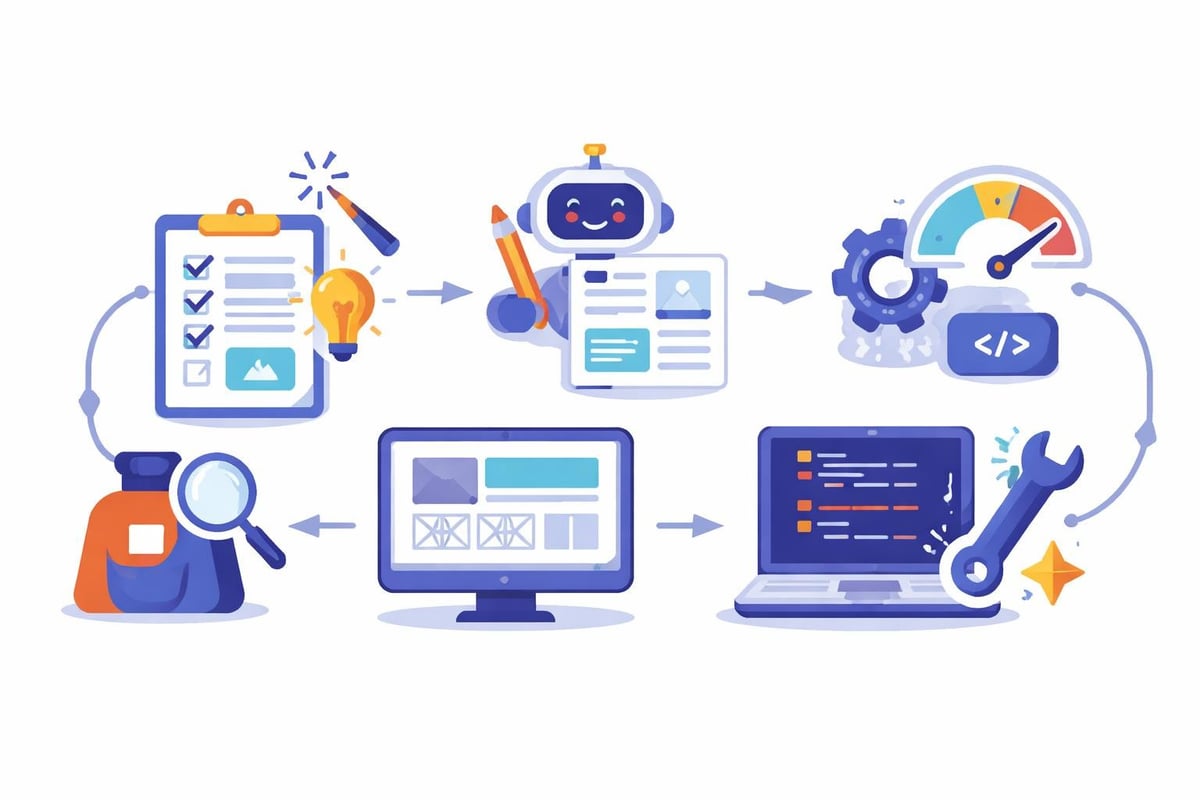
Modern ai for building websites operates through sophisticated machine learning algorithms that understand design principles, user experience patterns, and conversion optimization. These platforms analyze millions of successful websites to identify what works and apply those insights to new projects.
The technology breaks down into several core components that work together seamlessly:
- Natural language processing interprets user requirements and design briefs
- Computer vision analyzes visual preferences and brand guidelines
- Generative algorithms create layouts, color schemes, and typography combinations
- Optimization engines adjust elements based on performance data
- Code generation systems produce clean, efficient HTML, CSS, and JavaScript
When you input basic information about your business, industry, and goals, the AI processes this data through multiple neural networks. Each network specializes in different aspects of web design, from structural layout to color psychology. The system then generates complete website prototypes that align with your specifications.
The Technology Behind AI Web Development
The engines powering these platforms use transformer models similar to those behind ChatGPT and other large language models. However, they're specifically trained on web design datasets, including successful website architectures, conversion-optimized layouts, and accessibility standards. According to research on AI agents for web testing, these systems can now identify usability issues and suggest improvements with remarkable accuracy.
What sets 2026's ai for building websites apart from earlier versions is contextual awareness. The AI doesn't just create generic templates; it understands industry-specific conventions, target audience preferences, and brand positioning. A legal firm's website will have a fundamentally different structure and tone than an e-commerce store selling artisanal goods, and modern AI recognizes these distinctions automatically.
Key Benefits of Using AI for Website Creation
The advantages of implementing ai for building websites extend far beyond simple time savings. Businesses report measurable improvements across multiple performance indicators when they adopt AI-assisted development approaches.
| Benefit Category | Traditional Method | AI-Assisted Method | Improvement |
|---|---|---|---|
| Development Time | 8-12 weeks | 2-4 weeks | 60-75% faster |
| Initial Cost | $5,000-$15,000 | $2,000-$6,000 | 50-70% reduction |
| Revision Speed | 3-5 days | 2-4 hours | 90% faster |
| A/B Testing | Manual setup | Automated variants | 10x more tests |
Speed and efficiency represent the most immediate benefits. What once required weeks of back-and-forth between designers, developers, and clients now happens in days or even hours. This acceleration doesn't compromise quality; rather, it redirects human expertise toward strategy and refinement rather than repetitive technical implementation.
The cost reduction factor proves particularly valuable for small businesses and startups. Traditional web development carries significant overhead costs, including designer hours, developer time, project management, and revision cycles. AI handles the foundational work, allowing professionals to focus on high-value customization and strategic decisions.
Enhanced Personalization Capabilities
Modern ai for building websites excels at creating personalized user experiences at scale. The technology can generate multiple page variants optimized for different audience segments, device types, or traffic sources. This level of customization would be prohibitively expensive using traditional methods.
Dynamic content adaptation represents another significant advantage. AI systems analyze user behavior in real-time and adjust website elements accordingly. Navigation structures reorganize based on popular paths, content highlights shift based on user interests, and calls-to-action adapt to conversion likelihood. The Microsoft AI website builder overview provides detailed insights into how these personalization features function.
Choosing the Right AI Platform for Your Needs
The market for ai for building websites has expanded rapidly, with dozens of platforms offering varying capabilities, pricing structures, and specializations. Selecting the appropriate solution requires careful evaluation of your specific requirements and long-term goals.
Essential Features to Evaluate
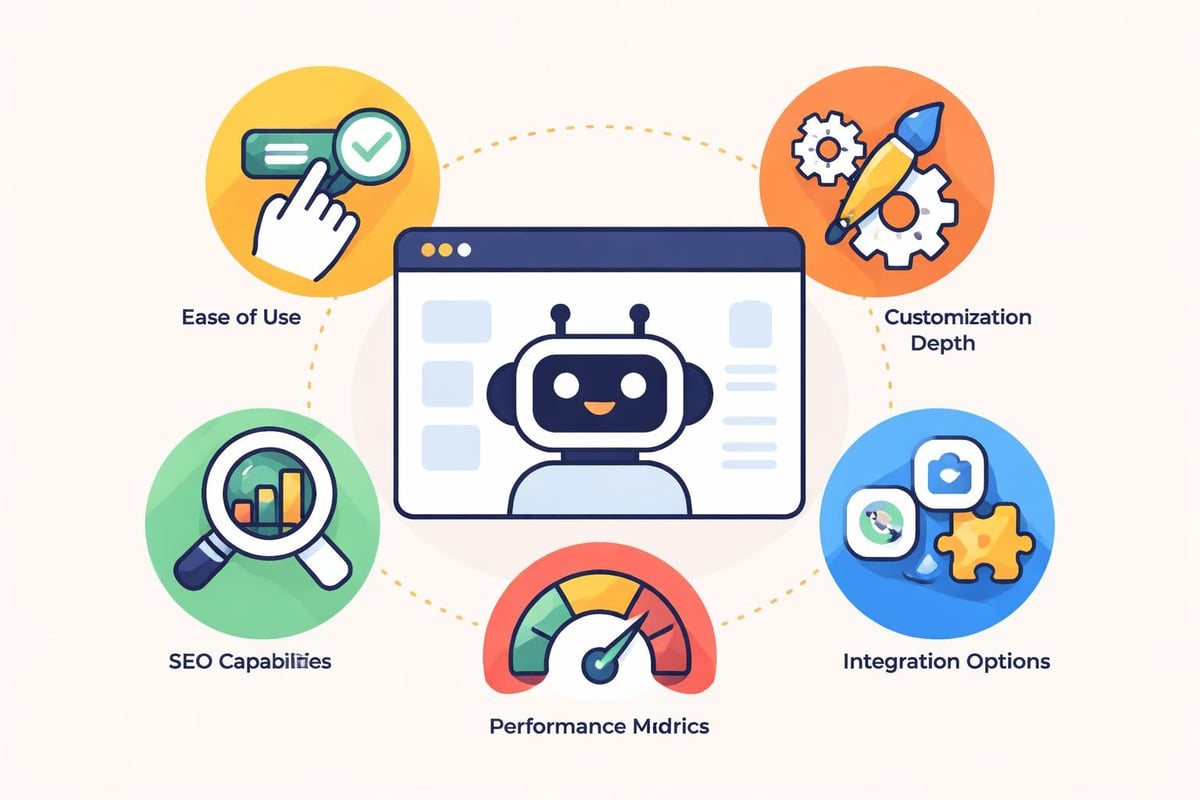
When comparing AI website builders, focus on these critical capabilities:
- Template quality and variety - Does the platform offer designs that align with your industry and brand aesthetic?
- Customization flexibility - Can you modify AI-generated elements or are you locked into preset options?
- SEO optimization - Does the platform generate clean code and proper meta structures for search visibility?
- Performance optimization - Are generated sites fast-loading and mobile-responsive by default?
- Integration capabilities - Can the website connect with your CRM, email marketing, or analytics tools?
- Content generation quality - Does the AI produce compelling, accurate copy or require significant editing?
- Ongoing support and updates - Will the platform evolve with changing web standards and AI capabilities?
The best website builders of 2026 vary significantly in their approaches. Some platforms prioritize ease of use for complete beginners, while others offer advanced customization for users with technical knowledge. Neither approach is inherently superior; the right choice depends on your team's capabilities and project complexity.
Industry-Specific Considerations
Different business sectors have unique website requirements that not all ai for building websites platforms address equally well. E-commerce sites need robust product catalog management, secure payment processing, and inventory integration. Professional services firms require appointment scheduling, client portals, and portfolio showcases. Content publishers need sophisticated CMS capabilities, multi-author support, and monetization features.
Research platforms that specialize in your industry or have demonstrated success with similar businesses. Review their template galleries, examine live examples, and test their content generation with industry-specific prompts. The quality variation between generic outputs and industry-optimized results can be substantial.
Optimizing AI-Generated Websites for Search Engines
Creating a website with AI represents just the first step; ensuring that site ranks well in search results requires strategic optimization. The intersection of ai for building websites and search engine optimization has become increasingly sophisticated as both technologies advance in parallel.
Search engines, particularly Google, have developed nuanced abilities to evaluate AI-generated content and design. The key differentiator isn't whether AI created the site but whether the result provides genuine value to users. Sites that simply automate content without adding unique insights or expertise will struggle to rank competitively.
Technical SEO Fundamentals for AI Sites
AI platforms vary considerably in the quality of their technical SEO implementation. Before committing to a platform, verify these essential elements:
- Clean, semantic HTML structure with proper heading hierarchies
- Optimized image compression and appropriate alt text generation
- Mobile-responsive design that adapts fluidly across devices
- Fast page load speeds with efficient code and minimal bloat
- Proper schema markup for rich search results
- XML sitemap generation and robots.txt configuration
- SSL certificate integration for secure connections
The guide to editing AI-generated websites emphasizes that human oversight remains critical for ensuring these technical elements align with current best practices. AI platforms update regularly, but they may lag behind the latest algorithm changes or emerging optimization opportunities.
Content Strategy for AI-Built Sites
Using ai for building websites doesn't mean abandoning content strategy; it means augmenting your approach with powerful tools. The most successful AI-powered sites combine machine efficiency with human expertise and oversight.
Start with thorough keyword research and competitive analysis. Feed this strategic foundation into your AI tools to ensure generated content targets the right topics and search queries. The AI can produce initial drafts at scale, but human editors should refine these outputs to add:
- Unique perspectives based on real business experience
- Specific examples and case studies that AI cannot fabricate
- Expert analysis that goes beyond surface-level information
- Brand voice consistency that reflects your company's personality
- Factual accuracy verification to prevent AI hallucinations
For businesses prioritizing visibility across both traditional and AI-powered search platforms, understanding how to optimize for AI search engines becomes increasingly important. The same principles that help sites rank on Google also influence how AI chatbots and generative search platforms reference and recommend your content.
Advanced Customization and Development
While ai for building websites excels at creating functional sites quickly, many businesses eventually require customizations beyond what automated tools provide. Understanding when to extend AI-generated foundations with custom development helps you plan resources and set realistic expectations.
| Customization Level | AI Capability | When Custom Development Needed |
|---|---|---|
| Color schemes and fonts | Fully automated | Rarely |
| Page layouts and sections | Mostly automated | Advanced interactions |
| Contact forms and basic integrations | Fully automated | Complex workflows |
| E-commerce functionality | Platform-dependent | Custom shopping experiences |
| Member portals and dashboards | Limited automation | Most implementations |
| Third-party API integrations | Basic connections only | Sophisticated data syncing |
The framework approach works well for many businesses. Start with an AI-generated foundation that handles 70-80% of your requirements, then invest in targeted custom development for the specialized features that differentiate your business.
Integrating AI with Professional Design Services
The most effective use of ai for building websites often involves collaboration between automated systems and professional designers. AI handles the structural foundation, responsive frameworks, and initial content population. Human designers then refine the aesthetics, enhance the user experience, and ensure brand consistency across every touchpoint. Agencies like professional web designers use AI to drastically accelerate the coding and structural setup, launching custom, high-performance websites in weeks rather than months while passing cost savings to clients.
This hybrid approach delivers the best of both worlds: the efficiency and cost-effectiveness of AI combined with the strategic thinking, creative nuance, and quality control that human experts provide. It's particularly valuable for businesses that need to balance tight budgets with high-quality outcomes.

Maintaining and Updating AI-Built Websites
Creating a website marks the beginning of your digital presence, not the conclusion. Ongoing maintenance, updates, and optimization determine long-term success. The tools and approaches for managing ai for building websites continue evolving as platforms add new capabilities.
Continuous Optimization Strategies
Modern AI platforms increasingly offer automated optimization features that monitor site performance and suggest or implement improvements:
- Performance monitoring tracks page load speeds and identifies bottlenecks
- Conversion rate optimization tests different layouts, copy, and calls-to-action
- Content freshness updates suggest topics and generate drafts for new pages
- Security patches apply automatically as vulnerabilities are discovered
- Compatibility updates ensure the site functions properly with new browsers and devices
Set up regular review cycles even with automated systems. Monthly audits help catch issues before they impact user experience or search rankings. Quarterly strategy sessions ensure your website evolves with your business objectives rather than becoming stagnant.
Scaling Your Website as Your Business Grows
One significant advantage of ai for building websites is the ease of scaling your digital presence. Adding new pages, sections, or even entire site areas requires minimal effort compared to traditional development approaches. The AI maintains consistency in design, navigation structure, and user experience as you expand.
Plan for growth from the beginning by selecting platforms and architectures that support your future needs. Consider whether you'll need multi-language support, extensive product catalogs, regional variations, or subdomain structures. While AI makes scaling easier, fundamental architectural decisions still impact long-term flexibility.
Privacy, Security, and Ethical Considerations
As ai for building websites becomes more prevalent, important questions about data privacy, security, and ethical AI use demand attention. Responsible implementation requires understanding both the capabilities and limitations of these systems.
Data Privacy in AI Website Builders
AI platforms require data to function effectively. They analyze your content, learn from user interactions, and sometimes share information across their network to improve general performance. Before selecting a platform, review:
- Data retention policies - How long does the platform store your content and user data?
- Usage rights - Does the platform claim any ownership over content you create?
- Training data usage - Will your website content train the AI for other users?
- Third-party sharing - What data gets shared with analytics, hosting, or integration partners?
- Compliance certifications - Does the platform meet GDPR, CCPA, or industry-specific regulations?
Most reputable platforms provide transparent privacy policies and offer controls over data usage. However, the responsibility ultimately falls on you to verify compliance with regulations affecting your business and customers.
Security Considerations for AI-Generated Sites
Security vulnerabilities in ai for building websites typically emerge from three sources: the AI platform itself, the generated code, and third-party integrations. Each requires different mitigation approaches.
Platform security depends on the provider's infrastructure, update frequency, and vulnerability response procedures. Research the company's security track record, read disclosure policies, and verify they maintain bug bounty programs or external security audits. The question isn't whether vulnerabilities will be discovered but how quickly they're addressed when found.
Generated code security has improved dramatically as AI models mature. Modern systems produce cleaner, more secure code than many human developers, particularly for common patterns and implementations. However, AI can still introduce subtle vulnerabilities, especially in complex custom features. Regular security scanning and penetration testing remain essential regardless of how your site was built.
The Future of AI in Web Development
The trajectory of ai for building websites points toward increasingly sophisticated capabilities that blur the lines between automated and custom development. Several emerging trends will shape the industry over the next few years.
Voice-driven development interfaces allow users to describe desired features conversationally, with AI interpreting intent and implementing solutions. Research on natural language interfaces for web navigation demonstrates significant progress in this area, suggesting we'll soon build and modify websites through spoken commands as naturally as we currently type.
AI agents that collaborate with human developers represent another frontier. Rather than simply generating complete sites, these systems will function as intelligent assistants that handle routine tasks, suggest optimizations, and implement changes while developers focus on strategic decisions. The VOIX declarative framework explores how websites can expose capabilities specifically designed for AI agent interaction.
Preparing for the Next Generation of AI Tools
Staying ahead in the rapidly evolving landscape of ai for building websites requires ongoing education and strategic flexibility. The platforms, capabilities, and best practices of 2026 will seem primitive compared to what emerges in 2027 and beyond.
Build relationships with agencies and professionals who prioritize continuous learning and platform-agnostic expertise. Avoid becoming dependent on a single tool or approach; instead, develop transferable strategies that work across different AI systems. Focus on fundamental principles like user experience, conversion optimization, and content value rather than platform-specific tricks.
Monitor how AI reshapes not just web development but the broader digital landscape. As AI transforms web design workflows, understanding these shifts helps you make informed decisions about technology adoption, team structure, and resource allocation.
Common Challenges and Solutions
Despite tremendous advances, ai for building websites still presents challenges that businesses must navigate. Understanding these limitations helps set realistic expectations and develop effective workarounds.
Brand differentiation poses perhaps the biggest challenge. When thousands of businesses use the same AI platforms with similar prompts, visual and structural homogeneity becomes problematic. Combat this through strategic customization: unique photography, distinctive copy voice, custom illustrations, and refined interaction patterns that reflect your brand personality.
Complex functionality limitations mean certain features remain difficult or impossible for current AI to implement properly. Advanced e-commerce workflows, sophisticated booking systems, or custom application functionality typically require human development. Plan hybrid approaches that leverage AI for foundational elements while investing in custom development where it matters most.
Content accuracy and expertise require vigilant oversight. AI generates plausible-sounding content that may contain factual errors, outdated information, or logical inconsistencies. Never publish AI-generated content without expert review, fact-checking, and refinement. Your reputation depends on accuracy, and AI cannot yet match human judgment in specialized domains.
Quality Control Best Practices
Implement systematic review processes for AI-generated websites:
- Multi-stakeholder reviews involving designers, marketers, and business experts
- User testing with actual customers before public launch
- Accessibility audits ensuring compliance with WCAG standards
- Cross-browser and device testing beyond what automated tools verify
- Content accuracy verification by subject matter experts
- Legal and compliance review for regulated industries
These checks don't negate AI's efficiency benefits; they ensure quality standards while still delivering sites faster and more cost-effectively than traditional methods. The top website builders guide emphasizes that even the best AI platforms benefit from thoughtful human oversight.
Measuring Success and ROI
Implementing ai for building websites should deliver measurable business value. Establish clear metrics and tracking systems to evaluate whether your AI-powered approach generates positive returns.
Key Performance Indicators to Monitor
Track both implementation efficiency and business outcomes:
Development Metrics:
- Time from concept to launch
- Total development costs including platform fees and customization
- Revision cycles required to reach final approval
- Developer/designer hours saved compared to traditional methods
Business Outcomes:
- Organic search traffic growth
- Conversion rate improvements
- Page load speed and performance scores
- User engagement metrics (bounce rate, time on site, pages per session)
- Customer acquisition cost changes
- Revenue attributed to website performance
Compare these metrics against baseline performance or industry benchmarks. Successful ai for building websites implementations typically show dramatic improvements in development efficiency alongside modest to significant gains in business performance. If you're not seeing positive trends within three to six months, reassess your platform choice, optimization strategy, or content approach.
The beauty of AI-powered development lies in iteration speed. Traditional websites require substantial investment to modify, making businesses hesitant to experiment. AI platforms enable rapid testing of different approaches, layouts, and messaging strategies until you identify what resonates with your audience.
The integration of ai for building websites has fundamentally transformed how businesses approach their digital presence, making professional-quality sites accessible to organizations of all sizes. Success requires balancing automation efficiency with strategic human oversight, ensuring your website not only launches quickly but performs exceptionally across search engines and delivers genuine business value. If you're ready to leverage AI for a website that ranks highly on both traditional and AI-powered search platforms, Creotivity combines cutting-edge AI tools with expert design, SEO, and optimization services to build modern websites that attract and convert your ideal customers.