
Branding and Web Design: Build Trust Online in 2026
Your website is often the first impression potential customers have of your business. In 2026, the relationship between branding and web design has become more critical than ever, as consumers expect seamless, authentic digital experiences that reflect a company's values and expertise. A website without strong branding is just a collection of pages, while branding without an effective web presence fails to reach modern audiences. Together, these elements create a powerful foundation for business growth, customer trust, and competitive differentiation in an increasingly crowded digital marketplace.
The Strategic Connection Between Brand Identity and Digital Design
Branding and web design are not separate entities but two sides of the same coin. Your brand encompasses your mission, values, personality, and visual identity, while your website serves as the primary platform where these elements come to life for your audience.
When these components align properly, visitors immediately understand who you are, what you offer, and why they should trust you. Visual consistency across your digital properties reinforces recognition and builds credibility with every interaction.
Why Integration Matters More Than Ever
The digital landscape has evolved dramatically over the past few years. Users now interact with brands across multiple touchpoints, from traditional search engines to AI-powered platforms like ChatGPT and Perplexing. Each interaction must reinforce the same core message and visual language.
Consider these critical factors:
- Speed of judgment: Users form opinions about your website in 0.05 seconds
- Mobile dominance: Over 60% of web traffic comes from mobile devices in 2026
- AI visibility: Generative search platforms now influence purchase decisions before users visit websites
- Trust signals: Professional design and consistent branding directly impact conversion rates
Research shows that maintaining consistent branding across all channels strengthens both recognition and customer loyalty, creating a compounding effect on business growth.
Core Elements That Define Strong Branding
Before translating your brand to the web, you need clear foundational elements that guide every design decision. These components serve as your north star throughout the design and development process.
Visual Identity Components
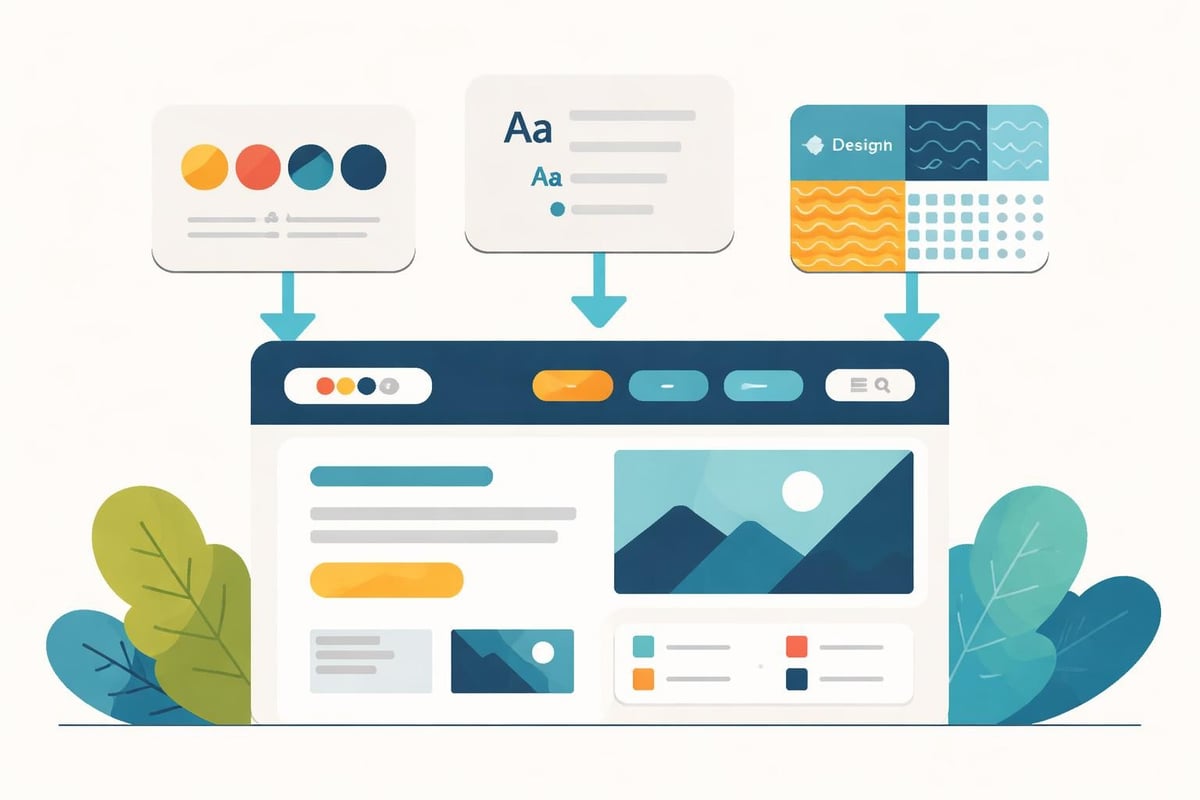
Your visual identity includes far more than just a logo. It encompasses a complete system of design elements that work together to create recognition and emotional connection.
| Element | Purpose | Application |
|---|---|---|
| Logo | Primary identifier | Headers, favicons, email signatures |
| Color Palette | Emotional association | Buttons, backgrounds, accents |
| Typography | Readability and personality | Headings, body text, CTAs |
| Imagery Style | Visual storytelling | Photos, illustrations, icons |
| Design Patterns | Consistency | Spacing, shapes, layouts |
Professional visual identities that communicate trust and authority become increasingly important as businesses compete in saturated markets. When users can immediately recognize your brand across platforms, you've achieved visual consistency that drives results.
Brand Voice and Messaging
Your brand voice extends beyond visuals into how you communicate. This includes the tone, language, and messaging hierarchy that appears throughout your website.
A technology company might use concise, technical language, while a wellness brand may adopt warmer, more conversational tones. Whatever voice you choose, it must remain consistent across every page, headline, and call to action.
Translating Brand Strategy Into Web Design
The transition from brand guidelines to functional web design requires strategic thinking about user experience, technical implementation, and business goals. This process determines whether your website becomes a powerful conversion tool or just another forgettable online presence.
Strategic Layout and Information Architecture
Your website structure should reflect your brand hierarchy and customer journey. The most important brand messages deserve prominent placement, while supporting content follows logical paths that guide users toward conversion.
Navigation systems must balance comprehensive access to information with simplicity. Modern users expect to find what they need within three clicks, and confusing navigation undermines even the strongest brand identity.
Key considerations for structure:
- Homepage establishes brand positioning within seconds
- Service or product pages communicate value propositions clearly
- About pages build emotional connection and credibility
- Contact information remains accessible from every page
- Mobile navigation prioritizes essential pathways
Design Systems for Scalability
As your business grows, your website must accommodate new content, services, and features without losing brand cohesion. User-centric design practices ensure that every addition feels like a natural extension of your brand rather than a disconnected afterthought.
A robust design system includes reusable components like buttons, cards, forms, and content blocks that maintain visual consistency while allowing flexibility. This approach accelerates development and ensures brand integrity across hundreds or thousands of pages.
User Experience as a Brand Differentiator
In 2026, user experience has become inseparable from brand perception. A beautiful website that loads slowly or confuses visitors damages your brand as surely as poor customer service. Every interaction either builds or erodes trust.
Performance and Technical Excellence
Website speed directly impacts how users perceive your professionalism and reliability. Research consistently shows that even one-second delays in page load time significantly decrease conversion rates and increase bounce rates.
Technical performance factors include:
- Page load speed: Aim for under 2 seconds on mobile networks
- Core Web Vitals: Google's quality metrics for user experience
- Mobile responsiveness: Seamless experiences across all device sizes
- Accessibility: Inclusive design that serves all users
- Security: HTTPS, data protection, and trust indicators
For businesses looking to launch quickly without sacrificing quality, modern web design services now use AI to accelerate development timelines while maintaining custom, high-performance results that align perfectly with your brand.
Visual Hierarchy and Content Flow
Strategic use of size, color, contrast, and spacing directs user attention exactly where you want it. Your most important brand messages and conversion points should stand out immediately, while supporting content creates depth without distraction.
Effective visual hierarchy considers:
- Headlines that communicate key benefits within seconds
- Subheadings that break content into scannable sections
- Strategic use of whitespace to reduce cognitive load
- High-contrast CTAs that guide users toward action
- Image placement that supports rather than competes with content

Building Trust Through Design Consistency
Trust is the currency of online business, and brand consistency builds user confidence more effectively than any single design element. When visitors encounter the same visual language, messaging style, and quality standards across your entire digital presence, they perceive your business as established and reliable.
Cross-Platform Coherence
Your website doesn't exist in isolation. Users may discover you through social media, find you in search results, receive your emails, or interact with your content on third-party platforms. Each touchpoint must reinforce the same brand identity.
This requires coordinated design across:
- Website and landing pages
- Social media profiles and posts
- Email marketing templates
- Digital advertising creative
- Documentation and resources
- Mobile applications if applicable
Businesses that understand how AI and personalization enhance web branding strategies can create tailored experiences that maintain brand consistency while adapting to individual user preferences and behaviors.
Establishing Design Standards
Comprehensive branding best practices include documented guidelines that ensure everyone creating digital assets follows the same standards. These guidelines prevent brand dilution and maintain quality as teams grow.
| Guideline Type | What It Covers | Why It Matters |
|---|---|---|
| Logo Usage | Size, spacing, variations | Prevents distortion and misuse |
| Color Specifications | Hex codes, RGB, CMYK | Ensures accurate reproduction |
| Typography Rules | Fonts, sizes, line height | Maintains readability and style |
| Image Guidelines | Style, quality, subjects | Creates visual coherence |
| Voice and Tone | Language, messaging | Ensures communication consistency |
Conversion Optimization Through Branded Design
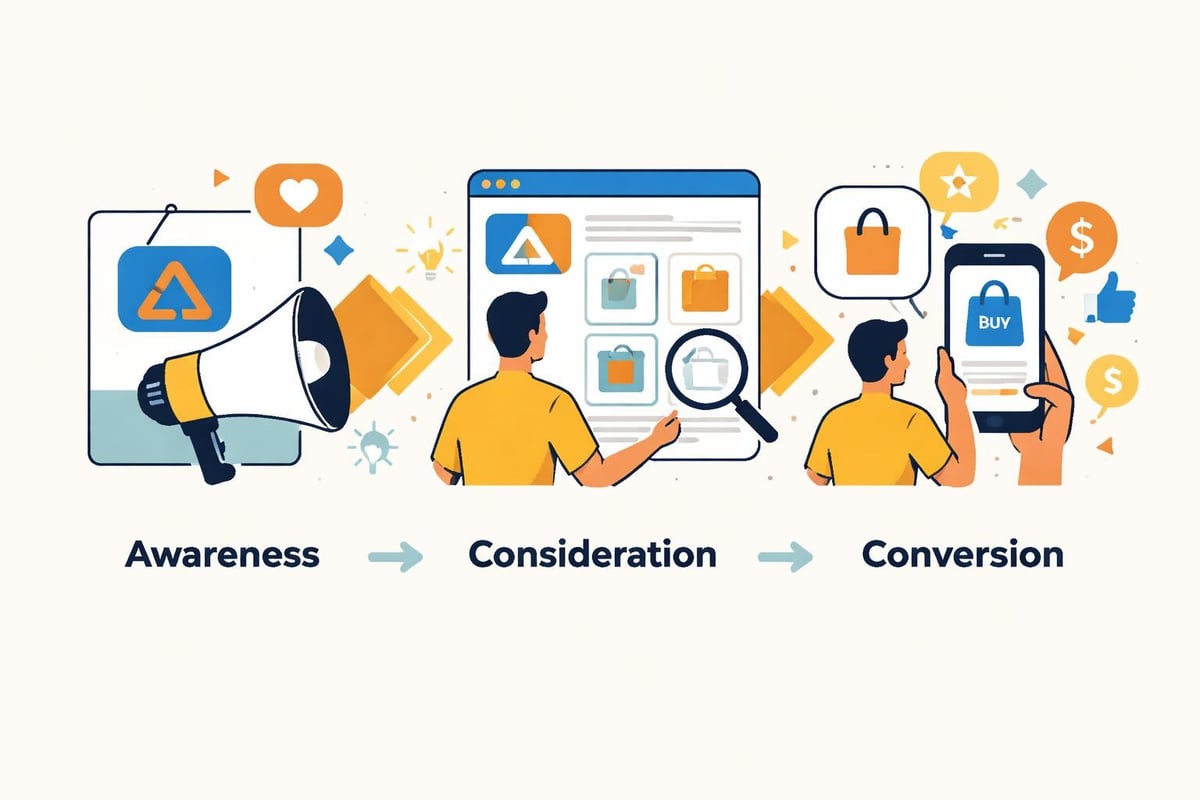
Beautiful design means nothing if it doesn't drive business results. The most effective branding and web design strategies prioritize conversion optimization while maintaining aesthetic excellence and brand integrity.
Strategic Call-to-Action Design
Your CTAs represent critical conversion points where branding and web design must work in perfect harmony. These elements should be instantly recognizable as belonging to your brand while standing out enough to capture attention and drive action.
Effective CTA strategies include:
- Color psychology: Using brand colors that create urgency or trust
- Positioning: Placing conversion opportunities at natural decision points
- Copy alignment: Matching your brand voice while being action-oriented
- Visual distinction: Making buttons clearly clickable and important
- Progressive engagement: Offering multiple conversion paths for different readiness levels
Landing Page Optimization
Dedicated landing pages for specific campaigns or audiences allow you to tailor messaging while maintaining overall brand consistency. These pages should feel unmistakably like your brand while focusing entirely on a single conversion goal.
High-performing landing pages balance:
- Strong, benefit-focused headlines that align with brand positioning
- Social proof elements styled to match your brand aesthetic
- Forms designed for minimum friction and maximum trust
- Relevant imagery that reinforces brand values and message
- Clear value propositions that differentiate your offering
Organizations focused on AI visibility and search optimization recognize that landing pages must now satisfy both human visitors and AI search engines, requiring strategic integration of branding elements with technical optimization.
Modern Web Design Trends That Enhance Branding
Staying current with design trends helps your brand feel relevant and forward-thinking, but not every trend serves every brand. The key is selecting approaches that amplify your brand identity rather than dilute it with generic styling.
Minimalism and Focused Design
The trend toward cleaner, more focused designs supports stronger branding by removing distractions and highlighting core brand elements. This approach prioritizes whitespace, purposeful color use, and strategic typography to create memorable experiences.
Benefits of minimal design include:
- Faster load times that improve user experience
- Enhanced focus on key brand messages and CTAs
- Better mobile experiences with simplified interfaces
- Timeless aesthetic that ages well
- Reduced cognitive load for visitors
Interactive and Personalized Experiences
Prioritizing user experience and interface design means creating websites that respond to user behavior and preferences. Interactive elements, when aligned with your brand personality, can significantly increase engagement and memorability.
Modern personalization options include:
- Dynamic content based on user behavior or location
- Interactive product configurators or calculators
- Chatbots that reflect your brand voice
- Progressive content reveals as users scroll
- Customizable dashboard experiences for returning users
Accessibility as Brand Value
In 2026, accessibility is both a legal requirement and a brand opportunity. Companies that prioritize inclusive design demonstrate values that resonate with broader audiences while expanding their potential customer base.
Accessible design practices that strengthen branding:
- High-contrast color schemes that maintain brand aesthetics
- Clear typography hierarchies that aid comprehension
- Alternative text for images that reinforces brand messaging
- Keyboard navigation that follows logical brand structure
- Screen reader optimization that communicates brand value
Measuring the Impact of Branding and Web Design
Understanding how your integrated branding and web design efforts perform requires tracking both quantitative metrics and qualitative feedback. This data informs ongoing optimization and proves ROI to stakeholders.
Key Performance Indicators
Different metrics reveal different aspects of success. A comprehensive measurement strategy combines business outcomes with user behavior insights.
Business metrics:
- Conversion rate from various traffic sources
- Average order value or lead quality
- Customer acquisition cost
- Return on ad spend
- Revenue per visitor
User experience metrics:
- Bounce rate and time on site
- Pages per session
- Core Web Vitals scores
- Mobile vs desktop performance
- Navigation completion rates
Qualitative Brand Perception
Numbers tell part of the story, but understanding how users perceive your brand requires direct feedback. User testing, surveys, and customer interviews reveal whether your design successfully communicates intended brand values.
Methods for gathering qualitative insights:
- Heat mapping and session recording analysis
- User testing with target audience members
- Customer surveys about brand perception
- Social listening for brand mentions and sentiment
- Competitive analysis of industry standards
Effective web design principles emphasize the importance of continuous testing and refinement based on both data and user feedback.
Implementation Strategy for Unified Branding and Web Design
Successfully implementing branding and web design requires structured processes that maintain quality while meeting deadlines and budgets. A clear strategy prevents costly revisions and ensures all stakeholders align on vision and execution.
The Discovery and Planning Phase
Before any design work begins, thorough discovery establishes the foundation for all decisions. This phase clarifies brand positioning, target audiences, competitive landscape, and business objectives.
Critical discovery activities:
- Brand audit: Evaluate existing brand assets and perception
- Competitor analysis: Identify opportunities for differentiation
- Audience research: Understand user needs, behaviors, and preferences
- Content inventory: Catalog existing content and identify gaps
- Technical requirements: Define functionality and integration needs
- Success metrics: Establish measurable goals for the project
Design and Development Workflow
An efficient workflow balances creative exploration with practical constraints. The best results come from iterative processes that incorporate feedback early and often.
| Phase | Activities | Key Deliverables |
|---|---|---|
| Wireframing | Structure and layout planning | Low-fidelity mockups |
| Visual Design | Brand application and aesthetics | High-fidelity designs |
| Prototyping | Interactive functionality testing | Clickable prototypes |
| Development | Technical implementation | Functional website |
| Testing | Quality assurance and optimization | Launch-ready product |
| Launch | Deployment and monitoring | Live website |
Post-Launch Optimization
Launch is just the beginning of your website's lifecycle. Ongoing optimization based on real user data ensures your branding and web design continue delivering results as markets and technologies evolve.
Continuous improvement activities include:
- A/B testing of design elements and messaging
- Regular content updates that maintain brand voice
- Technical performance monitoring and optimization
- User feedback collection and implementation
- Analytics review and strategic adjustments
Understanding how branding and web design work together as an ongoing process rather than a one-time project leads to sustained competitive advantage.
Future-Proofing Your Digital Brand Presence
The digital landscape continues evolving at an accelerating pace. Websites and brands that thrive in 2026 and beyond are built with flexibility and adaptability at their core, allowing them to embrace new technologies and user behaviors without losing their essential identity.
Preparing for AI-Driven Search
As AI-powered search platforms gain prominence, your website must serve both human visitors and AI systems that extract and summarize information. This requires structured content, clear brand messaging, and technical optimization that helps AI understand and accurately represent your business.
Strategic approaches include:
- Schema markup that defines brand entities and relationships
- Clear, authoritative content that AI can confidently cite
- Consistent NAP (Name, Address, Phone) information across platforms
- Strong brand signals through linked mentions and citations
- Technical excellence that builds algorithmic trust
Businesses investing in comprehensive AI optimization strategies position themselves for visibility in the next generation of search experiences.
Building Flexible Design Systems
Your design system should accommodate growth and change without requiring complete rebuilds. Modular components, clear documentation, and scalable architecture allow your brand to expand while maintaining consistency.
Continuous Brand Evolution
The strongest brands evolve gradually over time, refining their visual identity and messaging while maintaining recognition. Your website should support this evolution through flexible design systems that can adapt to refreshed branding without starting from scratch.
Planning for evolution means:
- Version control for brand assets and guidelines
- Documentation of design decisions and rationale
- Flexible content management systems
- Scalable hosting and technical infrastructure
- Regular audits to identify improvement opportunities
Strategic branding and web design create the foundation for sustainable business growth in the digital age. By aligning visual identity, user experience, and technical excellence, businesses build trust and recognition that translates directly to customer acquisition and retention. Whether you're launching a new brand or refreshing an established presence, Creotivity combines AI-powered efficiency with strategic design expertise to create websites that rank highly on both traditional and AI search engines while perfectly expressing your unique brand identity.