
Build Website with AI: 2026 Guide to Smart Web Design
The digital landscape has transformed dramatically with artificial intelligence revolutionizing how businesses create their online presence. To build website with ai is no longer a futuristic concept but a practical reality that dramatically reduces development time, costs, and technical barriers. Modern AI tools enable anyone from solo entrepreneurs to enterprise teams to create professional, high-performing websites in days rather than months, fundamentally changing the economics and accessibility of web development.
The AI Website Building Revolution
The ability to build website with ai represents a fundamental shift in web development methodology. Traditional website creation required extensive coding knowledge, design expertise, and significant time investment. Today's AI-powered platforms compress this timeline by automating repetitive tasks, generating code, suggesting design elements, and even optimizing content for search engines.
AI website builders operate on sophisticated machine learning models trained on millions of websites. These systems understand design patterns, user experience principles, and conversion optimization strategies. When you provide basic information about your business, target audience, and goals, the AI generates a functional website structure complete with layouts, navigation, and content suggestions.
The technology has matured significantly since early iterations. Modern AI tools don't just create generic templates-they analyze your industry, competitors, and target market to produce customized designs that align with best practices specific to your niche.
How AI Transforms Web Development Speed
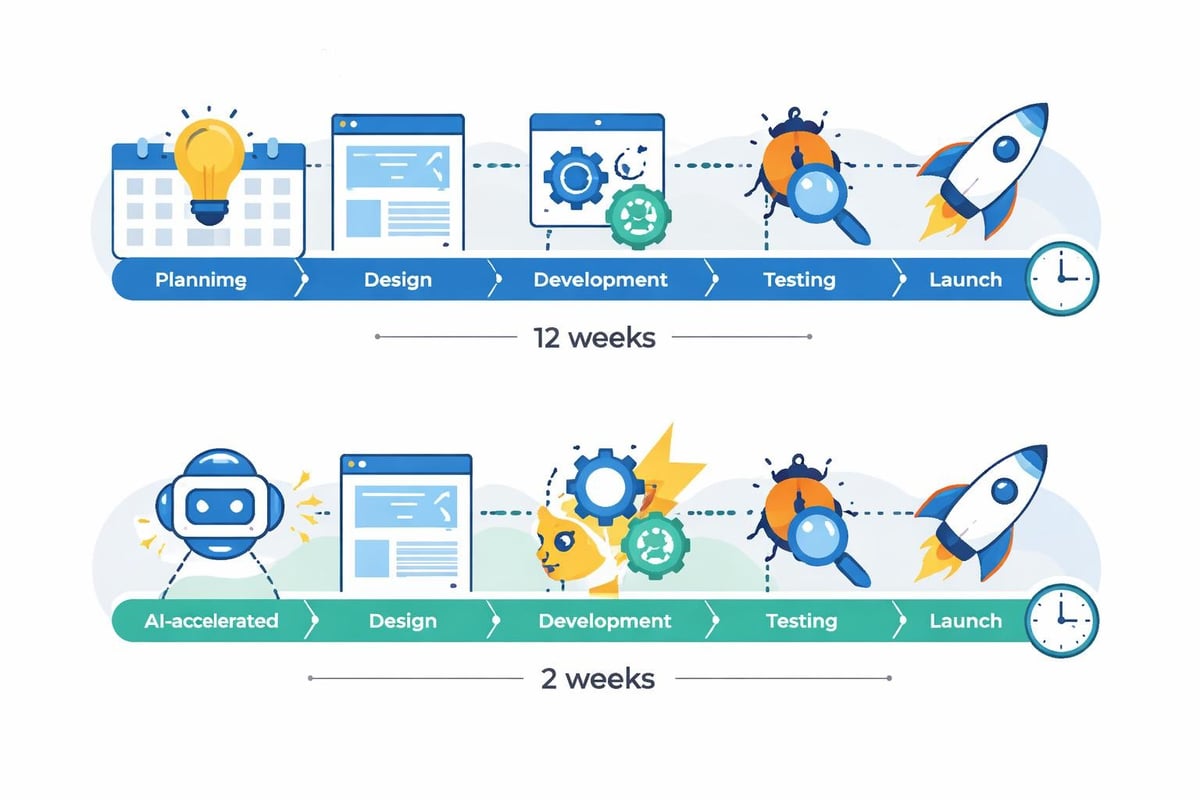
Speed represents one of the most compelling advantages when you build website with ai. Traditional development cycles often span 8-12 weeks for even basic sites. AI reduces this to hours or days by handling numerous parallel processes simultaneously.
Key Time-Saving Functions:
- Automated layout generation based on content type
- Instant responsive design across all device sizes
- Pre-built component libraries optimized for conversions
- Automated image optimization and compression
- Built-in accessibility compliance checking
- Real-time preview and editing capabilities
Professional agencies like Creotivity's web design team leverage AI to accelerate coding and structural setup, launching custom websites in weeks rather than months while maintaining quality standards. This efficiency allows businesses to enter markets faster and iterate based on real user feedback.
Choosing the Right AI Website Builder
The marketplace offers dozens of platforms to build website with ai, each with distinct capabilities and target audiences. Understanding these differences helps you select the tool that matches your technical skills, budget, and long-term goals.
| Platform Type | Best For | Technical Level Required | Customization Depth |
|---|---|---|---|
| Fully Automated | Quick launches, simple sites | None | Limited |
| AI-Assisted Builders | Business websites, portfolios | Beginner | Moderate |
| AI Development Tools | Complex applications | Intermediate-Advanced | Extensive |
| Code Generation AI | Custom solutions | Advanced | Complete |
Evaluating AI Builder Capabilities
Wix's AI website builder has pioneered conversational interfaces where you describe your business and the AI generates complete site structures. Similarly, platforms like Webflow's AI Site Builder create functional websites from natural language prompts, merging design and development workflows.
When evaluating options to build website with ai, consider these critical factors:
-
Design Quality and Flexibility - Can the AI generate visually appealing designs that match your brand identity? How much manual adjustment is required?
-
SEO and Performance Optimization - Does the platform automatically implement technical SEO best practices, fast loading speeds, and mobile optimization?
-
Content Generation Capabilities - Can the AI write compelling copy, or does it only structure pages you must populate manually?
-
Integration Ecosystem - Does the builder connect with your existing tools for email marketing, CRM, analytics, and e-commerce?
-
Scalability and Growth Support - Will the platform accommodate your website as traffic grows and features expand?
The most sophisticated platforms combine multiple AI capabilities. Microsoft Copilot's website building features demonstrate how AI can assist with HTML generation, CSS styling, and debugging across the entire development stack.
Building Your First AI-Powered Website
The practical process to build website with ai follows a structured methodology that balances automation with strategic human input. While AI handles technical execution, your strategic direction determines success.
Step 1: Define Your Website Objectives
Before engaging any AI tool, clarify your website's primary purpose. Are you generating leads, selling products, building authority, or providing information? This clarity guides the AI toward appropriate templates, layouts, and features.
Essential Planning Elements:
- Target audience demographics and preferences
- Primary conversion goals (form submissions, purchases, bookings)
- Key content pillars and topics
- Brand identity elements (colors, fonts, imagery style)
- Required functionality (e-commerce, booking systems, membership areas)
Step 2: Provide Context to the AI
Modern AI builders use conversational interfaces or detailed questionnaires to gather information. The more specific your input, the better your initial output. Describe your business, industry position, competitors, unique value proposition, and target customer pain points.
Advanced users can reference existing websites they admire, even transforming those sites into editable templates using tools like MagicPath's AI-powered conversion features. This approach provides concrete examples the AI can analyze and adapt.
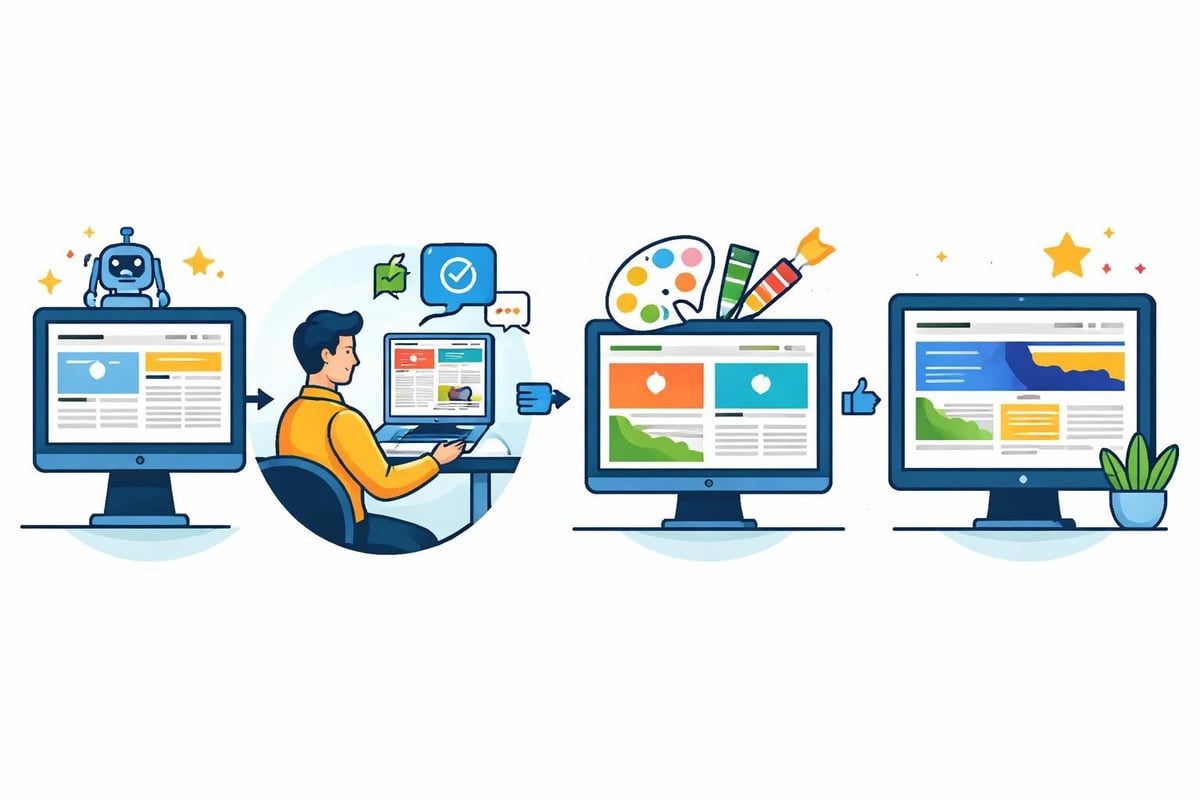
Step 3: Review and Refine AI Outputs
The AI generates your initial website structure, typically including:
- Homepage with hero section and key messaging
- About/Services pages with placeholder content
- Contact forms and information
- Basic navigation structure
- Responsive layouts for mobile devices
Review each element critically. While AI excels at structure and best practices, it cannot fully understand your unique brand voice or strategic positioning without iteration. Refine messaging, adjust layouts, and customize visual elements to align with your brand identity.
Optimizing AI-Generated Websites for Search Visibility
Creating a website represents only the first step. To build website with ai that actually drives business results requires optimization for search engines and user experience. AI tools increasingly incorporate SEO automation, but understanding optimization principles ensures maximum effectiveness.
Technical SEO Fundamentals
AI platforms handle many technical requirements automatically, but verification ensures nothing gets overlooked. Essential technical elements include:
- Clean URL structures with descriptive paths
- Proper heading hierarchy (H1, H2, H3 tags)
- Meta titles and descriptions for all pages
- Mobile-responsive design across devices
- Fast page load speeds (under 3 seconds)
- SSL security certificates
- XML sitemap generation
- Structured data markup for rich results
Professional SEO services can audit AI-generated sites to identify technical gaps and ensure comprehensive optimization before launch.
Content Optimization Strategies
While AI can generate content, human expertise remains critical for quality and strategic alignment. AI-written content should serve as a starting point requiring substantial editing, fact-checking, and brand voice alignment.
Content Optimization Checklist:
- Incorporate target keywords naturally (1-2% density)
- Write compelling meta descriptions under 155 characters
- Use descriptive alt text for all images
- Create clear internal linking structures
- Develop comprehensive content addressing user questions
- Update content regularly to maintain freshness
Research shows that AI-optimized websites can generate significantly more traffic when properly configured for answer engine optimization beyond traditional SEO.
The Future of AI in Website Development
The trajectory of AI website building points toward increasingly autonomous systems. Emerging platforms promise self-updating websites that generate and optimize content without human intervention, though such automation raises important questions about content quality and search engine policies.
Emerging AI Capabilities
When you build website with ai in 2026, you gain access to capabilities that didn't exist even two years ago. Current innovations include:
-
Dynamic Personalization - AI adjusts content, layouts, and offers based on individual visitor behavior and preferences in real-time.
-
Automated A/B Testing - Systems continuously test variations of headlines, images, and calls-to-action, automatically implementing winning combinations.
-
Predictive Analytics - AI forecasts which pages need updates, which content will perform best, and what features users will demand next.
-
Voice and Visual Search Optimization - Platforms optimize content for emerging search modalities beyond traditional text queries.
-
Cross-Platform Consistency - AI ensures your website, social media, and other digital properties maintain consistent branding and messaging.
Figma's AI Website Builder exemplifies this evolution, creating responsive, interactive websites from natural language descriptions while integrating design and development seamlessly.
Balancing Automation with Human Expertise
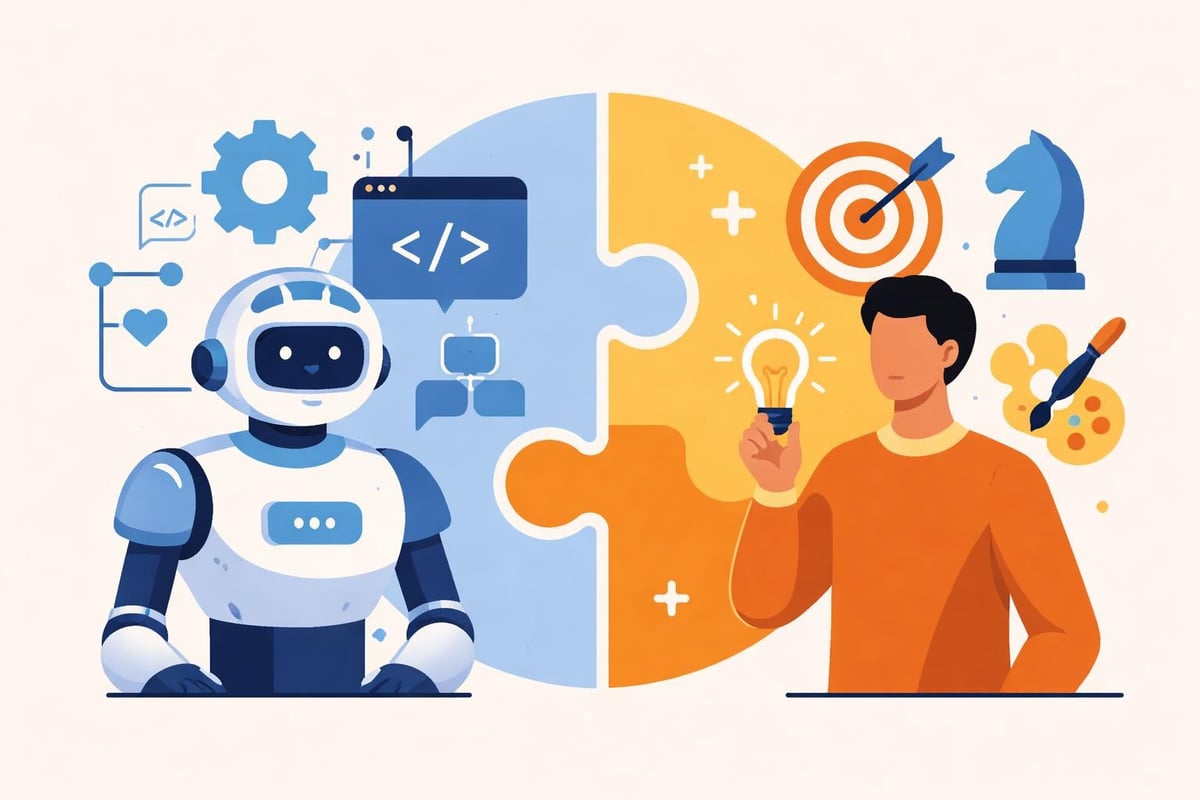
Despite advancing capabilities, successful websites require human strategic thinking. AI excels at execution, pattern recognition, and optimization, but struggles with nuanced brand positioning, emotional resonance, and creative differentiation.
The most effective approach combines AI efficiency with human expertise. Use AI to handle technical implementation, generate initial drafts, and automate repetitive tasks. Apply human judgment to strategy, messaging, brand voice, and creative decisions that differentiate your business.
| Task Category | AI Role | Human Role |
|---|---|---|
| Code Writing | Generate clean, functional code | Review for custom requirements |
| Design Layouts | Create responsive templates | Refine brand alignment |
| Content Creation | Draft initial copy | Edit for voice and accuracy |
| SEO Implementation | Apply technical optimization | Develop keyword strategy |
| Performance Testing | Monitor metrics automatically | Interpret and act on insights |
Cost Considerations When Building with AI
Financial implications represent a critical factor when deciding to build website with ai. AI-powered solutions have dramatically reduced website development costs, making professional online presences accessible to businesses of all sizes.
Pricing Models Across Platforms
AI website builders employ various pricing structures:
- Free Tiers - Basic features with platform branding, suitable for testing or simple personal sites
- Monthly Subscriptions - $10-50/month for small business sites with custom domains
- Premium Plans - $50-300/month including advanced features, e-commerce, and higher traffic limits
- Enterprise Solutions - Custom pricing for large organizations requiring dedicated support and customization
Traditional custom development typically costs $5,000-50,000 depending on complexity. AI tools reduce this to hundreds or low thousands for comparable functionality, though highly specialized requirements still benefit from custom development.
Total Cost of Ownership
Beyond initial setup, consider ongoing costs:
- Hosting and Domain - $50-300 annually for most businesses
- Premium Plugins/Extensions - $0-500 annually depending on features
- Maintenance and Updates - Minimal with AI platforms versus $1,000+ annually for custom sites
- Content Updates - Largely internal with AI tools versus outsourced costs
- Marketing and SEO - Variable based on competition and goals
The economic advantage of AI platforms becomes most apparent over time. Reduced maintenance requirements and built-in optimization tools lower total cost of ownership significantly.
Measuring Success of AI-Built Websites
Creating a website represents a means to business goals, not an end itself. To build website with ai effectively requires establishing success metrics and continuously optimizing performance.
Key Performance Indicators
Track these essential metrics to evaluate website effectiveness:
Traffic Metrics:
- Total visitors and page views
- Traffic sources (organic search, social, direct, referral)
- New versus returning visitor ratio
- Geographic distribution of visitors
Engagement Metrics:
- Average session duration
- Pages per session
- Bounce rate by page type
- Scroll depth on key pages
Conversion Metrics:
- Form submission rates
- E-commerce conversion rates
- Click-through rates on calls-to-action
- Cost per acquisition
AI platforms increasingly integrate analytics directly into their interfaces, providing automated insights and optimization recommendations based on performance data.
Continuous Optimization Practices
Websites require ongoing refinement to maintain effectiveness. Implement these practices:
- Monthly Performance Reviews - Analyze metrics to identify improvement opportunities
- Quarterly Content Updates - Refresh existing pages and add new content addressing customer questions
- Regular Speed Testing - Ensure page load times remain under 3 seconds across devices
- Security Updates - Apply platform updates promptly to maintain security and functionality
- User Feedback Integration - Collect and act on customer feedback about website experience
The combination of AI automation and strategic human oversight creates websites that continuously improve over time, adapting to changing user needs and market conditions.
AI Website Building Best Practices
Success when you build website with ai requires following proven methodologies that maximize both efficiency and effectiveness. These practices apply regardless of which specific platform you choose.
Start with Strategy, Not Tools
The biggest mistake is launching an AI builder before defining your website's purpose and success criteria. Spend time developing:
- Clear value proposition statements
- Target audience personas
- Content strategy aligned with customer journey stages
- Conversion funnel mapping
- Competitive differentiation positioning
This strategic foundation ensures AI tools receive the right inputs to generate effective outputs.
Maintain Brand Consistency
AI excels at creating functional websites but may generate designs that feel generic. Actively customize visual elements, messaging tone, and user experience to reflect your unique brand identity. This includes:
- Custom color schemes matching brand guidelines
- Consistent typography across all pages
- Brand-aligned imagery and graphics
- Voice and tone guidelines for all copy
- Unique value propositions prominently featured
Agencies specializing in branding services can develop comprehensive visual identities that inform AI customization, ensuring your website stands out in competitive markets.
Prioritize Mobile Experience
Over 60% of web traffic now originates from mobile devices. When you build website with ai, verify that mobile experiences receive equal attention to desktop versions. Test navigation, form completion, and content readability on actual mobile devices, not just browser simulators.
Optimize for AI Search Engines
Traditional SEO focused exclusively on Google's traditional algorithm. In 2026, businesses must optimize for AI-driven search platforms including ChatGPT, Claude, Perplexity, and Google's AI Overviews. This requires structured content that directly answers questions and provides clear, factual information AI systems can easily parse and cite.
Specialized AI optimization services help ensure your website remains visible as search behavior evolves toward conversational AI interfaces.
Plan for Scalability
Your initial website represents a starting point, not a final destination. Choose AI platforms and architectures that accommodate growth:
- Support for adding new pages and sections easily
- E-commerce capabilities if future product sales are possible
- Membership or gated content features for lead nurturing
- Blog or content management for ongoing publishing
- Integration capabilities with evolving marketing tools
Building with scalability in mind prevents expensive migrations or rebuilds as your business expands.
The ability to build website with ai has democratized professional web presence, enabling businesses of all sizes to compete effectively online. By combining AI efficiency with strategic human expertise, you create websites that not only launch quickly but perform exceptionally in attracting and converting customers. Creotivity specializes in building modern websites optimized for both traditional search engines and emerging AI platforms, helping businesses establish powerful online presences that drive measurable results. Whether you're starting from scratch or upgrading an existing site, our team combines AI acceleration with expert strategy to deliver high-performing websites efficiently and cost-effectively.