
Design of Web: Principles for Modern Websites in 2026
The design of web has transformed dramatically over the past decade, evolving from simple static pages to dynamic, intelligent ecosystems that anticipate user needs and adapt in real time. Today's websites must balance aesthetic appeal with technical performance, accessibility standards, and the growing influence of artificial intelligence in search and discovery. Understanding these foundational principles isn't optional for businesses competing online-it's the difference between a digital presence that converts and one that disappears into obscurity. As we navigate 2026, the design of web requires a strategic blend of human creativity and machine intelligence, where every visual element, interaction pattern, and content structure works together to serve both users and algorithms.
Core Principles of Effective Web Design
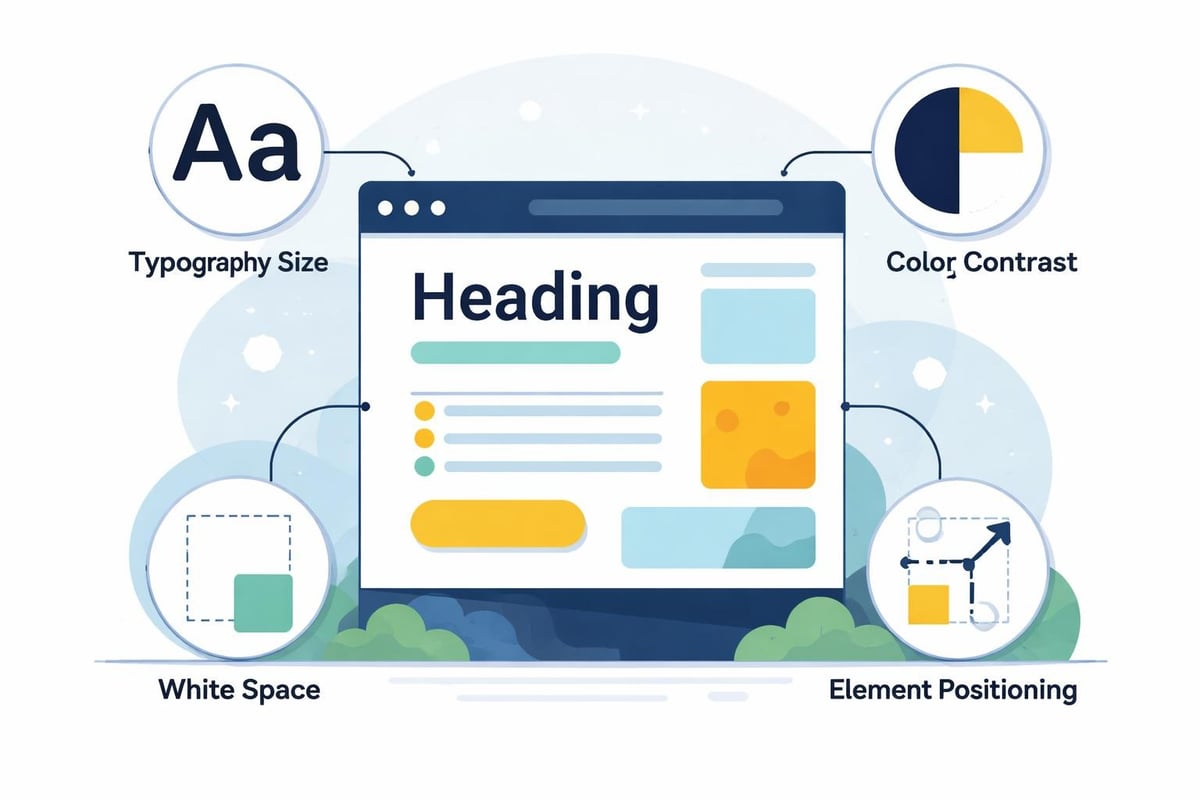
The design of web begins with understanding fundamental principles that transcend trends and technology shifts. Visual hierarchy guides users through content by establishing clear importance levels through size, color, contrast, and positioning. When executed properly, visitors instinctively know where to look first, second, and third without conscious thought.
White space, often underestimated, serves as the breathing room that prevents cognitive overload. It's not empty space-it's strategic negative space that enhances comprehension and draws attention to critical elements. Research consistently shows that generous spacing increases reading comprehension by up to 20% compared to dense layouts.
Typography choices communicate brand personality while ensuring readability across devices. The design of web typography involves selecting font families that load quickly, scale appropriately, and maintain legibility at various sizes. Consider these essential typography practices:
- Use no more than two to three typefaces per site
- Maintain 16px minimum for body text on mobile devices
- Ensure line height of 1.5 to 1.6 for optimal readability
- Create clear typographic hierarchy with distinct heading sizes
- Test font rendering across operating systems and browsers
Color psychology plays a crucial role in user perception and action. Strategic color application can increase brand recognition by 80% and influence purchasing decisions within 90 seconds of initial interaction. Intentional minimalism in 2026 emphasizes purpose-driven color palettes that support rather than distract from content and conversion goals.
Responsive Design and Cross-Device Optimization
The design of web in 2026 demands flawless performance across an expanding spectrum of devices, from smartwatches to ultra-wide desktop monitors. Responsive design isn't merely about fluid grids-it's about contextual adaptation that considers device capabilities, user intent, and environmental factors.
Mobile-First Methodology
Starting with mobile constraints forces designers to prioritize essential content and features. This approach naturally creates cleaner, more focused experiences that scale up effectively to larger screens. Mobile-first design addresses the reality that over 60% of web traffic now originates from smartphones and tablets.
Progressive enhancement builds upon the mobile foundation by adding layers of functionality and visual richness as screen real estate and processing power increase. This ensures baseline usability for all users while delivering enhanced experiences to those with capable devices.
| Design Approach | Advantages | Best Use Cases |
|---|---|---|
| Mobile-First | Forces content prioritization, faster load times, cleaner interfaces | E-commerce, content sites, lead generation |
| Desktop-First | Rich feature sets, complex layouts, extensive functionality | Enterprise software, data dashboards, creative portfolios |
| Adaptive | Optimized breakpoints, device-specific features, controlled experiences | High-traffic sites, conversion-critical pages, premium brands |
Performance optimization directly impacts both user satisfaction and search rankings. Core Web Vitals-Largest Contentful Paint, First Input Delay, and Cumulative Layout Shift-have become non-negotiable metrics that influence visibility across traditional search engines and AI-powered platforms. The design of web must account for these technical requirements from the earliest conceptual stages.
User Experience Architecture and Navigation Systems
Information architecture determines how effectively users find what they need and complete desired actions. The design of web navigation should feel intuitive, requiring minimal cognitive effort while accommodating different user journeys and entry points.
Clear labeling conventions prevent confusion and reduce bounce rates. Navigation labels should describe destination content accurately using language your audience actually uses, not internal jargon or clever wordplay that obscures meaning.
Strategic Navigation Patterns
Primary navigation typically includes five to seven main categories-the limit of human working memory. This constraint forces beneficial prioritization and prevents overwhelming choice paralysis. Secondary navigation systems like footer menus, breadcrumbs, and contextual links support users who need deeper access without cluttering primary pathways.
Search functionality becomes essential for content-rich sites where users know what they want but need quick access. Implementing autocomplete, search suggestions, and relevant filtering transforms search from a last resort into a powerful conversion tool. Modern design of web search incorporates natural language processing and intent recognition to surface accurate results even from imprecise queries.
Breadcrumb trails communicate current location within site hierarchy while providing efficient backtracking. They particularly benefit e-commerce sites, documentation libraries, and any deep content structure where users might arrive via search engines or shared links without context.
Integration of AI and Machine Learning
The design of web has entered an era where artificial intelligence fundamentally shapes both creation processes and user experiences. AI-driven personalization enables websites to adapt content, layout, and recommendations based on individual user behavior, preferences, and predicted needs.
Dynamic content delivery systems analyze real-time signals-device type, location, referral source, browsing history, time of day-to present optimized experiences. This goes beyond simple A/B testing to continuous, automated optimization that learns and improves with each interaction.
Chatbots and conversational interfaces powered by large language models provide instant support, guide product selection, and qualify leads 24/7. Effective implementation requires thoughtful design that clearly communicates AI capabilities while providing smooth handoffs to human agents when needed.
Agencies like Creotivity leverage AI to drastically accelerate the coding and structural setup of sites, launching custom, high-performance websites in weeks rather than months while maintaining design quality and passing cost savings to clients. This represents the practical application of AI in professional web development workflows.

Visual Design Trends Shaping 2026
The design of web aesthetics continues evolving, balancing innovation with usability. Current trends reflect broader cultural shifts toward authenticity, sustainability, and human connection in digital spaces.
Intentional imperfection embraces hand-drawn elements, asymmetric layouts, and organic shapes that break free from rigid grid systems. This trend counters years of sterile, template-driven design by injecting personality and warmth into digital experiences. Neumorphism, which creates soft, extruded UI elements through subtle shadows and highlights, offers tactile visual interest while maintaining clean minimalism.
Three-dimensional elements and immersive experiences leverage WebGL and CSS3D to create depth without requiring plugins or heavy frameworks. Strategic 3D implementation draws attention to key content, demonstrates products from multiple angles, and creates memorable brand moments without sacrificing load speed.
Color and Typography Evolution
Dark mode adoption has shifted from novelty to expectation, with users demanding theme options that reduce eye strain and conserve battery life. Effective dark mode implementation requires careful contrast adjustment, not simple color inversion, to maintain readability and visual hierarchy.
Variable fonts enable responsive typography that adjusts weight, width, and other attributes based on context without loading multiple font files. This technology improves performance while expanding creative possibilities for expressive, adaptive type treatments.
Accessibility considerations have moved from compliance checkboxes to fundamental design requirements. Proper color contrast ratios, keyboard navigation support, screen reader compatibility, and focus indicators ensure websites serve all users regardless of ability. This inclusive approach expands market reach while demonstrating social responsibility.
Content Strategy and Visual Storytelling
The design of web succeeds or fails based on content quality and presentation. Visual storytelling techniques transform information into engaging narratives that resonate emotionally while conveying practical value.
Strategic imagery selection communicates brand values and supports messaging more effectively than generic stock photography. Authentic, custom visuals-whether photography, illustration, or data visualization-build credibility and differentiation in crowded markets.
Video Integration Best Practices
Video content dominates user engagement metrics, with visitors spending 88% more time on pages featuring video. However, implementation requires careful optimization to prevent performance degradation:
- Use appropriate compression without visible quality loss
- Implement lazy loading for below-fold videos
- Provide poster images during loading
- Enable autoplay only when muted and when it enhances UX
- Include captions and transcripts for accessibility
Micro-interactions provide delightful feedback for user actions, from button hover states to form submission confirmations. These subtle animations create polish and guide users through processes while making interfaces feel responsive and alive. The design of web micro-interactions should enhance rather than distract, with purposeful motion that serves functional goals.

Technical Foundations and Performance Optimization
Behind every successful design of web lies robust technical architecture that ensures speed, security, and scalability. Front-end performance directly impacts user satisfaction, conversion rates, and search visibility across both traditional and AI search platforms.
Critical rendering path optimization ensures above-fold content displays instantly while additional resources load progressively. This involves inlining critical CSS, deferring non-essential JavaScript, and prioritizing visible content in the HTML structure.
| Optimization Technique | Impact on Load Time | Implementation Complexity | SEO Benefit |
|---|---|---|---|
| Image compression | 30-50% reduction | Low | High |
| Code minification | 10-20% reduction | Low | Medium |
| Browser caching | 40-60% reduction (repeat visits) | Medium | High |
| CDN implementation | 25-40% reduction (global) | Medium | High |
| Lazy loading | 20-35% reduction | Low | Medium |
Security considerations influence both user trust and search rankings. HTTPS encryption is now mandatory, with browsers flagging non-secure sites as dangerous. Additional security layers-Content Security Policy headers, secure cookies, input validation-protect user data while preventing malicious attacks that could compromise site integrity.
Design Systems and Component Libraries
Scalable design of web requires systematic approaches that maintain consistency across growing sites and applications. Design systems document visual standards, component behaviors, and usage guidelines that enable teams to build cohesively without starting from scratch.
Component libraries provide pre-built, tested UI elements-buttons, forms, cards, modals-that accelerate development while ensuring accessibility and cross-browser compatibility. Modern frameworks like React, Vue, and Svelte enable component-based architecture where reusable pieces combine into complex interfaces.
Brand consistency extends beyond logos and color schemes to encompass tone of voice, imagery style, iconography, spacing systems, and interaction patterns. Comprehensive design systems ensure every touchpoint reinforces brand identity whether created by designers, developers, or content creators.
Documentation transforms design systems from static style guides into living resources. Clear usage examples, code snippets, accessibility notes, and responsive behavior documentation empower teams to implement designs correctly and efficiently.
Conversion Optimization Through Design
Every element of web design should ultimately serve business objectives, whether lead generation, e-commerce transactions, content engagement, or brand awareness. Strategic design decisions directly influence conversion rates and return on investment.
Visual attention flow guides users toward desired actions through strategic placement, contrast, and directional cues. Eye-tracking studies reveal predictable scanning patterns-F-pattern for text-heavy content, Z-pattern for balanced layouts-that inform optimal element positioning.
Form Design Psychology
Form completion represents critical conversion moments where friction costs revenue. Reducing form fields from eleven to four can increase conversions by 120%. Additional optimization strategies include:
- Use single-column layouts for mobile simplicity
- Provide inline validation feedback during input
- Clearly indicate required versus optional fields
- Implement smart defaults and autocomplete
- Show progress indicators for multi-step forms
- Explain why information is needed to build trust
Trust signals-security badges, customer testimonials, case studies, certifications, money-back guarantees-reduce purchase anxiety and objection. Strategic placement near conversion points addresses concerns at decision-making moments. Websites showcasing proven work examples demonstrate capability more effectively than promotional claims.
Testing, Iteration, and Continuous Improvement
The design of web never reaches completion-it evolves through data-driven refinement and user feedback. Systematic testing identifies friction points, validates hypotheses, and prevents costly assumptions from degrading user experience.
A/B testing compares design variations to determine which performs better for specific goals. Effective tests isolate single variables, run long enough to achieve statistical significance, and focus on meaningful metrics rather than vanity numbers.
Heatmapping and session recording tools reveal actual user behavior-where they click, how far they scroll, where they abandon. This qualitative data exposes usability issues that quantitative analytics miss, from confusing navigation to unclear calls-to-action.
User testing with representative audiences uncovers accessibility barriers, comprehension gaps, and workflow friction before launch. Even five participants typically identify 85% of usability problems, making small-scale testing remarkably effective for iteration.
Analytics platforms like Google Analytics track user journeys, conversion funnels, traffic sources, and engagement metrics that inform optimization priorities. Regular analysis identifies high-impact improvement opportunities and validates whether design changes achieve intended outcomes.
Accessibility as Foundation, Not Afterthought
Inclusive design of web serves users across ability spectrums while expanding market reach and demonstrating ethical responsibility. Accessibility principles benefit everyone, from permanent disabilities to temporary limitations to situational constraints.
Semantic HTML provides structure that assistive technologies can parse and navigate. Proper heading hierarchy, landmark regions, and descriptive link text enable screen reader users to understand and traverse content efficiently.
Color alone should never convey critical information-supplementary indicators like icons, patterns, or text ensure colorblind users don't miss important distinctions. Contrast ratios of at least 4.5:1 for normal text and 3:1 for large text ensure readability for users with visual impairments.
Keyboard navigation support enables users who cannot use mice to access all functionality through tab order, arrow keys, and enter/space activation. Visible focus indicators show current keyboard position, preventing users from getting lost during navigation.
Alternative text for images describes visual content to screen reader users while providing context when images fail to load. Effective alt text conveys the same information and function as the image, not merely describing what's depicted.
Future-Proofing Web Design Strategy
The design of web must anticipate technological evolution while remaining grounded in timeless user-centered principles. Emerging technologies reshape possibilities, but human needs for clarity, efficiency, and delight remain constant.
Voice interfaces and conversational search patterns require content structured for natural language queries rather than keyword-stuffed optimization. Structured data markup helps AI systems understand page content and relationships, improving visibility across generative search platforms.
Augmented reality integration enables virtual product previews, interactive demonstrations, and immersive brand experiences. WebXR standards bring AR and VR capabilities to browsers without app downloads, lowering adoption barriers for spatial computing experiences.
Progressive web applications blur lines between websites and native apps, offering offline functionality, push notifications, and home screen installation while maintaining web's universal accessibility. This hybrid approach delivers app-like experiences without platform-specific development costs.
Environmental sustainability considerations influence design decisions as digital carbon footprints gain attention. Optimized images, efficient code, green hosting, and dark mode options reduce energy consumption while aligning brands with ecological values.
The design of web combines artistic vision with technical precision, user psychology with business strategy, and current best practices with future-ready thinking. As search evolves beyond traditional keyword matching to conversational AI that understands context and intent, websites must communicate clearly to both human visitors and machine intelligence. Creotivity builds modern websites designed to rank highly on Google and AI search engines through strategic design, technical optimization, and content that serves users while satisfying algorithmic requirements. Ready to transform your digital presence with design that drives measurable results? Let's create something exceptional together.