SEO Website Design: Build Sites That Rank in 2026
Modern websites must serve two masters: human visitors seeking seamless experiences and search algorithms determining visibility. SEO website design represents the strategic fusion of aesthetic appeal, functional architecture, and technical optimization that enables websites to rank competitively while delivering exceptional user experiences. As we navigate 2026, the convergence of traditional Google ranking factors and emerging AI search platforms demands a sophisticated approach to web development that prioritizes discoverability alongside design excellence.
The Foundation of SEO-Optimized Web Architecture
Building a website with search visibility requires foundational decisions about structure, navigation, and information hierarchy. These architectural choices determine how effectively search engines crawl, index, and rank your content.
Information Architecture That Drives Rankings
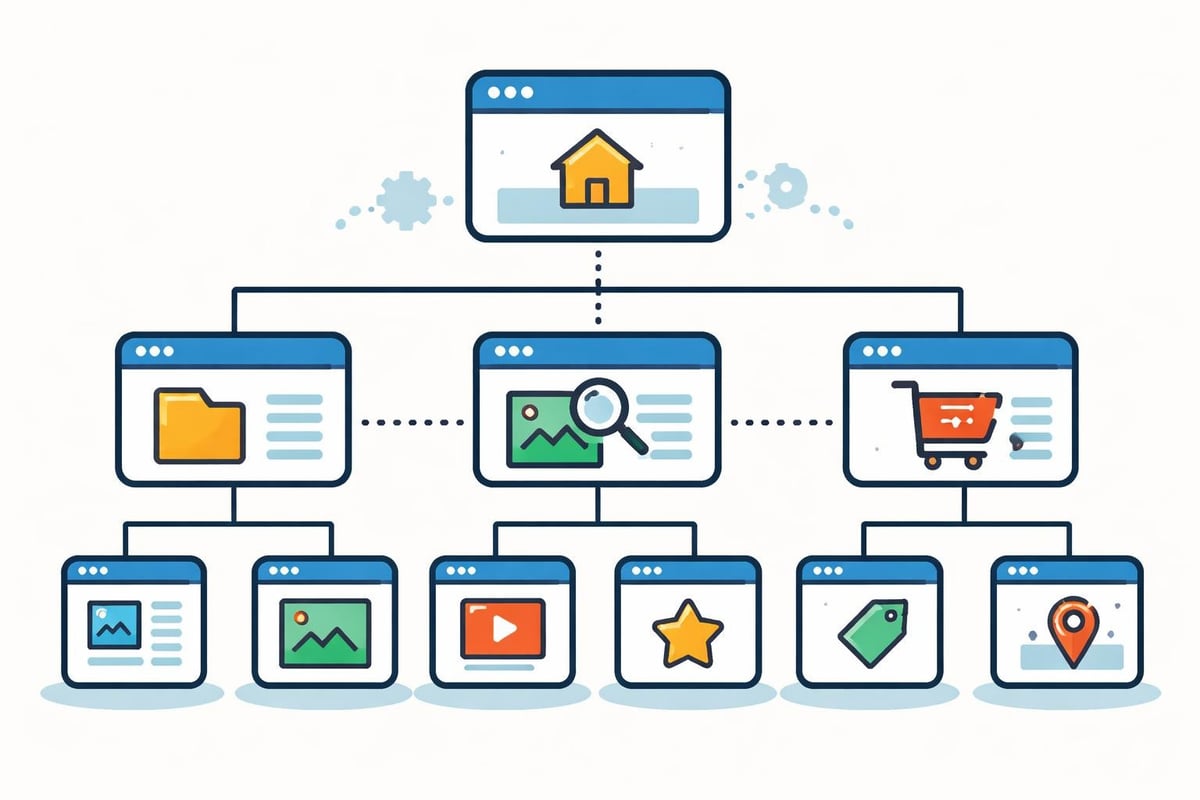
The organizational framework of your website directly impacts both user experience and search performance. A well-planned site architecture emphasizes discoverability through logical categorization and clear pathways between related content.
Key architectural principles include:
- Flat site structure limiting clicks from homepage to any page (ideally three clicks or fewer)
- Topic clusters organizing content around pillar pages and supporting articles
- Logical URL hierarchies reflecting content relationships
- XML sitemaps guiding search engine crawlers efficiently
Effective seo website design begins with mapping content relationships before visual design commences. This strategic planning prevents the common mistake of retrofitting SEO into completed designs, which often requires costly restructuring.
| Architectural Element | SEO Impact | User Benefit |
|---|---|---|
| Clear navigation hierarchy | Improves crawl efficiency | Reduces confusion, increases engagement |
| Internal linking structure | Distributes page authority | Helps discovery of related content |
| Breadcrumb navigation | Provides contextual signals | Clarifies location within site |
| Logical URL structure | Enhances relevance signals | Creates memorable, shareable links |
Mobile-First Design Imperatives
Google's mobile-first indexing makes responsive design non-negotiable for search visibility. The search engine primarily uses the mobile version of your content for indexing and ranking, making mobile optimization central to seo website design strategy.
Responsive frameworks must deliver identical content across devices while adapting layout, navigation, and interactive elements to screen constraints. Touch targets require adequate spacing, fonts need sufficient size without zooming, and horizontal scrolling must be eliminated.
Performance on mobile devices carries additional weight. Core Web Vitals-measuring loading performance, interactivity, and visual stability-directly influence rankings. Mobile users expect sub-three-second load times, and each additional second correlates with increased bounce rates and diminished conversions.
Technical SEO Elements Embedded in Design
Technical optimization intersects with design decisions at every level. Modern seo website design incorporates technical requirements during the design phase rather than applying them as afterthoughts.
Semantic HTML and Accessibility Standards
Search engines rely on HTML structure to understand content hierarchy and meaning. Proper semantic markup using heading tags (H1 through H6), article elements, navigation containers, and aside sections helps algorithms categorize and contextualize information.
Critical semantic elements include:
- Single H1 tag per page clearly stating primary topic
- Hierarchical heading structure guiding content organization
- Descriptive alt text for images serving accessibility and SEO
- Schema markup providing explicit context about content type
- ARIA labels enhancing accessibility for assistive technologies
Implementing semantic HTML and accessible components simultaneously improves search rankings and expands your audience to users requiring assistive technologies. Accessibility features like skip navigation links, keyboard navigation support, and sufficient color contrast serve SEO indirectly by improving engagement metrics.
The relationship between accessibility and SEO extends beyond code. Clear, readable content benefits both screen readers and search algorithms attempting to extract meaning from text. Descriptive link text helps users and algorithms understand destination content, while logical tab orders improve keyboard navigation and crawlability.
Page Speed Optimization Through Design Choices
Visual design decisions profoundly impact loading performance. Image-heavy designs, unoptimized media files, custom fonts, and excessive animation create performance bottlenecks that harm both user experience and search rankings.
Modern SEO-friendly web design practices emphasize efficiency alongside aesthetics:
- Next-generation image formats (WebP, AVIF) reducing file sizes by 30-50%
- Lazy loading deferring off-screen content until needed
- Critical CSS inlining above-the-fold styles for faster initial render
- Asynchronous loading of non-essential scripts preventing render blocking
- Content delivery networks distributing assets geographically
The visual design phase should establish performance budgets limiting total page weight, number of requests, and time to interactive metrics. Designers collaborating closely with developers ensure creative vision aligns with performance requirements rather than conflicting with them.
For businesses seeking accelerated development timelines without sacrificing quality, Web Design services leveraging AI can dramatically reduce coding time while maintaining optimization standards, delivering custom websites in weeks rather than months.
Content Integration and On-Page Optimization
Design provides the framework, but content fills that framework with ranking signals. Strategic content integration during the design process ensures visual hierarchy supports SEO priorities.
Visual Hierarchy Supporting Keyword Strategy
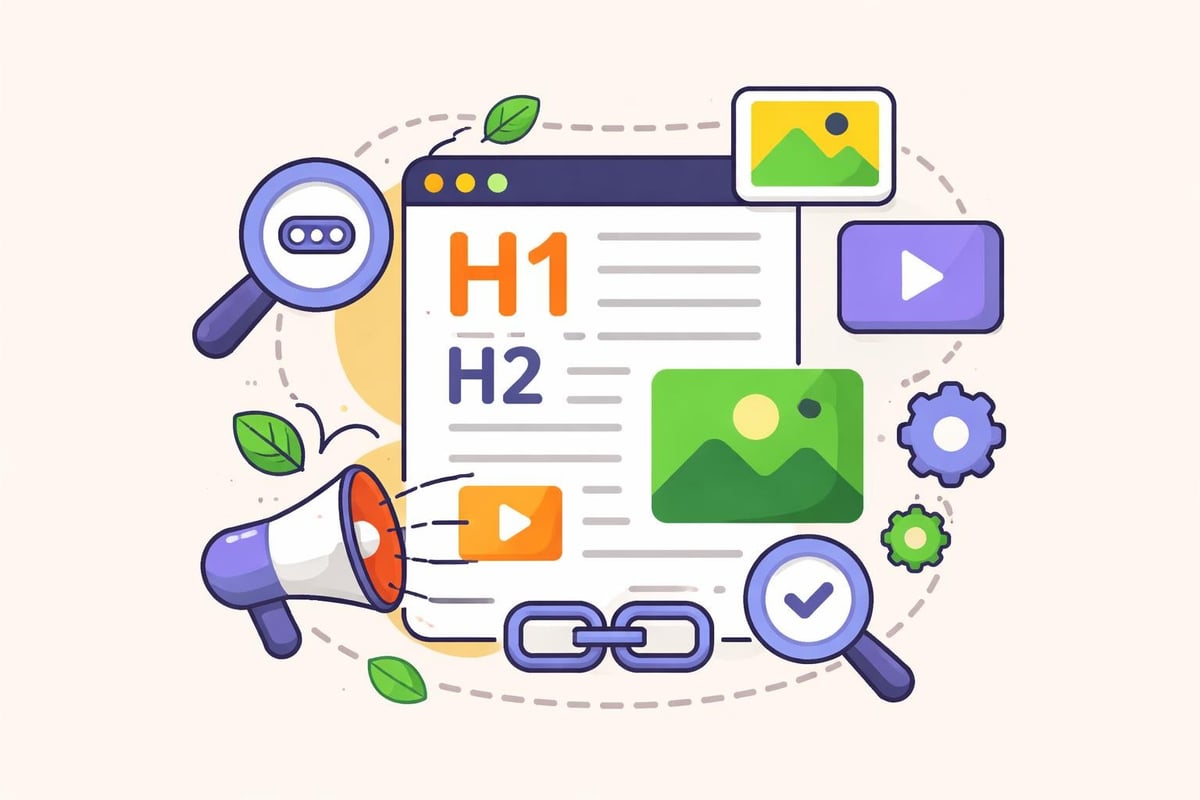
Typography, spacing, and visual prominence guide both human attention and algorithmic understanding. The most important content-typically incorporating primary keywords-should receive prominent visual treatment through larger fonts, strategic positioning, and contrasting colors.
Effective visual-SEO alignment includes:
- Primary headlines (H1) prominently displayed with largest font size
- Supporting subheadings (H2, H3) creating scannable content structure
- First paragraphs containing primary keywords and value propositions
- Strategic bolding emphasizing key concepts and semantic keywords
- Adequate whitespace improving readability and comprehension
This visual hierarchy communicates content importance to search algorithms while improving user engagement metrics that indirectly influence rankings. Pages with clear hierarchies typically see lower bounce rates and longer dwell times as users quickly assess relevance and find desired information.
Internal Linking Architecture
Navigation menus represent only one dimension of internal linking. Contextual links within content create relationships between pages, distribute authority throughout your site, and guide users to related information.
Strategic internal linking should be planned during content structure development, not added randomly after publication. Each page should link to related content using descriptive anchor text that provides context about the destination page.
| Internal Linking Best Practice | SEO Benefit | Implementation Tip |
|---|---|---|
| Descriptive anchor text | Provides topical relevance signals | Avoid generic "click here" or "read more" |
| Links to related content | Strengthens topic authority | Create content clusters around themes |
| Reasonable link quantity | Maintains link value distribution | 3-5 contextual links per 1000 words |
| Deep linking strategy | Distributes authority to all pages | Don't just link to homepage and contact |
Breadcrumb navigation provides both user orientation and additional internal linking structure. These navigational aids improve usability while providing search engines with explicit site structure signals through schema markup.
Design Patterns That Enhance Discoverability
Certain design patterns have emerged as particularly effective for SEO performance, balancing user experience requirements with search visibility optimization.
Content Silos and Topic Clustering
Organizing content into distinct thematic silos helps establish topical authority. Rather than creating isolated pages, this approach groups related content under unifying pillar pages that comprehensively cover broad topics.
The design implementation involves creating clear visual distinction between topic areas through navigation structure, URL paths, and internal linking patterns. Each silo operates somewhat independently while maintaining connection to the broader site architecture.
For example, a digital agency might organize services into distinct silos (web design, SEO, branding) with each containing supporting content like case studies, process explanations, and related blog articles. This organization signals expertise to search algorithms while helping users navigate to relevant information efficiently.
Navigation Simplicity and Depth Control
While comprehensive navigation helps users find content, overly complex menus create crawl budget issues and confuse both visitors and search algorithms. Effective seo website design balances comprehensiveness with simplicity.
Navigation optimization strategies:
- Limit primary navigation to 5-7 main categories
- Use mega menus sparingly, ensuring mobile compatibility
- Implement footer navigation for secondary pages
- Create clear calls-to-action guiding priority conversions
- Ensure consistent navigation across all pages
Search engines allocate limited crawl budget to each site, and inefficient navigation wastes this resource on low-value pages. Strategic navigation design guides crawlers to your most important content while ensuring all pages remain accessible within reasonable click depth.
Technical Infrastructure Supporting SEO Design
Behind every effective design lies robust technical infrastructure enabling performance, security, and crawlability. These backend considerations must inform frontend design decisions.
URL Structure and Readability
Clean, descriptive URLs serve multiple functions: they're memorable for users, provide ranking signals for search engines, and appear in search results where they influence click-through rates.
SEO-friendly URL structures share common characteristics:
- Lowercase letters avoiding case-sensitivity issues
- Hyphens separating words for readability
- Keywords describing page content
- Short length (under 60 characters when possible)
- Static structure without unnecessary parameters
Dynamic sites often generate URLs with session IDs, tracking parameters, or database queries. These create duplicate content issues and waste crawl budget. URL rewriting translates complex backend structures into clean, semantic URLs serving both SEO and user experience.
HTTPS Security and Trust Signals
Google has explicitly confirmed HTTPS as a ranking factor, making SSL certificates mandatory for competitive rankings. Beyond algorithmic impact, browser security warnings on non-HTTPS sites devastate user trust and conversion rates.
Modern seo website design assumes HTTPS implementation from launch rather than migrating later. Certificate installation, proper redirects from HTTP versions, and avoiding mixed content warnings require planning during the development phase.
Trust signals extend beyond encryption. Professional design aesthetics, clear contact information, privacy policies, and security badges contribute to perceived credibility-factors influencing both user behavior and search quality assessments.
Measuring and Iterating Design Performance
Launch represents the beginning, not the conclusion, of seo website design optimization. Continuous measurement and refinement based on performance data separate effective sites from abandoned digital brochures.
Analytics Integration and Goal Tracking
Design should accommodate analytics tracking from inception. Proper implementation of Google Analytics requires event tracking for interactions, conversion goal configuration, and custom dimensions capturing relevant business metrics.
Key performance indicators for SEO-focused design include:
- Organic traffic volume and trends
- Bounce rate and pages per session
- Average session duration
- Conversion rates by traffic source
- Core Web Vitals scores
- Mobile versus desktop performance gaps
These metrics reveal how effectively design supports both discovery and conversion. High traffic with poor engagement suggests content-design misalignment, while strong engagement with low traffic indicates visibility issues requiring technical SEO optimization.
A/B Testing Design Elements
Data-driven design refinement requires systematic testing of variations. Elements worth testing include navigation structures, call-to-action placement and design, content hierarchy, internal linking patterns, and mobile menu implementations.
Testing should isolate individual variables to establish causation rather than correlation. Simultaneous changes to multiple elements prevent clear understanding of what drove performance improvements or declines.
| Design Element | Testing Hypothesis | Success Metric |
|---|---|---|
| CTA button color | Contrasting colors increase visibility | Click-through rate |
| Navigation depth | Simpler menus improve engagement | Pages per session |
| Image placement | Above-fold images slow performance | Load time, bounce rate |
| Content length | Comprehensive content ranks better | Organic position, time on page |
Adapting for AI Search Visibility
Traditional SEO principles remain foundational, but 2026 brings increased importance of optimizing for AI-powered search experiences including Google AI Overviews, ChatGPT, Claude, and Perplexing. These platforms extract and synthesize information differently than traditional search results.
Structured Data and Entity Recognition
AI systems rely heavily on structured data to understand content context and relationships. Schema markup provides explicit signals about content type, author information, publication dates, product details, and organizational data.
Implementing comprehensive schema markup helps AI platforms cite your content as authoritative sources. Organization schema, article schema, FAQ schema, and local business schema each serve specific discovery functions.
Entity recognition-how AI systems identify people, places, organizations, and concepts-benefits from consistent naming, clear definitions, and contextual relationships. Design decisions like author bylines, publication information, and related content sections provide signals helping AI systems understand and reference your content.
Businesses seeking to maximize visibility across both traditional and AI search platforms should explore specialized AI optimization services addressing these emerging ranking factors comprehensively.
Conversation-Optimized Content Structure
AI chatbots respond to queries with synthesized answers drawing from multiple sources. Content structured to answer specific questions clearly and concisely increases citation probability.
AI-friendly content patterns include:
- FAQ sections addressing common questions directly
- Numbered lists providing step-by-step instructions
- Comparison tables facilitating decision-making
- Definition sections explaining terminology
- Summary paragraphs distilling key takeaways
This structure serves both AI extraction and human consumption, creating natural alignment between traditional SEO and emerging AI visibility requirements. The design challenge involves presenting information in multiple formats-scannable for humans, parseable for AI-without creating redundancy or confusion.
Balancing Aesthetics and Optimization
The tension between visual creativity and technical optimization creates the central challenge of seo website design. Resolving this tension requires understanding that these goals complement rather than conflict when approached strategically.
Design Systems Supporting Consistency
Establishing comprehensive design systems-including typography scales, color palettes, spacing units, and component libraries-enables consistent implementation across all pages. This consistency provides multiple SEO benefits beyond aesthetic appeal.
Search engines reward consistent user experiences. Standardized navigation, predictable interaction patterns, and uniform content presentation reduce friction and improve engagement metrics. Design systems ensure these elements remain consistent as sites scale and evolve.
Component libraries accelerate development while maintaining optimization standards. Pre-built, tested components for common elements (cards, forms, calls-to-action, navigation menus) ensure each instance follows best practices for accessibility, performance, and semantic markup.
Creative Differentiation Within Optimization Constraints
SEO requirements establish guardrails, not straitjackets. Within constraints like mobile responsiveness, fast loading, and semantic structure, infinite creative possibilities exist for visual differentiation.
Unique typography, distinctive color schemes, custom illustrations, and branded photography create memorable experiences without compromising technical performance. The key lies in optimizing creative assets rather than eliminating them.
Strategic use of animation, when implemented through CSS transforms and GPU-accelerated properties, enhances engagement without degrading performance. Video content, when properly compressed and delivered through adaptive streaming, enriches messaging while maintaining acceptable load times.
Implementation Considerations for Business Owners
For organizations evaluating seo website design projects, several considerations influence project success and return on investment.
Choosing the Right Development Approach
The technical foundation profoundly impacts long-term optimization capabilities. Custom development offers maximum flexibility but requires ongoing maintenance. Content management systems like WordPress provide easier content management with varying degrees of optimization depending on theme and plugin choices.
Modern web design best practices emphasize frameworks enabling rapid updates, A/B testing, and continuous optimization. Headless CMS architectures separate content from presentation, enabling omnichannel delivery and improved performance through static site generation.
Platform selection should consider:
- Developer availability and ecosystem size
- Plugin/extension quality and maintenance status
- Performance characteristics and optimization capabilities
- Scalability supporting traffic and content growth
- Integration requirements with existing tools and systems
Establishing Ongoing Optimization Workflows
Launch represents iteration zero, not completion. Effective seo website design requires commitment to continuous improvement based on performance data, algorithm updates, and competitive landscape evolution.
Monthly audits should assess technical health, content freshness, backlink profile quality, and Core Web Vitals performance. Quarterly strategy reviews examine whether design and content support evolving business objectives and market positioning.
Allocating budget for ongoing optimization-typically 15-20% of initial development investment annually-ensures your digital presence remains competitive rather than degrading as competitors advance and algorithms evolve.
Tools like Google Search Console provide free insights into indexing status, search performance, and technical issues. Regular monitoring prevents small issues from escalating into traffic-devastating problems.
Effective seo website design represents the strategic integration of aesthetic excellence, technical optimization, and content strategy into cohesive digital experiences that rank competitively while converting visitors into customers. As search algorithms evolve to incorporate AI-powered understanding and user experience signals gain ranking importance, the distinction between "design" and "SEO" continues dissolving into unified digital strategy. Creotivity specializes in building modern websites engineered for visibility across both traditional search engines and emerging AI platforms, combining technical expertise with design excellence to help businesses attract and convert their ideal customers efficiently.