
Website Design Consultancy: A Complete Guide for 2026
The digital landscape has evolved dramatically, and businesses can no longer afford to approach web design as a simple aesthetic exercise. A website design consultancy brings strategic expertise, technical knowledge, and business acumen to create digital experiences that drive measurable results. Whether you're launching a new venture or refreshing an existing online presence, partnering with experienced consultants ensures your website serves as a powerful business asset rather than just a digital placeholder.
Understanding the Role of Website Design Consultancy
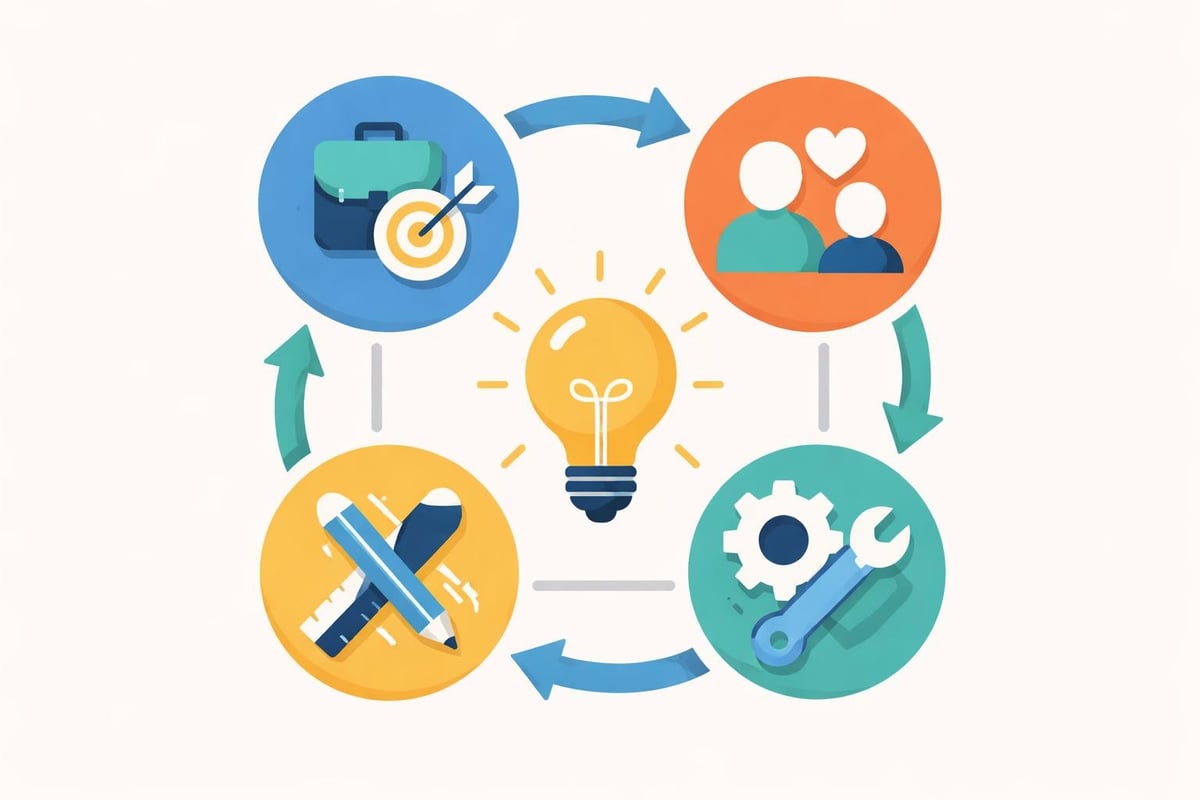
Website design consultancy goes far beyond choosing colors and arranging elements on a page. These specialized professionals analyze your business objectives, target audience, competitive landscape, and growth projections to create a comprehensive digital strategy. The consultancy process typically begins with discovery sessions where consultants dive deep into your brand identity, value proposition, and customer journey.
Modern consultants integrate multiple disciplines:
- User experience (UX) research and testing
- Conversion rate optimization strategies
- Technical performance and infrastructure planning
- Content strategy and information architecture
- Accessibility compliance and inclusive design
- Search visibility and AI optimization
A qualified website design consultancy serves as a strategic partner who challenges assumptions and provides objective guidance. They identify gaps between your current digital presence and where you need to be to achieve business goals. This outside perspective proves invaluable, especially for companies too close to their own operations to see blind spots.
The Strategic Value Proposition
Organizations invest in consultancy services to access specialized knowledge without maintaining full-time staff. This approach provides flexibility and ensures you benefit from consultants who work across industries and stay current with emerging trends. The strategic value manifests in faster time-to-market, reduced risk of costly mistakes, and solutions grounded in proven methodologies.
According to research on integrating user-centered design approaches, aligning design processes with strategic business goals creates measurable improvements in customer satisfaction and conversion rates. Consultants bring structured frameworks that translate abstract business objectives into concrete design decisions.
Key Services Provided by Design Consultancies
Comprehensive Website Audits
Before proposing solutions, professional consultants conduct thorough audits of existing digital properties. These assessments examine technical performance, user experience, content effectiveness, and competitive positioning. Audit findings provide the foundation for prioritized recommendations and roadmap development.
| Audit Component | What's Evaluated | Business Impact |
|---|---|---|
| Technical Performance | Page speed, mobile responsiveness, code quality | User retention, search rankings |
| User Experience | Navigation, conversion paths, accessibility | Customer satisfaction, sales |
| Content Strategy | Message clarity, SEO optimization, engagement | Traffic quality, authority |
| Brand Consistency | Visual identity, tone of voice, trust signals | Recognition, credibility |
Strategic Planning and Architecture
Information architecture represents one of the most critical yet frequently overlooked aspects of web design. Consultants map out how content should be organized, how users navigate between sections, and how different page types serve specific business functions. This structural planning happens before any visual design work begins.
The planning phase also addresses technical infrastructure decisions. Should you use a headless CMS? What hosting environment best supports your traffic patterns? How will the site scale as your business grows? These decisions have long-term implications that consultants help you navigate based on your specific requirements and constraints.
Design System Development
Rather than creating one-off page designs, experienced consultants build comprehensive design systems. These systems include reusable components, style guidelines, interaction patterns, and documentation that ensure consistency across your entire digital ecosystem. Design systems accelerate future development while maintaining brand coherence.
A robust design system includes:
- Typography scales and hierarchies
- Color palettes with accessibility ratios
- Spacing and layout grids
- Component libraries (buttons, forms, cards)
- Interaction states and animations
- Iconography and imagery guidelines
Selecting the Right Website Design Consultancy
Evaluating Expertise and Experience
Not all consultancies possess equal capabilities. When evaluating potential partners, look beyond portfolio aesthetics to understand their process, strategic thinking, and measurable outcomes. Request case studies that demonstrate how their work solved specific business challenges rather than just showcasing visual appeal.
Common pitfalls include overlooking SEO and marketing knowledge when hiring design consultants. Your website must attract qualified traffic and convert visitors into customers. Consultants who understand search visibility, user psychology, and conversion optimization deliver substantially more value than those focused solely on aesthetics.
Assessing Cultural Fit and Communication
The consultancy relationship requires close collaboration, so cultural alignment matters enormously. During initial conversations, evaluate how consultants communicate complex concepts, whether they ask thoughtful questions about your business, and if their working style matches your organizational culture.
Effective client collaboration practices emphasize clear goal-setting, regular check-ins, and structured feedback processes. Ask potential consultants about their project management approach, communication cadence, and how they handle disagreements or scope changes.
Understanding Pricing Models and Value
Website design consultancy pricing varies widely based on project scope, consultant experience, and engagement structure. Common models include fixed-price projects, hourly rates, retainer arrangements, and value-based pricing. Each approach has advantages depending on your situation.
Consider these pricing factors:
- Project complexity and custom requirements
- Timeline constraints and rush fees
- Ongoing support and maintenance needs
- Number of stakeholders and revision rounds
- Integration with existing systems
- Training and documentation requirements
Value-based pricing aligns consultant compensation with business outcomes rather than time invested. This model works well when projects have clear, measurable success metrics like increased conversions or reduced bounce rates.
The Consultancy Process from Start to Finish
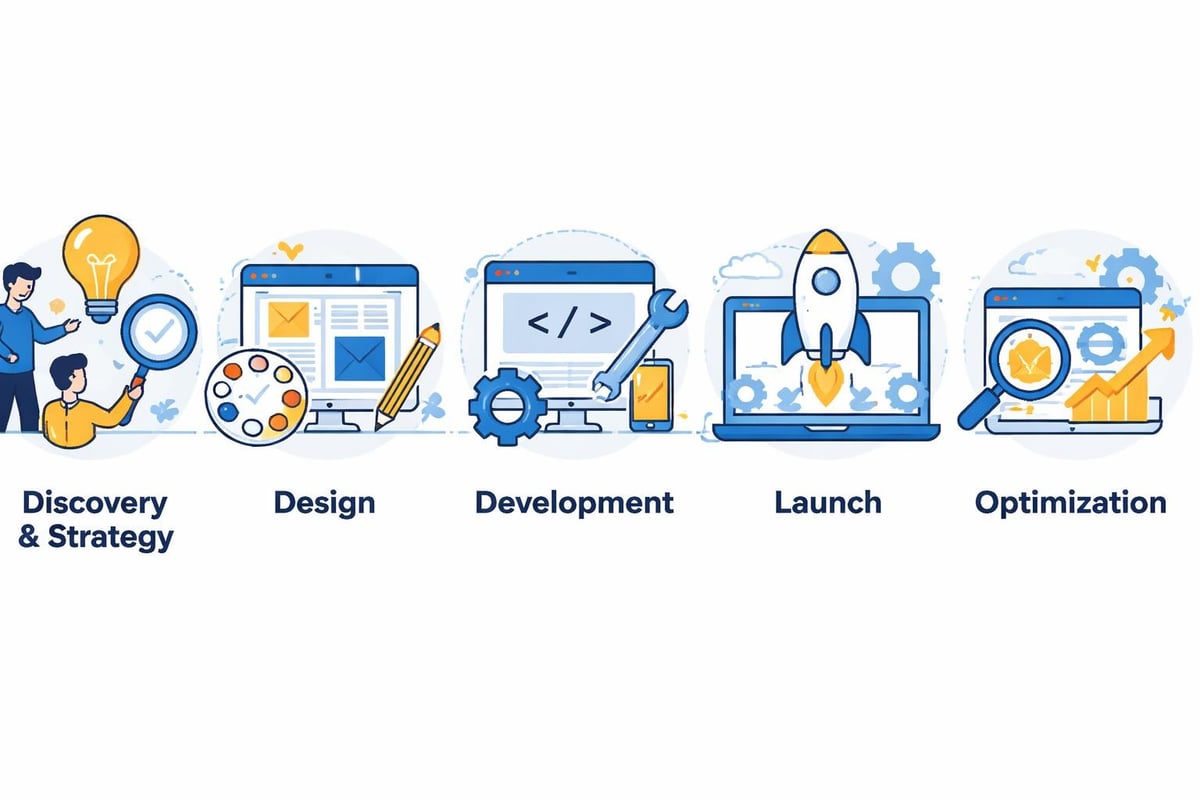
Discovery and Research Phase
Professional engagements begin with comprehensive discovery work. Consultants interview stakeholders, review existing analytics data, conduct competitive analysis, and often facilitate strategy workshops. This research phase typically consumes 15-20% of the total project timeline but proves essential for informed decision-making.
User research methods might include surveys, interviews with existing customers, usability testing of current sites, and analysis of support tickets to identify common pain points. The insights gathered during discovery inform every subsequent project decision.
Strategy and Planning
Armed with research findings, consultants develop strategic recommendations addressing both immediate needs and long-term vision. This documentation typically includes audience personas, user journey maps, content strategies, technical specifications, and success metrics.
Best practices for managing web design projects emphasize setting clear expectations during the planning phase. Detailed project briefs, defined approval processes, and agreed-upon milestones prevent misunderstandings and scope creep.
Design and Prototyping
The design phase progresses from low-fidelity wireframes through high-fidelity mockups to interactive prototypes. Modern website design consultancy leverages tools like Figma for collaborative design work, allowing real-time feedback and iteration. This transparency keeps stakeholders engaged while preventing surprise reactions to finished designs.
Consultants typically present designs in context, explaining how specific choices support strategic objectives. Rather than asking "Do you like this?" they frame discussions around "Does this effectively communicate our value proposition to our target audience?"
Development and Implementation
During development, consultants either execute the build themselves or oversee external development teams. Quality consultancies maintain close collaboration between design and development, ensuring the final product matches design specifications while remaining technically sound and performant.
For businesses seeking to accelerate their launch timeline, agencies like Creotivity use AI to streamline coding and structural setup, delivering custom, high-performance websites in weeks rather than months while maintaining quality standards.
Testing and Optimization
Before launch, rigorous testing catches issues across devices, browsers, and user scenarios. Consultants conduct quality assurance checks, accessibility audits, performance testing, and often facilitate user acceptance testing with actual customers. This validation step prevents embarrassing post-launch problems.
| Testing Type | Purpose | Success Criteria |
|---|---|---|
| Functional Testing | Verify all features work correctly | Zero critical bugs |
| Performance Testing | Ensure fast load times | Core Web Vitals pass |
| Accessibility Testing | Confirm WCAG compliance | Level AA standards met |
| Cross-Browser Testing | Check consistency | Works on 95%+ of traffic |
| Security Testing | Identify vulnerabilities | No high-risk issues |
Maximizing the Consultancy Relationship
Preparing Your Organization
Successful consultancy engagements require internal preparation. Identify clear project stakeholders with decision-making authority. Gather existing brand assets, analytics data, and documentation. Allocate internal resources for timely feedback and content creation. These preparatory steps dramatically improve project efficiency.
Establish realistic expectations about timelines and your team's availability. Consultants can work quickly, but they need timely responses to questions, content approvals, and access to necessary systems. Communication delays often represent the biggest obstacle to on-time delivery.
Providing Effective Feedback
Structured feedback processes help consultants understand your concerns while maintaining project momentum. Rather than collecting opinions from everyone in your organization, designate a single point of contact who consolidates feedback into prioritized, actionable items.
Frame feedback around objectives rather than personal preferences. Instead of "I don't like this blue," try "Does this color scheme effectively convey the premium positioning we're targeting?" This shift focuses discussions on strategic goals rather than subjective tastes.
Leveraging Post-Launch Support
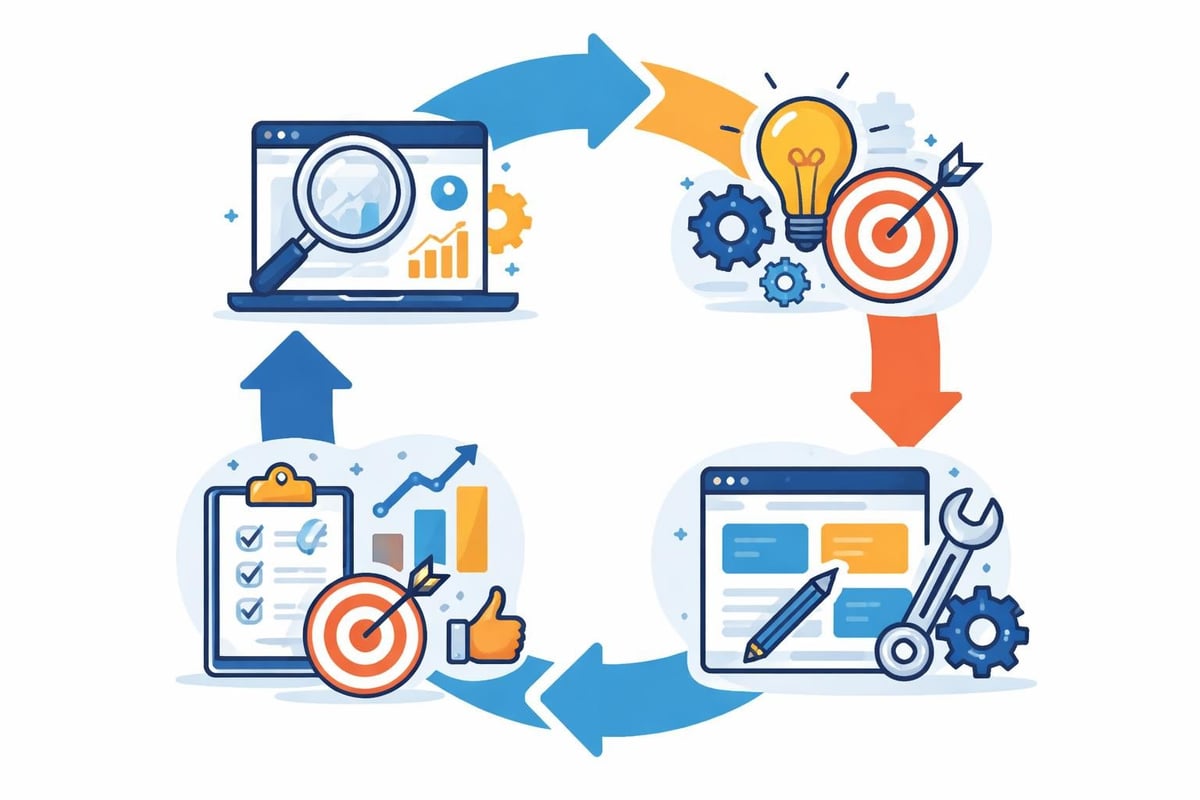
The website launch marks a beginning, not an endpoint. Professional consultancies offer post-launch optimization based on real user behavior. Analytics reveal which elements perform well and which need refinement. A/B testing validates assumptions and drives continuous improvement.
Ongoing relationships with your website design consultancy provide access to strategic guidance as your business evolves. Markets shift, technologies advance, and customer expectations change. Maintaining the consultancy relationship ensures your digital presence adapts accordingly.
Building for Search Visibility and AI Discovery
Optimizing for Traditional and AI Search
In 2026, website design consultancy must address both traditional search engines and AI-powered discovery platforms. Businesses need visibility across Google AI Overviews, ChatGPT, Claude, and Perplexity to capture customers using conversational search interfaces. This requires structured data implementation, semantic HTML, and content optimized for natural language queries.
Consultants who understand how AI search engines operate design sites with enhanced discoverability. They implement schema markup, create content that answers specific questions, and structure information for easy extraction by language models. These technical considerations happen during the design phase, not as afterthoughts.
Demonstrating Expertise and Authority
Consultancy websites must demonstrate Experience, Expertise, Authority, and Trustworthiness to rank well and convert visitors. This means showcasing real results through detailed case studies, displaying team credentials, featuring client testimonials, and publishing thoughtful content that demonstrates deep knowledge.
Strategic content planning positions your business as the obvious choice in your niche. Rather than generic service descriptions, effective consultancy sites provide valuable insights, frameworks, and perspectives that help potential clients even before engagement. This generosity builds trust and differentiates you from competitors.
Industry-Specific Considerations
B2B Service Businesses
B2B companies selling complex services face unique challenges. Their websites must educate sophisticated buyers, support lengthy sales cycles, and address multiple stakeholder concerns. Website design consultancy for B2B focuses on clarity, credibility, and providing the resources decision-makers need to build internal consensus.
Effective B2B consulting websites include:
- Detailed service explanations with clear deliverables
- Industry-specific case studies with measurable outcomes
- Educational content addressing common challenges
- Clear pathways for different buyer journey stages
- Multiple conversion opportunities beyond "contact us"
E-commerce and Retail
E-commerce businesses require consultants who understand conversion optimization, product display best practices, checkout flow psychology, and inventory management integration. The stakes are higher because design decisions directly impact revenue. Even small improvements in conversion rates generate significant financial returns.
Consultants specializing in e-commerce bring knowledge of shopping behaviors, mobile commerce trends, personalization strategies, and retention tactics. They design experiences that not only attract customers but encourage repeat purchases and higher average order values.
Professional Services and Consulting Firms
For consulting firms and professional service providers, website design guide principles emphasize clarity, authenticity, social proof, and easy client connection. Your website must quickly communicate what you do, who you serve, and why prospects should choose you. Visitors often arrive with specific problems seeking immediate answers.
Professional service websites benefit from thought leadership content, detailed service pages explaining your approach, and clear calls-to-action that match different stages of buyer readiness. Some visitors want to schedule consultations immediately, while others prefer downloading resources to learn more.
Measuring Consultancy Success
Defining Key Performance Indicators
Before engaging a website design consultancy, establish clear success metrics. What does success look like six months after launch? Typical KPIs include organic traffic growth, conversion rate improvements, reduced bounce rates, increased time on site, and ultimately, more qualified leads or sales.
Consultants should help you set realistic benchmarks based on industry standards and your starting position. Dramatic overnight transformations rarely occur, but steady improvements compound over time. Monthly reporting keeps everyone aligned on progress and identifies areas needing attention.
Long-Term Business Impact
The true value of professional consultancy emerges over time. A well-designed website continues delivering returns long after the initial investment. Calculate lifetime value by considering reduced customer acquisition costs, improved conversion efficiency, decreased support burden from better self-service content, and enhanced brand perception.
Quality design also reduces future costs. Sites built with scalability in mind accommodate growth without requiring complete rebuilds. Proper documentation and clean code make updates and enhancements more efficient. These long-term benefits justify premium pricing for experienced consultants.
Common Challenges and Solutions
Managing Scope and Expectations
Scope creep threatens project timelines and budgets. Clear project definitions, change request processes, and regular scope reviews keep projects on track. Professional consultancies present scope changes with transparent pricing and timeline impacts, allowing informed decisions about priorities.
Sometimes "scope creep" actually represents discovering requirements that should have been identified during discovery. This highlights the importance of thorough initial planning and asking the right questions upfront.
Balancing Stakeholder Input
Organizations with multiple stakeholders often struggle with conflicting opinions about design directions. Website design consultancy helps navigate these dynamics by grounding decisions in user research and business objectives rather than personal preferences. When disagreements arise, returning to data and strategic goals provides objective resolution.
Technical Limitations and Constraints
Existing technical infrastructure sometimes constrains design possibilities. Legacy systems, platform limitations, or budget constraints require creative problem-solving. Experienced consultants work within constraints while still delivering effective solutions, prioritizing high-impact improvements when everything isn't possible.
Future-Proofing Your Investment
Designing for Adaptation
Technology evolves rapidly, so website design consultancy must create adaptable foundations. This means using modern, standards-compliant code, implementing flexible design systems, choosing extensible platforms, and documenting technical decisions for future reference.
Mobile-first responsive design is now table stakes, but consultants should also consider emerging interfaces like voice search, augmented reality, and new device categories. While you don't need to implement every emerging technology, your site architecture should accommodate future expansion.
Building Internal Capabilities
Strategic consultancies don't create dependency. They empower your team through training, documentation, and knowledge transfer. You should understand how to update content, monitor performance, and make minor adjustments without consultant involvement. This autonomy reduces long-term costs while maintaining site quality.
Consider requesting training sessions for your team covering content management, basic troubleshooting, and using analytics to inform decisions. Some consultancies offer ongoing resources and guides that support continuous learning beyond the initial engagement.
Planning for Continuous Improvement
Digital excellence requires ongoing attention. Markets evolve, competitors adapt, and user expectations rise. Budget for regular updates, periodic audits, and incremental enhancements. Treating your website as a living asset rather than a finished product maximizes long-term returns.
Annual strategy reviews with your consultancy partner ensure your digital presence remains aligned with business objectives. These check-ins identify new opportunities, assess emerging technologies, and plan tactical improvements based on accumulated user data.
Engaging a qualified website design consultancy transforms how your business approaches digital presence, moving from reactive maintenance to strategic asset development. The right partner brings expertise across design, technology, user experience, and business strategy to create websites that deliver measurable results. If you're ready to build a modern website designed to rank highly on Google and AI search engines while converting visitors into customers, Creotivity offers comprehensive services including web design, SEO, AI visibility optimization, and branding tailored to your business objectives.