Build a Website with AI: The 2026 Complete Guide
The landscape of web development has fundamentally shifted. Where businesses once spent months coordinating with developers, designers, and content specialists, artificial intelligence now enables anyone to build a website with AI in a fraction of the time. In 2026, AI tools have matured beyond simple template generators into sophisticated platforms that understand design principles, write clean code, optimize for search engines, and create compelling content. This transformation isn't just about speed-it's about accessibility, cost-efficiency, and the ability to iterate rapidly based on real performance data. Whether you're launching a startup, expanding an established business, or pivoting your online presence, understanding how to leverage AI for website creation has become essential.
Understanding AI Website Building Technology
Artificial intelligence has evolved dramatically since the early days of drag-and-drop builders. Modern AI systems utilize natural language processing, computer vision, and machine learning algorithms to interpret user intent and generate complete websites from simple descriptions. These platforms analyze millions of existing websites to understand what makes effective design, optimal user experience, and conversion-focused architecture.
How AI Generates Websites
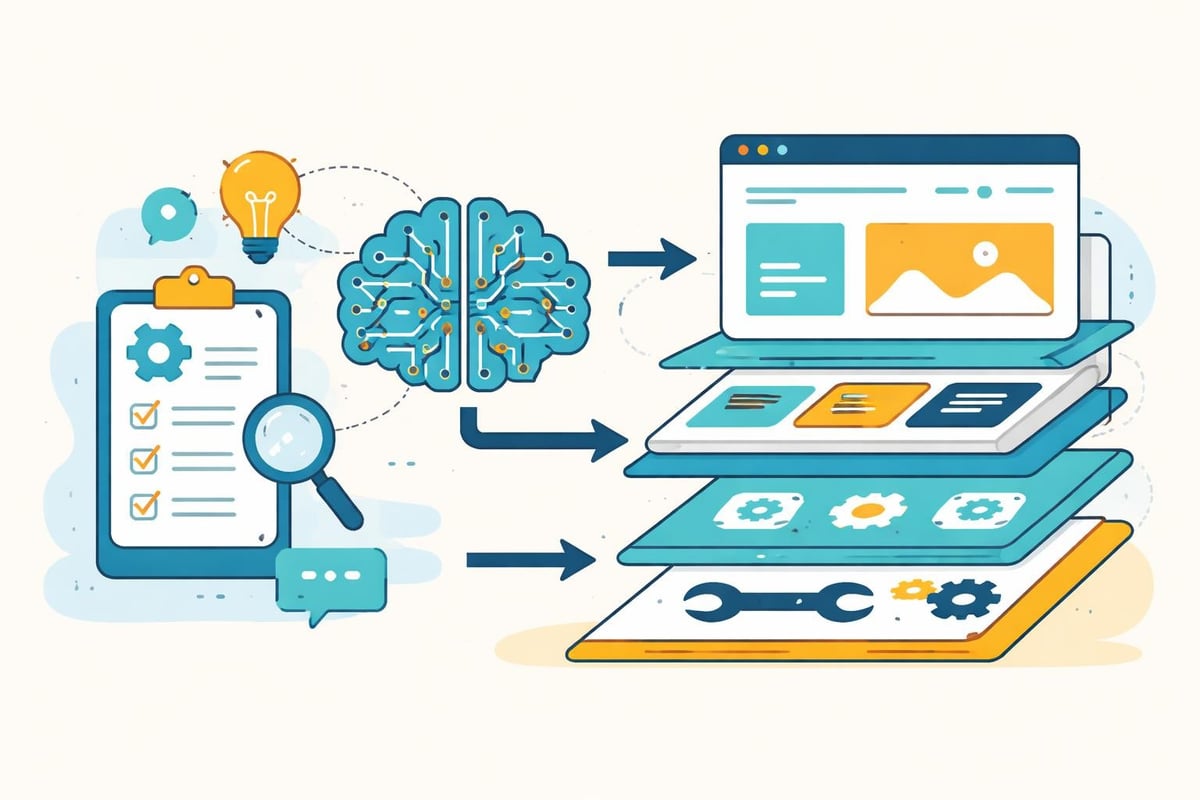
When you build a website with AI, the process begins with data input. You provide information about your business, industry, target audience, and desired functionality. The AI engine processes this information through multiple neural networks trained on web design best practices, brand positioning, and user behavior patterns.
The system then:
- Generates responsive layouts optimized for all devices
- Creates color schemes aligned with brand psychology
- Writes initial content based on your industry and keywords
- Structures navigation for optimal user flow
- Implements basic SEO elements automatically
What once required separate specialists now happens through integrated AI workflows. The technology doesn't just template content-it reasons about your specific business needs and generates custom solutions.
The Evolution of AI Web Builders in 2026
The current generation of AI website builders represents a quantum leap from earlier iterations. Wix Harmony introduced Aria, an AI agent that executes design commands through conversational prompts, allowing users to refine websites by simply describing changes. Similarly, Figma's AI website builder merges design and development into a unified platform where natural language descriptions become fully functional sites.
These platforms have moved beyond basic automation. They now incorporate:
| Feature | Capability | Business Impact |
|---|---|---|
| Generative Design | Creates unique layouts per brand | Eliminates generic templates |
| Contextual Content | Writes industry-specific copy | Reduces content creation time |
| Performance Optimization | Auto-optimizes code and assets | Improves load speeds and SEO |
| Adaptive Interfaces | Adjusts to user behavior data | Increases conversion rates |
The technology continues advancing rapidly, with new capabilities emerging quarterly as AI models become more sophisticated and training datasets expand.
Choosing the Right AI Platform for Your Needs
Not all AI website builders serve the same purpose. The platform you select should align with your technical expertise, business goals, and long-term growth strategy. Understanding the landscape helps you make informed decisions that prevent costly migrations later.
Evaluating AI Website Builder Categories
AI website platforms generally fall into three categories: no-code builders designed for complete beginners, low-code platforms that offer customization flexibility, and AI-assisted development tools for those with technical knowledge who want to accelerate coding workflows.
No-code builders like Hostinger's AI-powered platform excel at speed and simplicity. Their AI Writer and AI Heatmap features help beginners create functional sites quickly without touching code. These platforms work well for straightforward business websites, portfolios, and small e-commerce operations.
Low-code platforms provide middle ground. They generate foundational code through AI but allow developers to access and modify underlying systems. This flexibility proves valuable as businesses scale and require custom integrations or advanced functionality.
For development teams, AI coding assistants like Copilot augment traditional workflows by generating code snippets, debugging existing code, and suggesting architectural improvements. These tools help professional developers build faster while maintaining complete control over technical implementation.
Key Features to Prioritize
When you build a website with AI, certain capabilities prove more valuable than others depending on your goals. Prioritize platforms offering strong SEO foundations, mobile responsiveness, page speed optimization, and content management flexibility.
- AI content generation quality: Test how well the platform writes for your specific industry
- Design customization depth: Verify you can modify AI-generated designs to match brand requirements
- Integration ecosystem: Confirm compatibility with tools you already use (CRM, email, analytics)
- Performance metrics: Check if the platform builds sites that load quickly and rank well
- Scalability options: Ensure the platform grows with your business needs
Consider whether the platform optimizes for traditional search engines and emerging AI search platforms. As generative AI reshapes how users discover content, websites must perform well across multiple search paradigms.
The Step-by-Step Process to Build a Website with AI
Creating an effective website through AI follows a structured approach. While the technology handles much of the heavy lifting, strategic human input at each stage ensures the final product aligns with business objectives and brand identity.
Stage One: Strategic Planning and Input
Begin by gathering comprehensive information about your business. The quality of AI output directly correlates with the quality of your input. Document your unique value proposition, target customer demographics, competitor positioning, and desired outcomes.
Prepare these elements before engaging with AI tools:
- Brand assets: Logo files, color codes, font preferences, existing brand guidelines
- Content inventory: Service descriptions, product details, company history, team bios
- Functional requirements: Contact forms, booking systems, e-commerce needs, third-party integrations
- Success metrics: Conversion goals, lead generation targets, engagement benchmarks
The more specific your input, the less revision required afterward. AI systems excel at execution when given clear direction and comprehensive context.
Stage Two: AI Generation and Initial Review
Once you input requirements, the AI generates your initial website. This process typically takes minutes rather than weeks. Modern platforms create complete multi-page sites with navigation, content, images, and basic SEO structure automatically.
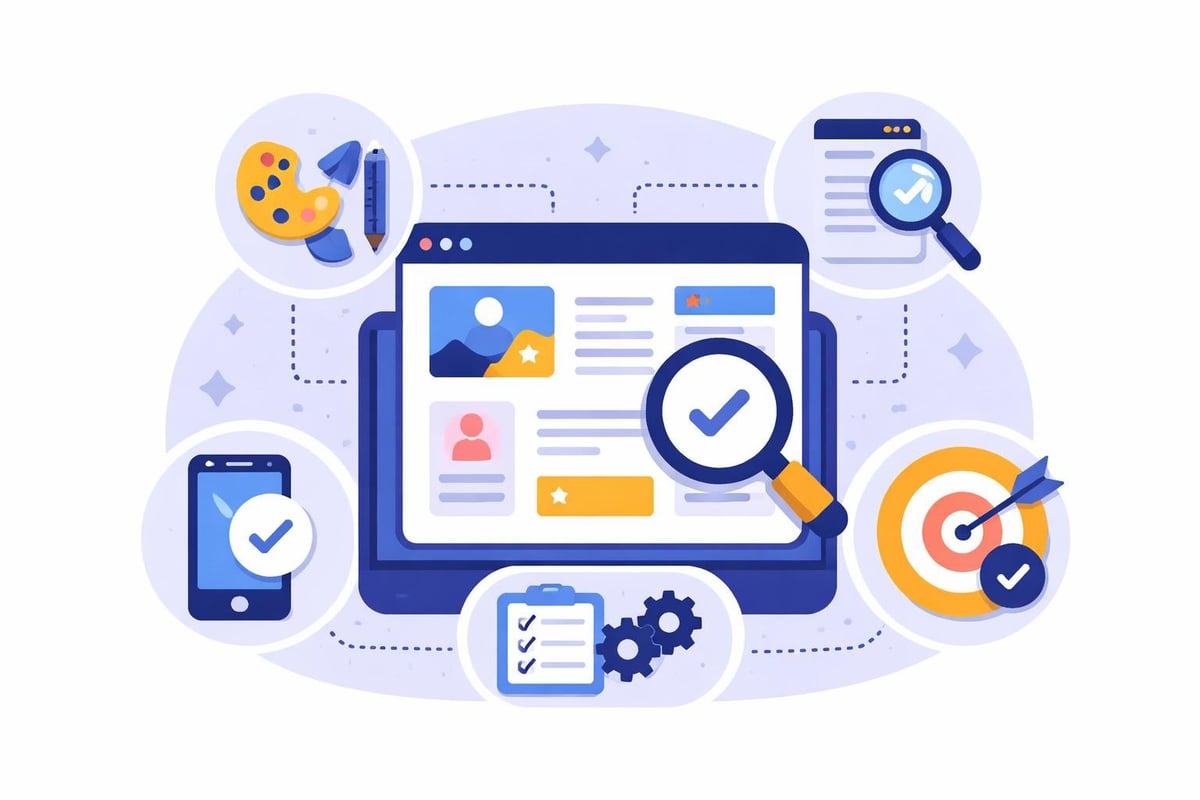
Review the generated site systematically:
| Review Area | What to Check | Common AI Gaps |
|---|---|---|
| Visual Design | Brand alignment, color harmony, spacing consistency | Generic stock photos, inconsistent spacing |
| Content Quality | Accuracy, tone of voice, industry terminology | Surface-level descriptions, generic phrasing |
| Technical Function | Forms, links, navigation, loading speed | Missing form validations, broken internal links |
| Mobile Experience | Touch targets, readability, layout adaptation | Overcrowded mobile layouts, small text |
Expect to spend time refining the initial output. AI provides an exceptional starting point, but human judgment ensures the final product truly represents your brand and serves your audience effectively.
Stage Three: Refinement and Optimization
The refinement phase separates adequate websites from exceptional ones. Use the AI's iteration capabilities to improve specific elements. Most modern platforms allow conversational editing where you describe desired changes rather than manually adjusting elements.
For example, rather than manually adjusting layouts, you might instruct the AI: "Make the homepage hero section more prominent with a clearer call-to-action button" or "Adjust the services page to emphasize our enterprise solutions." As demonstrated with Claude's vibe coding capabilities, natural language commands can rapidly implement design changes across entire sites.
Professional agencies that leverage AI to accelerate web design development combine AI efficiency with design expertise to deliver custom websites faster than traditional development cycles while maintaining high standards for aesthetics and functionality.
Optimizing AI-Generated Websites for Search Visibility
Building the website represents only half the challenge. Ensuring your site attracts visitors through search engines and AI platforms requires strategic optimization. The relationship between AI-generated content and search ranking continues evolving as search engines refine their algorithms.
Traditional SEO Fundamentals Still Apply
Even when you build a website with AI, core SEO principles remain essential. Search engines evaluate page speed, mobile responsiveness, structured data, internal linking architecture, and content quality. Many AI platforms implement basic SEO elements automatically, but achieving competitive rankings requires deeper optimization.
Audit your AI-generated site for:
- Title tags and meta descriptions: Verify each page has unique, keyword-optimized metadata
- Heading hierarchy: Ensure proper H1-H6 structure that organizes content logically
- Image optimization: Confirm all images include descriptive alt text and compressed file sizes
- URL structure: Check for clean, descriptive URLs without unnecessary parameters
- Internal linking: Add contextual links between related pages to distribute authority
AI tools often miss nuanced SEO opportunities that experienced practitioners catch. Review AI-generated content for keyword integration, topic comprehensiveness, and competitive positioning against top-ranking pages in your niche.
Preparing for AI-Powered Search Engines
Traditional Google search represents just one channel. ChatGPT, Perplexity, Claude, and Google's AI Overviews now answer user queries directly, fundamentally changing how people discover websites. Optimizing for these platforms requires different strategies than traditional SEO.
Generative AI platforms prioritize authoritative, well-structured information that directly answers questions. To improve visibility across these channels:
- Structure content around specific questions your audience asks
- Provide comprehensive, factual answers with supporting evidence
- Use schema markup to help AI systems understand your content
- Build topical authority through interconnected content clusters
- Establish citations and backlinks from recognized industry sources
For businesses seeking comprehensive optimization across both traditional and AI-driven search platforms, specialized expertise in AI search optimization has become increasingly valuable as these channels capture growing market share.
Advanced Customization and Professional Development
While no-code AI builders serve many businesses effectively, some projects demand deeper customization. Understanding when to enhance AI-generated sites with professional development ensures optimal results without overspending on unnecessary complexity.
When to Layer Professional Expertise
AI website builders excel at creating functional, attractive sites for standard business needs. However, certain scenarios benefit from professional development layered atop AI-generated foundations:
Complex integrations: When connecting multiple business systems (inventory management, CRM, custom databases), professional developers ensure secure, efficient data flow.
Custom functionality: Unique features like configurators, calculators, or specialized user portals typically require custom code beyond AI platform capabilities.
Enterprise scalability: Large organizations with thousands of pages, multiple user roles, and complex content workflows need architecture AI builders can't fully address.
Brand differentiation: Highly competitive markets may demand completely custom design that stands apart from AI-generated aesthetics.
The most cost-effective approach often combines AI speed with human expertise. Generate the initial structure through AI, then refine critical elements with professional input where differentiation matters most.
Maintaining and Evolving AI-Built Websites
Websites require ongoing maintenance regardless of how they're built. AI platforms have introduced autonomous updating capabilities that generate and optimize content without human intervention, though this remains experimental territory in 2026.
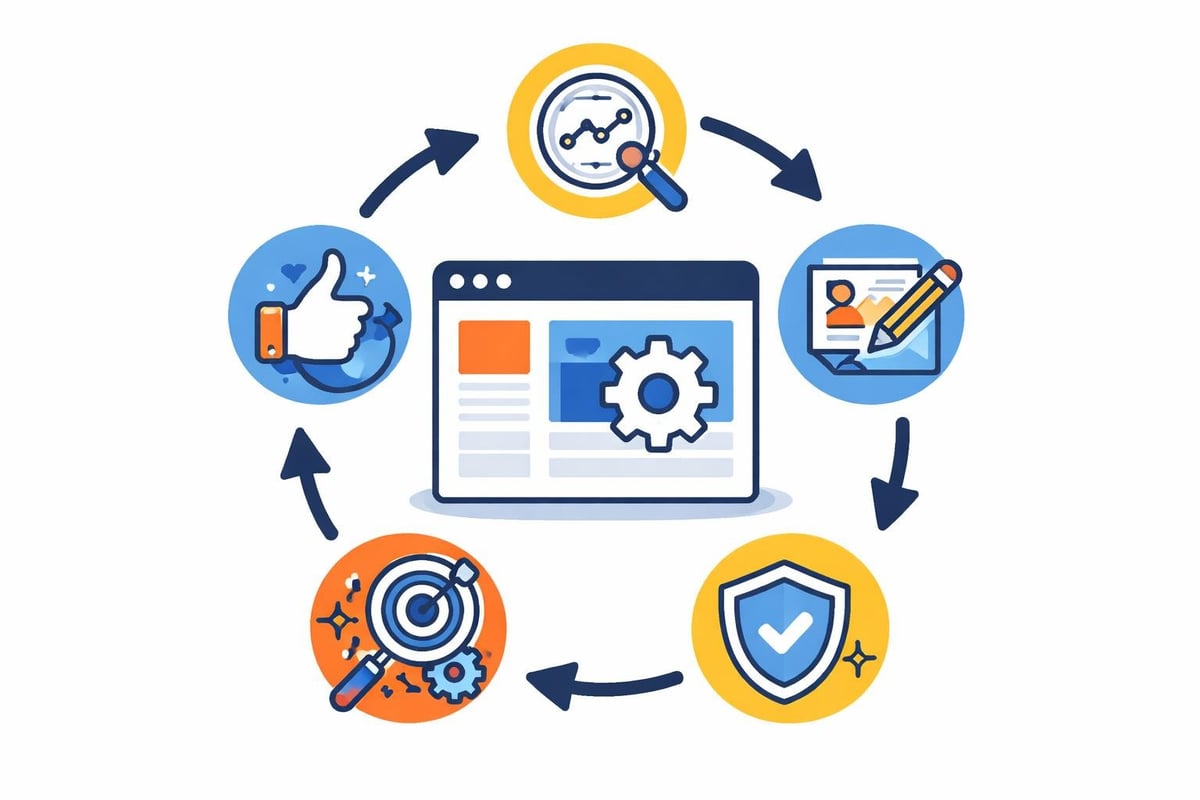
For most businesses, a hybrid maintenance approach works best:
- Automated monitoring: Let AI tools track performance metrics, uptime, and security threats
- Regular content reviews: Human oversight ensures AI-generated updates align with brand voice and business goals
- Quarterly strategic audits: Assess whether the site continues serving business objectives and user needs
- Competitive analysis: Monitor how competitor sites evolve and identify opportunities for improvement
Tools like MagicPath's Web to Design feature allow you to convert competitor sites into editable templates, helping you understand and adapt successful design patterns to your own site.
The Business Impact of AI Website Development
Beyond technical capabilities, the shift to AI-powered website creation carries significant business implications. Understanding these impacts helps leaders make strategic decisions about web presence and digital marketing investments.
Cost and Time Efficiency Analysis
Traditional website development for a professional business site typically ranges from $5,000 to $50,000 with timelines spanning two to six months. When you build a website with AI, initial versions launch within hours or days at dramatically lower costs.
| Development Approach | Timeline | Cost Range | Best For |
|---|---|---|---|
| Traditional Agency | 2-6 months | $10K-$100K+ | Complex, highly custom sites |
| AI + Professional Polish | 2-6 weeks | $2K-$15K | Businesses wanting custom look, faster delivery |
| Pure AI No-Code | 1-7 days | $0-$500 | Simple sites, rapid testing, tight budgets |
| AI-Assisted Development | 1-3 months | $5K-$30K | Technical products needing custom features |
The time savings extend beyond initial launch. AI platforms enable rapid iteration based on performance data. Where traditional updates might require development quotes and week-long implementation cycles, AI platforms let businesses test variations continuously.
Competitive Implications and Market Dynamics
The accessibility of AI website builders has lowered barriers to online presence, intensifying competition across industries. Every business can now afford a professional-looking website, shifting competitive advantage from simply having a website to having an optimized, high-performing one.
Research indicates that 76% of web design professionals view AI as a career threat, driving industry transformation as designers adapt by focusing on strategy, optimization, and specialized expertise that AI can't replicate. This evolution actually creates opportunities for businesses willing to invest beyond basic AI output.
The businesses winning online in 2026 combine AI efficiency with strategic differentiation through:
- Superior content strategy: AI generates baseline content, humans ensure depth and differentiation
- Performance optimization: Systematic testing and refinement based on real user behavior
- Multi-channel integration: Websites that connect seamlessly with social media, email, and emerging platforms
- Continuous evolution: Regular updates responding to market changes and competitive movements
Simply having an AI-generated website no longer differentiates. Strategic implementation and ongoing optimization determine success.
Addressing Common Challenges and Limitations
AI website builders deliver remarkable capabilities but come with limitations. Understanding these constraints helps set realistic expectations and develop mitigation strategies that ensure project success.
Design Originality and Brand Authenticity
AI systems train on existing websites, which can lead to outputs that feel derivative. When thousands of businesses build a website with AI using similar platforms, distinguishing your brand becomes challenging. The AI generates competent designs but rarely creates truly memorable ones without human creative direction.
Overcome this limitation by:
- Providing detailed brand guidelines that push AI toward distinctive choices
- Using AI for structure while manually refining visual elements that define brand personality
- Incorporating custom photography and graphics rather than relying on AI-selected stock images
- Working with design professionals to establish visual direction before AI generation
The most successful AI-built sites use the technology for efficiency while preserving human creativity where it creates competitive advantage.
Content Depth and Industry Expertise
AI-generated content often lacks the nuanced understanding that comes from years of industry experience. While platforms produce grammatically correct, SEO-optimized text, the depth and insight that establish thought leadership typically require human expertise.
This becomes particularly evident in specialized industries like healthcare, finance, legal services, or technical B2B sectors where accuracy and expertise directly impact credibility. AI provides excellent scaffolding, but subject matter experts should review and enhance content to ensure:
- Technical accuracy and current industry knowledge
- Appropriate depth for target audience sophistication
- Unique perspectives that differentiate from competitors
- Compliance with industry regulations and standards
The most effective workflow treats AI-generated content as first drafts requiring expert refinement rather than finished products.
Technical Limitations and Platform Lock-In
Most AI website builders operate as closed platforms. While this simplifies the building process, it can create challenges if you later need functionality the platform doesn't support or want to migrate to different infrastructure.
Before committing to a platform, evaluate:
- Export capabilities: Can you export your site data if needed?
- Extensibility options: Does the platform allow custom code or third-party integrations?
- Performance ceilings: Will the platform handle your traffic and data needs as you scale?
- Cost trajectory: How do pricing tiers change as your site grows?
For businesses with long-term growth ambitions, platforms offering more flexibility-even if slightly more complex initially-often prove more sustainable than completely locked ecosystems.
Integration with Marketing and Business Systems
A website doesn't operate in isolation. Its effectiveness depends on how well it integrates with your broader marketing technology stack and business operations. When you build a website with AI, ensuring these connections work seamlessly requires planning and often additional configuration.
Connecting AI Websites to Marketing Automation
Modern marketing depends on data flow between your website, email platform, CRM, analytics tools, and advertising systems. AI website builders vary dramatically in their integration capabilities.
Essential integrations to verify before selecting a platform:
- Email marketing platforms: Mailchimp, ConvertKit, HubSpot, ActiveCampaign
- CRM systems: Salesforce, HubSpot, Pipedrive, Zoho
- Analytics tools: Google Analytics 4, Google Tag Manager, Hotjar, Mixpanel
- Advertising pixels: Facebook Pixel, Google Ads conversion tracking, LinkedIn Insight Tag
- Chat and support: Intercom, Drift, Zendesk, custom chat solutions
The quality of these integrations impacts your ability to track ROI, nurture leads, and understand customer behavior. Some AI platforms offer native integrations, others require workarounds through tools like Zapier, and some lack integration options entirely.
E-Commerce and Transaction Functionality
For businesses selling products or services online, AI platforms must support robust e-commerce features. Evaluate payment processing options, inventory management, shipping calculations, tax handling, and security compliance.
While basic AI builders include simple payment buttons or forms, comprehensive e-commerce requires more sophisticated functionality. Consider whether the platform supports:
| E-Commerce Feature | Basic AI Builders | Advanced Platforms | Custom Development |
|---|---|---|---|
| Product catalogs | Limited (10-50 items) | Extensive (unlimited) | Fully customizable |
| Payment gateways | 1-2 options | Multiple processors | Any integration |
| Inventory tracking | Manual or basic | Automated syncing | ERP integration |
| Abandoned cart recovery | Rarely | Usually | Custom workflows |
| Multi-currency | Sometimes | Usually | Complete flexibility |
The gap between AI platform capabilities and business requirements often necessitates either accepting limitations or investing in professional development to extend functionality.
Building a website with AI has evolved from experimental technology to practical business tool, delivering professional results at unprecedented speed and cost-efficiency. Success requires understanding that AI handles execution brilliantly but still needs human strategy, creativity, and expertise to create websites that truly differentiate and perform. Whether you leverage pure AI platforms or combine AI efficiency with professional refinement depends on your specific business requirements, competitive landscape, and growth objectives. Creotivity specializes in this strategic balance, using AI to accelerate development while applying human expertise in design, optimization, and AI search visibility to create websites that don't just launch quickly but rank highly and convert visitors into customers.