
Design for You: Custom Web Solutions That Convert
Every business faces the same fundamental challenge: standing out in a crowded digital marketplace where generic templates and cookie-cutter solutions dominate. The concept of personalized design for you has evolved from a luxury to a necessity, particularly as consumers develop increasingly sophisticated expectations for digital experiences. Companies that invest in custom design solutions tailored specifically to their brand identity, target audience, and business objectives consistently outperform competitors relying on standardized approaches. This shift reflects a broader understanding that effective design transcends aesthetics to become a strategic business tool that influences perception, builds trust, and drives measurable results.
Understanding Personalized Design Strategy
Design for you represents more than simply choosing colors or layouts that match personal preferences. It encompasses a comprehensive approach to visual communication that aligns every design element with specific business goals and audience needs.
Strategic personalization involves several critical components:
- Audience research and demographic analysis
- Competitive landscape evaluation
- Brand positioning and differentiation strategy
- User experience mapping and journey optimization
- Conversion pathway design and testing
- Performance metrics and continuous refinement
The foundation of any successful custom design project begins with understanding who will interact with the final product. Design studios that specialize in personalized solutions emphasize discovery phases that uncover pain points, preferences, and behaviors unique to each client's target market. This research-driven approach ensures that design decisions serve functional purposes rather than purely aesthetic ones.
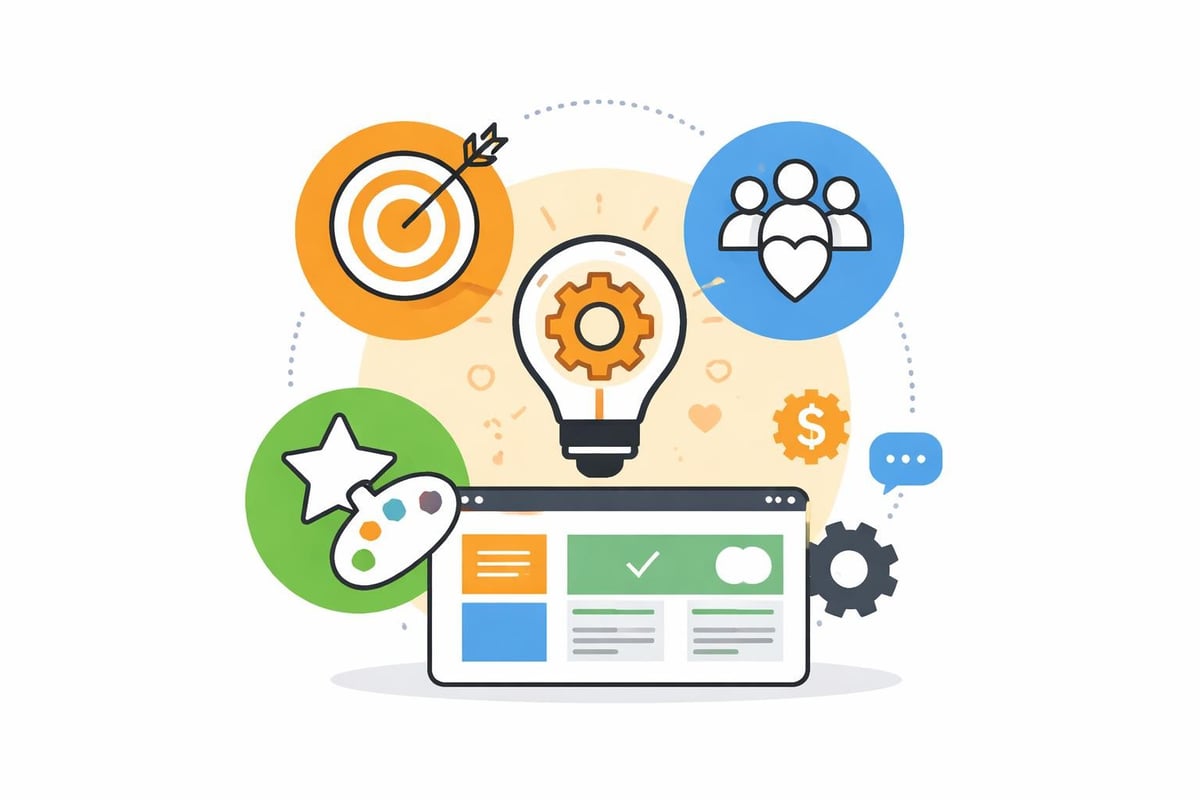
The Business Case for Custom Design
Generic templates cost less upfront but carry hidden expenses that accumulate over time. Businesses using standardized solutions often spend significant resources trying to differentiate themselves within severe constraints, ultimately achieving mediocre results that fail to justify the ongoing investment.
| Aspect | Template Approach | Custom Design for You |
|---|---|---|
| Initial Cost | Low ($50-500) | Moderate to High ($5,000-50,000+) |
| Differentiation | Limited by template constraints | Unlimited creative freedom |
| Brand Alignment | Approximate at best | Precise and intentional |
| Conversion Optimization | Generic best practices | Audience-specific optimization |
| Long-term Value | Requires frequent replacement | Sustainable competitive advantage |
| Technical Flexibility | Constrained by template limitations | Fully customizable architecture |
Custom design projects deliver return on investment through improved conversion rates, enhanced brand perception, reduced customer acquisition costs, and increased customer lifetime value. When a website accurately reflects brand positioning and speaks directly to target audience needs, visitors engage more deeply and convert at higher rates.
Creating User-Centered Design Experiences
The most effective design for you strategies prioritize user needs above all other considerations. This user-centered philosophy recognizes that websites, applications, and digital products exist to serve specific audiences with particular goals and expectations.
Research-Driven Design Decisions
Professional designers employ multiple research methodologies to inform their work. User interviews reveal motivations, frustrations, and decision-making processes. Analytics data exposes behavioral patterns and interaction bottlenecks. Competitive analysis identifies industry standards and differentiation opportunities. Heat mapping and session recordings show exactly how real users navigate existing interfaces.
These insights transform assumptions into evidence-based design strategies. Rather than guessing which layout might perform better, designers create solutions validated by actual user behavior and preferences. This approach reduces risk and accelerates time-to-value by eliminating costly trial-and-error cycles.
Key research activities include:
- Stakeholder interviews to understand business objectives
- User persona development based on demographic and psychographic data
- Customer journey mapping across all touchpoints
- Usability testing with representative audience members
- A/B testing to validate design hypotheses
- Continuous monitoring and iterative refinement
Platforms dedicated to design innovation showcase how research-driven approaches produce solutions that resonate with specific audiences while advancing broader design trends. The intersection of individual client needs and industry best practices creates uniquely effective outcomes.
Accessibility and Inclusive Design
Design for you must extend to all potential users regardless of ability, device, or circumstance. The Design for All philosophy emphasizes inclusive principles that make digital experiences accessible to the widest possible audience. This approach benefits everyone, not just users with disabilities.
Accessible design considerations include:
- Color contrast ratios that ensure readability for users with visual impairments
- Keyboard navigation for users who cannot use pointing devices
- Screen reader compatibility through semantic HTML and ARIA labels
- Responsive layouts that adapt to different screen sizes and orientations
- Clear content hierarchy and consistent navigation patterns
- Alternative text for images and transcripts for audio content
These elements represent fundamental design quality rather than special accommodations. Websites built with accessibility in mind typically perform better in search rankings, deliver superior user experiences across all demographics, and demonstrate brand values that prioritize inclusion.
Brand Identity Through Custom Visual Systems
A comprehensive design for you approach extends beyond individual projects to encompass entire visual systems that maintain consistency across all customer touchpoints. These systems codify design decisions into reusable components, guidelines, and principles that ensure brand coherence as businesses scale.
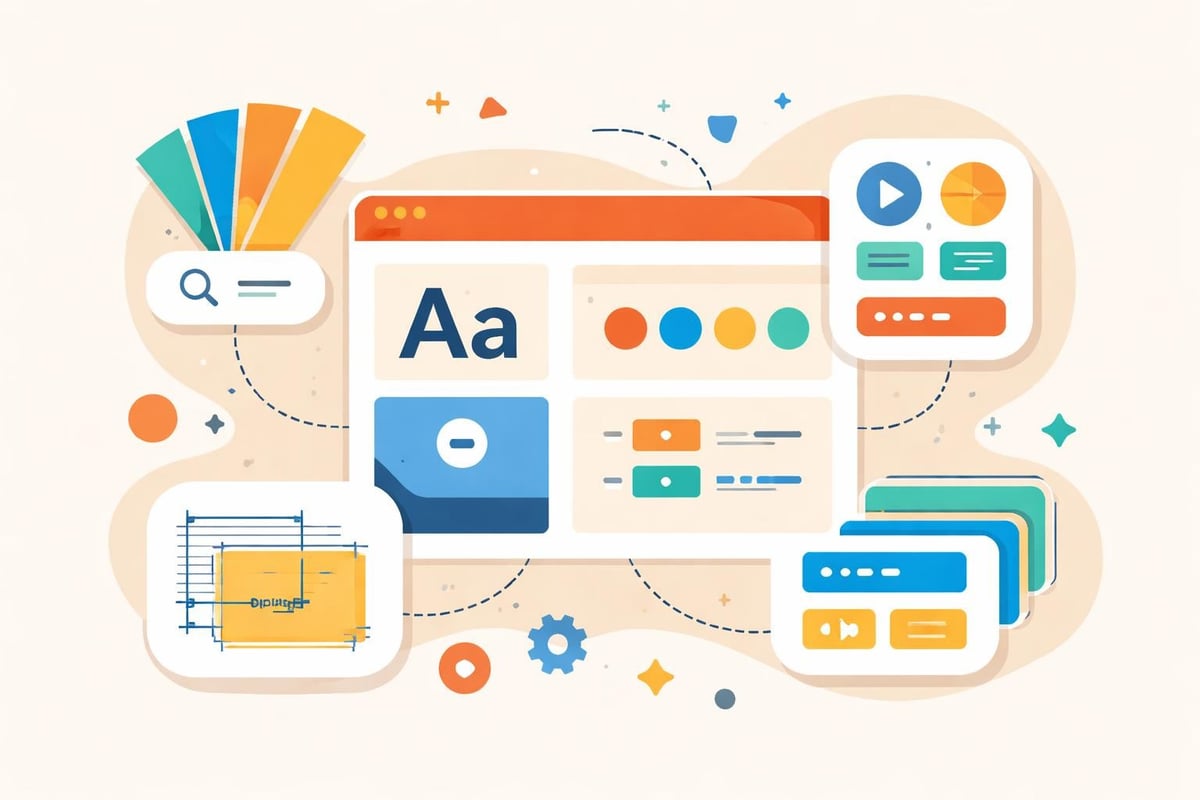
Building Cohesive Design Languages
Professional design systems document every visual element a brand uses, from typography and color palettes to button styles and animation patterns. This documentation serves multiple purposes: it accelerates future design work, maintains consistency as teams grow, and provides clear guidelines for partners and vendors.
A complete design system includes:
- Typography standards defining font families, sizes, weights, and usage contexts
- Color specifications with exact values for primary, secondary, and accent colors
- Spacing and layout grids establishing visual rhythm and hierarchy
- Component libraries containing pre-designed buttons, forms, cards, and other interface elements
- Photography and illustration guidelines ensuring visual content aligns with brand aesthetics
- Voice and tone principles connecting visual design to content strategy
Companies investing in robust design systems report faster project completion times, reduced quality inconsistencies, and improved collaboration between design and development teams. Organizations that provide tailored design solutions understand that these systems represent strategic assets delivering long-term value far exceeding their initial development cost.
Converting Visitors Through Strategic Design
Every design decision should support conversion objectives, whether those involve purchases, form submissions, content downloads, or any other desired action. Design for you strategies optimize conversion pathways by removing friction, building trust, and guiding visitors toward valuable outcomes.
Visual hierarchy directs attention to priority elements through size, color, position, and contrast. Clear calls-to-action use specific, benefit-oriented language combined with visually distinctive buttons positioned at natural decision points. Trust signals including testimonials, security badges, guarantees, and social proof address common objections before they prevent conversion.
The modern approach to web design leverages AI to accelerate development timelines without sacrificing customization quality. This technological advancement allows businesses to launch sophisticated, personalized websites in weeks rather than months while maintaining budgets that previously only supported template solutions.
| Conversion Element | Generic Approach | Personalized Approach |
|---|---|---|
| Headlines | Industry buzzwords | Audience-specific language addressing known pain points |
| Value Proposition | Feature-focused | Benefit-focused with measurable outcomes |
| Social Proof | Generic testimonials | Specific success stories from similar customers |
| Call-to-Action | "Submit" or "Click Here" | Action-oriented with clear next steps |
| Form Design | Maximum data collection | Minimum friction with progressive disclosure |
Technical Considerations for Custom Design
Beautiful design means nothing if technical implementation undermines performance, security, or search visibility. Effective design for you strategies integrate technical excellence from initial concept through ongoing maintenance.
Performance Optimization Strategies
Website speed directly impacts both user experience and search rankings. Custom designs optimized for performance deliver faster load times through image compression, efficient code structure, strategic resource loading, and content delivery network integration.
Critical performance metrics include:
- Largest Contentful Paint (LCP) measuring loading performance
- First Input Delay (FID) assessing interactivity
- Cumulative Layout Shift (CLS) evaluating visual stability
- Time to Interactive (TTI) indicating full functionality availability
- Total Blocking Time (TBT) measuring responsiveness during load
Search engines prioritize websites that deliver excellent user experiences, making performance optimization a crucial component of SEO strategy. Custom design projects should incorporate performance budgets that prevent feature creep from degrading speed over time.
Mobile-First Design Principles
With mobile devices generating over 60% of web traffic in 2026, design for you strategies must prioritize mobile experiences rather than treating them as afterthoughts. Mobile-first design begins with constraints of smaller screens and touch interfaces, then progressively enhances for larger displays.
This approach produces cleaner, more focused designs that eliminate unnecessary elements and prioritize core content. Touch targets meet minimum size requirements for accurate interaction. Navigation patterns accommodate thumb-friendly zones. Content hierarchies remain clear even on compact screens.
Responsive design techniques ensure seamless experiences across the full spectrum of device sizes without requiring separate mobile sites that fragment SEO efforts and complicate content management. Resources exploring how websites perform across different contexts provide valuable insights into optimization priorities.
Measuring Design Success Through Analytics
Implementing custom design represents just the beginning of an ongoing optimization process. Comprehensive measurement frameworks track how design decisions impact business outcomes, revealing opportunities for continuous improvement.
Establishing Baseline Metrics
Before launching new design initiatives, establish current performance benchmarks across relevant metrics. These baselines provide reference points for measuring improvement and calculating return on investment.
Key performance indicators vary by business model but often include:
- Conversion rate (percentage of visitors completing desired actions)
- Average session duration (engagement depth indicator)
- Bounce rate (percentage of single-page visits)
- Pages per session (content consumption metric)
- Revenue per visitor (direct financial impact)
- Customer acquisition cost (marketing efficiency measure)
Regular analysis of these metrics reveals which design elements contribute to business success and which require refinement. Heat maps show where users click, scroll, and spend time. Session recordings expose usability issues and confusion points. Form analytics identify abandonment triggers.

Continuous Improvement Cycles
The most successful design for you implementations treat launch as iteration zero rather than final completion. Ongoing testing and refinement compound initial improvements into sustained competitive advantages.
A/B testing compares design variations to identify optimal solutions based on actual user behavior rather than opinions. Multivariate testing examines how multiple elements interact to influence outcomes. Personalization engines deliver different experiences to different audience segments based on demographics, behavior, or context.
These data-driven approaches remove guesswork from design decisions while building organizational knowledge about what resonates with specific audiences. Understanding AI-powered optimization strategies becomes increasingly valuable as search engines and recommendation algorithms evolve.
Balancing Creativity and Commercial Objectives
Effective design for you solutions navigate the tension between creative expression and business requirements. Pure artistry without commercial consideration fails to justify investment, while excessive focus on conversion optimization can produce sterile experiences that fail to build emotional connections.
The sweet spot combines innovative visual thinking with strategic business alignment. Designers push creative boundaries while respecting brand guidelines and user expectations. Novel approaches differentiate brands from competitors without confusing or alienating target audiences.
This balance requires ongoing collaboration between creative teams and business stakeholders. Regular feedback loops ensure projects stay aligned with objectives while allowing creative exploration within defined parameters. Clear success metrics prevent subjective disagreements by anchoring discussions in measurable outcomes.
Industry-Specific Design Considerations
Design for you strategies must account for industry-specific conventions, regulatory requirements, and audience expectations. Healthcare websites prioritize trust signals and privacy compliance. E-commerce platforms optimize product discovery and checkout flows. Professional service firms emphasize credibility and expertise demonstration.
Understanding these contextual factors prevents generic solutions that ignore crucial industry nuances. Professional branding services recognize that visual identities must communicate appropriate messages for specific markets while maintaining distinctive personalities that support differentiation.
Financial services require conservative aesthetics that project stability and security. Technology startups benefit from modern, forward-looking designs that signal innovation. Local service businesses need approachable, community-oriented visual languages that build neighborhood connections.
Implementing Design Systems at Scale
As businesses grow, maintaining design consistency across expanding teams and product lines becomes increasingly challenging. Comprehensive design for you systems provide frameworks that scale with organizational needs while preserving brand coherence.
Scalable design systems address several growth challenges:
- Onboarding efficiency: New team members quickly understand design standards through comprehensive documentation
- Development speed: Reusable components accelerate project timelines and reduce redundant work
- Quality consistency: Clear guidelines prevent fragmentation as multiple people contribute to brand experiences
- Platform coherence: Consistent design language spans websites, applications, marketing materials, and physical touchpoints
- Update propagation: Centralized component libraries allow systematic updates that cascade across all implementations
Professional design agencies implement governance models that balance consistency requirements with flexibility needs. These frameworks define which elements remain fixed across all applications and which allow variation to accommodate specific contexts.
Version control systems track design system evolution, documenting changes and maintaining historical records. Regular audits identify inconsistencies requiring correction and opportunities for system refinement. Stakeholder feedback loops ensure systems serve practical needs rather than becoming bureaucratic obstacles.
Custom design solutions deliver measurable competitive advantages by aligning visual communication with specific business objectives and audience needs. Businesses ready to move beyond generic templates and invest in personalized design strategies position themselves for sustainable growth in increasingly competitive digital markets. Creotivity combines AI-accelerated development with strategic design expertise to create custom websites that rank highly across traditional search engines and emerging AI platforms, delivering modern design solutions optimized for both human users and algorithmic discovery.