SEO Optimized Website Design: The Complete Guide
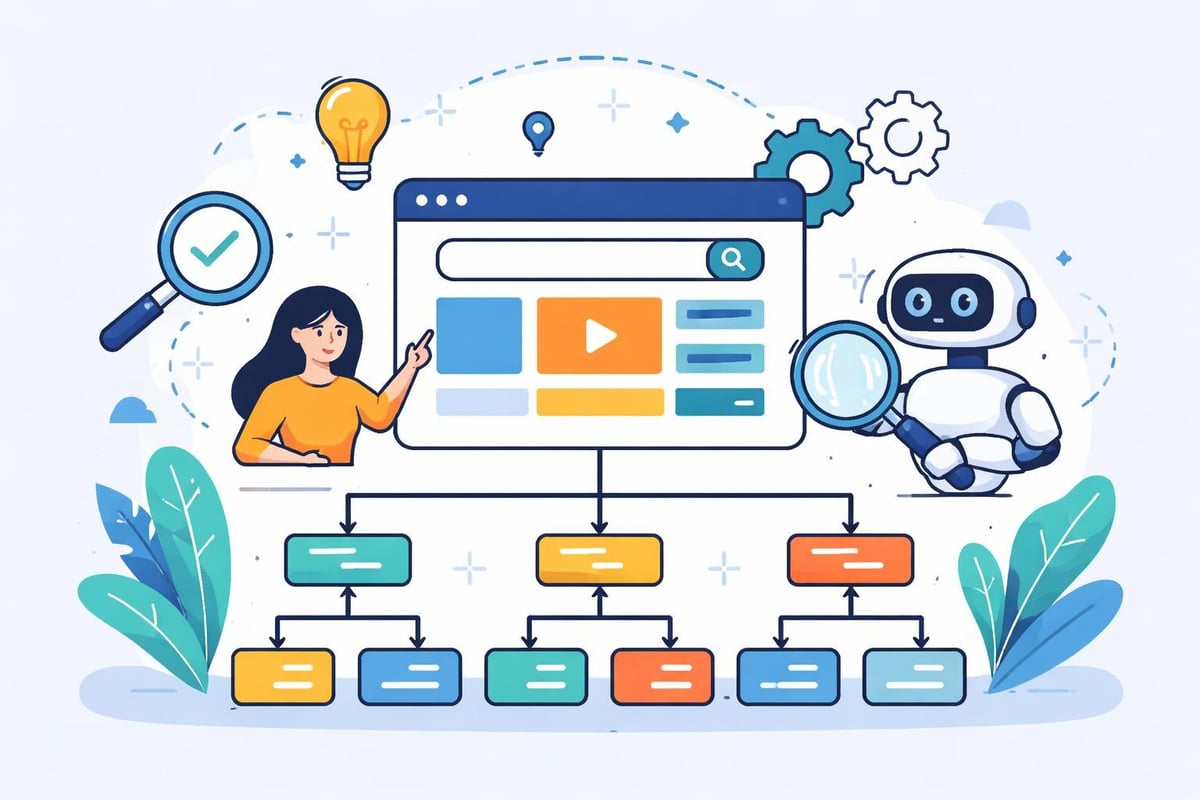
Modern businesses face a critical challenge: building websites that not only look professional but also perform exceptionally well in search results. An seo optimized website design combines aesthetic appeal with technical precision, creating digital experiences that attract both human visitors and search engine algorithms. In 2026, as AI-powered search platforms reshape how people discover information, the fundamentals of design and optimization must work together from the first line of code. Understanding how to architect websites for maximum visibility requires knowledge of user experience principles, technical SEO requirements, and emerging search technologies that now include ChatGPT, Perplexing, and Google's AI Overviews.
The Foundation of SEO Optimized Website Design
Building an effective seo optimized website design starts with understanding that search engines evaluate websites through hundreds of ranking factors. These factors encompass everything from technical infrastructure to content quality and user engagement metrics.
Core Design Principles for Search Visibility:
- Mobile-first responsive layouts that adapt seamlessly across devices
- Intuitive navigation structures that help users and crawlers find content
- Fast loading speeds that reduce bounce rates and improve rankings
- Clean, semantic HTML that communicates content hierarchy
- Accessible design that serves all users regardless of ability
The relationship between design and SEO has evolved significantly. Where these disciplines once operated separately, they now represent two sides of the same coin. Top design practices for SEO emphasize that visual appeal and search performance must develop together from the project's inception.
Search engines prioritize websites that deliver exceptional user experiences. This means your design decisions directly impact your search rankings. A beautiful website that loads slowly or confuses visitors will underperform against a well-structured competitor every time.
Mobile-First Design Architecture
Mobile devices account for over 60% of all web traffic in 2026, making mobile optimization non-negotiable for search success. Google's mobile-first indexing means the search engine primarily uses the mobile version of your content for ranking and indexing.
Responsive Design Requirements
Your seo optimized website design must deliver consistent functionality across all screen sizes. This goes beyond simply shrinking desktop layouts to fit smaller screens.
Essential Mobile Design Elements:
- Touch-friendly navigation with appropriately sized tap targets
- Readable text without requiring zoom (minimum 16px font size)
- Optimized images that load quickly on cellular connections
- Streamlined forms that minimize typing on mobile keyboards
- Accessible menu structures that work with touch gestures
The technical implementation matters as much as the visual result. Using CSS Grid and Flexbox allows for fluid layouts that adapt naturally. Media queries should enhance the experience at breakpoints rather than completely redesigning the interface at each viewport size.
| Mobile Design Aspect | SEO Impact | Best Practice |
|---|---|---|
| Page Speed | High | Optimize images, minimize JavaScript |
| Touch Navigation | Medium | 48px minimum tap target size |
| Viewport Configuration | High | Responsive meta viewport tag |
| Content Parity | Critical | Same content across devices |
Performance on mobile networks requires particular attention. Even with 5G availability expanding, many users still browse on slower connections. Implementing lazy loading for images and deferring non-critical JavaScript ensures content appears quickly.
Technical Infrastructure for Search Performance
The technical foundation of your website determines how effectively search engines can crawl, index, and rank your content. An seo optimized website design addresses these technical requirements during the development phase, not as an afterthought.
Site Speed Optimization
Page speed directly influences both user experience and search rankings. Best practices for SEO website design confirm that faster sites consistently outrank slower competitors in search results.
Speed Optimization Strategies:
- Compress images using modern formats like WebP and AVIF
- Minimize HTTP requests by combining files where appropriate
- Implement browser caching to reduce repeat load times
- Use content delivery networks (CDNs) for faster global access
- Remove unnecessary plugins and third-party scripts
- Enable GZIP compression for text-based resources
Core Web Vitals have become critical ranking factors. These metrics include Largest Contentful Paint (LCP), First Input Delay (FID), and Cumulative Layout Shift (CLS). Your design must account for these measurements, ensuring elements load efficiently and don't shift unexpectedly.
URL Structure and Site Architecture
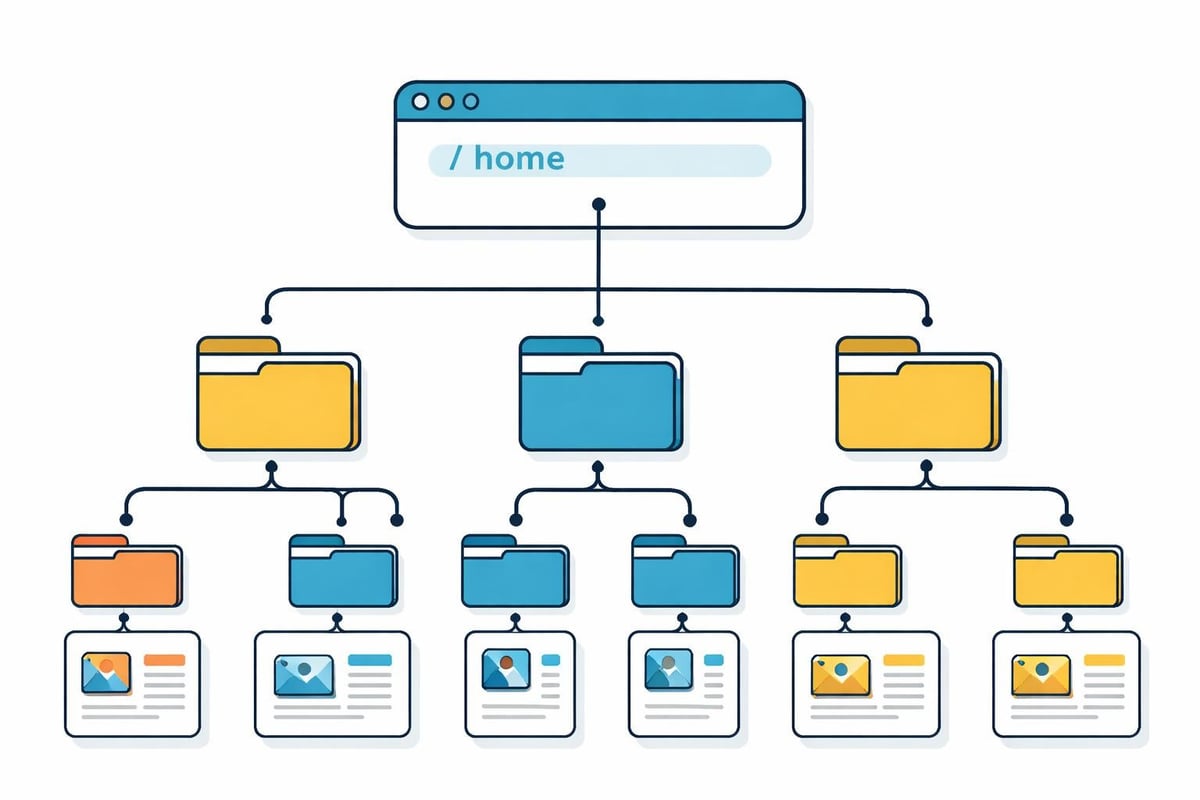
Clean, descriptive URLs help search engines understand your content hierarchy. Agencies like Creotivity use AI to accelerate structural setup while ensuring every URL follows SEO best practices from launch.
Logical site architecture creates clear pathways between related content. This internal linking structure distributes page authority and helps search engines discover all your important pages. Organizing website pages effectively involves planning category structures that make sense for both users and algorithms.
Content Hierarchy and Semantic HTML
Proper HTML structure communicates content importance to search engines. An seo optimized website design uses heading tags (H1, H2, H3) strategically to create a clear content outline.
Heading Tag Strategy
Every page should have exactly one H1 tag that describes the main topic. Subsequent headings (H2, H3, H4) create a logical outline that breaks content into digestible sections.
Heading Tag Guidelines:
- Use only one H1 per page containing the primary keyword
- Structure H2 tags as main section headings
- Use H3 tags for subsections under H2s
- Never skip heading levels (don't jump from H2 to H4)
- Make headings descriptive and keyword-relevant
Search engines use this heading structure to understand your content's organization. Well-structured headings also improve accessibility for screen reader users, creating a better experience for all visitors.
Semantic HTML Elements
Modern HTML5 provides semantic elements that describe content purpose: <article>, <nav>, <aside>, <section>, and <footer>. Using these elements instead of generic <div> tags helps search engines understand your page layout.
Navigation elements wrapped in <nav> tags signal to crawlers that these links represent your site's primary structure. Content within <article> tags indicates standalone, complete information. This semantic clarity improves how search engines interpret and rank your pages.
Image Optimization and Visual Content
Images enhance user engagement but can severely impact performance if not properly optimized. Every image in your seo optimized website design should serve a purpose and load efficiently.
Alt Text and Image SEO
Alternative text (alt text) serves dual purposes: accessibility for visually impaired users and context for search engines. Using alt tags effectively means writing descriptive text that accurately conveys image content without keyword stuffing.
Image Optimization Checklist:
- Compress images before uploading (aim for under 100KB)
- Use descriptive, keyword-relevant file names
- Write concise, accurate alt text for every image
- Implement responsive images with srcset attributes
- Choose appropriate image formats (WebP for photos, SVG for logos)
- Add width and height attributes to prevent layout shift
Visual content extends beyond static images. Videos, infographics, and interactive elements all require optimization. Videos should include transcripts for accessibility and SEO value. Hosting videos on platforms like YouTube and embedding them reduces server load while maintaining engagement benefits.
| Image Format | Best Use Case | Compression Type | SEO Benefit |
|---|---|---|---|
| WebP | Photographs | Lossy/Lossless | Fastest loading |
| JPEG | Photos | Lossy | Good compression |
| PNG | Graphics with transparency | Lossless | Quality preservation |
| SVG | Logos and icons | Vector | Scalable, small file size |
Internal Linking Strategy
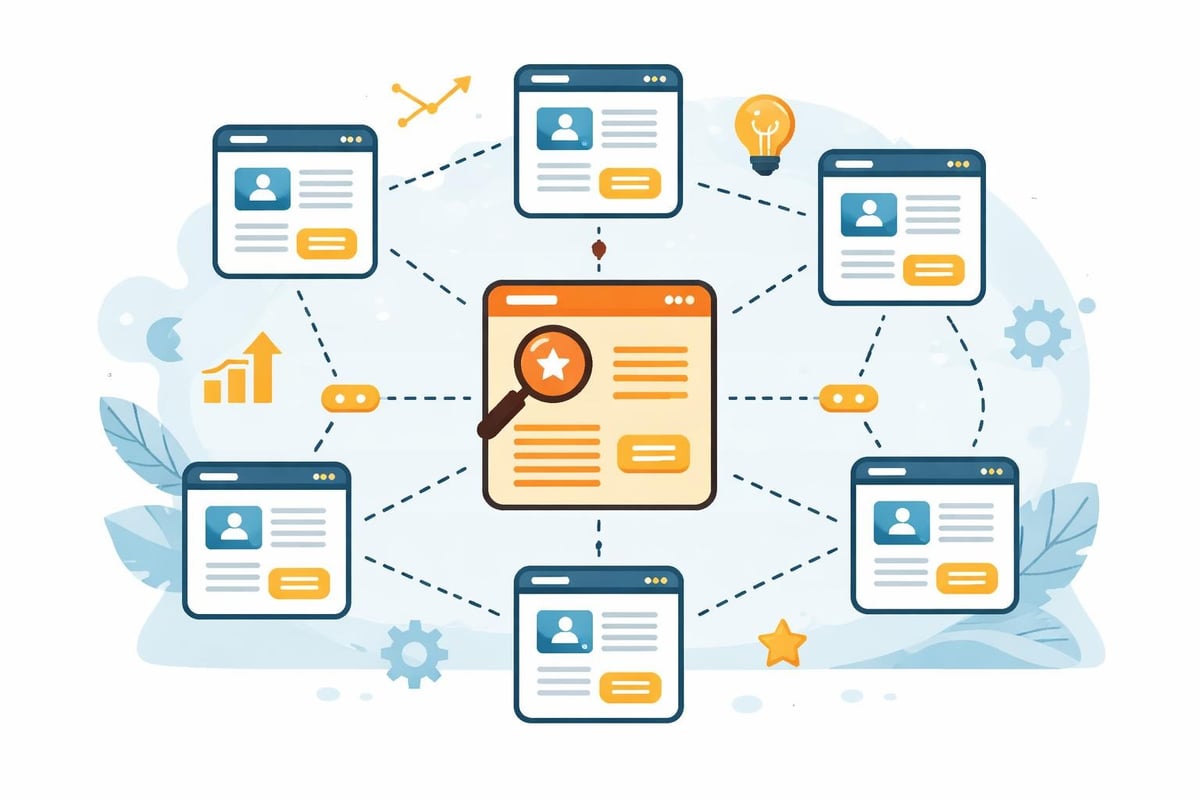
Internal links connect your content, distribute page authority, and guide visitors through your website. Strategic internal linking helps search engines discover content and understand relationships between pages.
Link Architecture Best Practices
Every page on your website should be reachable within three clicks from the homepage. This flat architecture ensures search engines can crawl your entire site efficiently while making navigation intuitive for users.
Anchor text for internal links should be descriptive and relevant to the destination page. Instead of "click here," use specific phrases like "learn more about keyword research techniques" that tell users and search engines what to expect.
Effective Internal Linking:
- Link to related content within blog posts and service pages
- Create hub pages that link to related subtopics
- Use breadcrumb navigation to show page hierarchy
- Include links in navigation menus to important pages
- Update older content with links to newer, related articles
- Avoid excessive links that dilute page authority
The navigation menu represents your most powerful internal links since it appears on every page. Carefully selecting which pages appear in primary navigation signals their importance to search engines. Secondary pages can be reached through footer links or contextual links within content.
Schema Markup and Structured Data
Structured data helps search engines understand your content's meaning and context. Implementing schema markup can earn rich snippets in search results, increasing click-through rates.
Common Schema Types for Business Websites
Different content types benefit from specific schema markup. Business websites typically implement Organization schema, Service schema, Product schema, and Article schema depending on their content.
Priority Schema Implementations:
- Organization schema for business information and branding
- LocalBusiness schema for physical locations and contact details
- Service schema for offered services and pricing
- Article schema for blog content and publication dates
- FAQ schema for frequently asked questions
- Review schema for customer testimonials and ratings
JSON-LD format is Google's recommended method for adding structured data. This JavaScript notation lives in the page head or body without affecting visible content. Tools like Google's Rich Results Test verify your implementation and preview how it appears in search results.
The evolution toward AI-driven search makes structured data even more critical. AI systems like ChatGPT and Google's AI Overviews rely on structured information to understand and cite web content accurately.
Navigation Design for SEO and UX
Navigation serves as the backbone of both user experience and search engine crawling. An seo optimized website design balances intuitive user pathways with search-friendly link structures.
Menu Structure and Hierarchy
Primary navigation should include your most important pages, typically five to seven main items. Common pitfalls in SEO web design include overly complex mega menus that confuse users and dilute link equity.
Dropdown menus can organize subcategories effectively but require careful implementation. JavaScript-dependent menus that hide content from crawlers hurt SEO performance. Ensure all navigation links are accessible to search engines using standard HTML anchor tags.
Navigation Design Principles:
| Element | User Benefit | SEO Benefit |
|---|---|---|
| Clear Labels | Easy understanding | Keyword relevance |
| Logical Grouping | Quick access | Topic clustering |
| Breadcrumbs | Location awareness | Site structure signals |
| Search Function | Content discovery | Internal search data |
| Footer Links | Additional pathways | Secondary crawl paths |
Breadcrumb navigation provides context about page location within your site hierarchy. This helps users understand where they are while giving search engines clear structural signals. Implementing breadcrumb schema markup can display these paths directly in search results.
Content Readability and User Engagement
Search engines increasingly prioritize content that genuinely serves user needs. An seo optimized website design presents information in scannable, engaging formats that encourage visitors to stay and explore.
Writing for Humans and Algorithms
Content structure affects both readability and SEO performance. Short paragraphs, descriptive subheadings, and bullet points make information easier to digest. Content readability strategies emphasize breaking complex topics into manageable sections.
Readability Enhancement Techniques:
- Keep paragraphs to 2-4 sentences maximum
- Use bullet points and numbered lists for key information
- Highlight important concepts with bold text
- Include relevant examples and case studies
- Break up text with images and multimedia
- Write in active voice for clarity and impact
Font selection impacts readability across devices. Sans-serif fonts typically perform better on screens than serif fonts. Maintain sufficient contrast between text and background (minimum 4.5:1 ratio for normal text). Line height of 1.5 to 1.6 provides comfortable reading spacing.
User engagement metrics like time on page and bounce rate influence rankings. When visitors quickly leave your site, search engines interpret this as a signal that your content didn't meet their needs. Engaging design keeps users exploring, which positively impacts SEO performance.
Technical SEO Elements in Design
Certain technical SEO requirements must be built into your website's foundation. SEO-optimized website design practices include implementing these elements during development rather than retrofitting them later.
Metadata and On-Page Elements
Every page needs unique, compelling title tags and meta descriptions. Title tags should be 50-60 characters and include target keywords naturally. Meta descriptions, while not direct ranking factors, influence click-through rates from search results.
Canonical tags prevent duplicate content issues by specifying the preferred version of similar pages. This is particularly important for e-commerce sites with product variations or content accessible through multiple URLs.
Essential Technical Elements:
- XML sitemap for search engine discovery
- Robots.txt file for crawl management
- SSL certificate for secure HTTPS connections
- 301 redirects for moved or deleted pages
- Custom 404 pages that guide users back to active content
- Hreflang tags for international or multilingual sites
Open Graph tags and Twitter Cards control how your content appears when shared on social media. While not direct SEO factors, social sharing increases visibility and can generate traffic and backlinks.
Conversion-Focused Design Elements
An seo optimized website design doesn't just attract visitors; it converts them into customers. Strategic placement of calls-to-action (CTAs) and conversion elements maintains SEO integrity while driving business results.
Balancing Conversion and SEO
Pop-ups and interstitials can hurt both user experience and SEO performance if implemented poorly. Google penalizes intrusive interstitials that block content access, particularly on mobile devices. Design CTAs that integrate naturally with content rather than interrupting the user experience.
Contact forms should be simple and accessible. Each form field represents a barrier to completion; minimize required fields to essential information only. Clear labels and helpful error messages reduce frustration and abandonment.
Conversion-Optimized Elements:
- Sticky headers with navigation and CTA buttons
- Inline CTAs within long-form content
- Exit-intent pop-ups that appear only when users show leaving behavior
- Click-to-call buttons prominently displayed on mobile
- Live chat widgets that don't obstruct content
- Trust signals like security badges and testimonials
The tools you use for analytics and optimization should help you understand user behavior without slowing down your site. Implement tracking scripts asynchronously to prevent them from blocking page rendering.
Performance Monitoring and Continuous Improvement
Launching an seo optimized website design is just the beginning. Ongoing monitoring and optimization ensure your site maintains peak performance as search algorithms and user expectations evolve.
Key Performance Metrics
Google Search Console provides invaluable data about your site's search performance. Monitor impressions, click-through rates, and average positions for target keywords. Identify pages with high impressions but low clicks to optimize titles and descriptions.
Metrics to Track Regularly:
| Metric Category | Specific Measurements | Optimization Focus |
|---|---|---|
| Technical Performance | Core Web Vitals, page speed | Code efficiency, hosting |
| User Engagement | Bounce rate, time on page | Content quality, UX |
| Search Visibility | Rankings, impressions, CTR | Keywords, metadata |
| Conversion | Form submissions, sales | CTA placement, forms |
Regular technical audits identify issues before they impact rankings. Tools like Screaming Frog crawl your site like search engines do, revealing broken links, missing metadata, and other technical problems.
A/B testing different design elements reveals what works best for your specific audience. Test one variable at a time (button colors, CTA text, image placement) to understand what drives improvements in engagement and conversions.
Accessibility as an SEO Advantage
Website accessibility ensures all users can access your content regardless of disabilities. Many accessibility best practices align perfectly with SEO requirements, making accessible design a win-win approach.
WCAG Compliance and SEO
Web Content Accessibility Guidelines (WCAG) provide standards for creating accessible web experiences. Keyword-rich anchor text benefits both screen reader users and search engines by clearly describing link destinations.
Keyboard navigation allows users to access all interactive elements without a mouse. This requires proper focus states and logical tab order, elements that also help search engine crawlers navigate your site effectively.
Accessibility Practices That Boost SEO:
- Descriptive alt text for images
- Proper heading hierarchy for content structure
- Sufficient color contrast for readability
- Keyboard-accessible navigation and forms
- Closed captions and transcripts for video content
- Clear, descriptive link text instead of generic phrases
Form labels explicitly associated with input fields help both screen readers and search engines understand form purpose. Error messages that clearly explain problems and solutions reduce frustration while maintaining professional user experience standards.
Emerging Trends in SEO Web Design
The landscape of search continues evolving, with artificial intelligence reshaping how people discover information. An seo optimized website design in 2026 must account for traditional search engines and emerging AI platforms.
AI Search Optimization
AI-powered search platforms like ChatGPT, Claude, and Google's AI Overviews present information differently than traditional search results. These systems prioritize clear, authoritative content that directly answers questions. If you want to rank on ChatGPT and similar platforms, structuring content in question-and-answer formats helps AI systems extract and cite your information.
Voice search continues growing, requiring content that answers conversational queries. People speak differently than they type, using longer, more natural phrases. Optimizing for voice means including these longer-tail keywords and question-based phrases naturally within your content.
Future-Ready Design Strategies:
- Structured data implementation for AI understanding
- Question-based content that answers specific queries
- Natural language optimization for voice search
- Fast, mobile-optimized experiences for on-the-go users
- Video content with searchable transcripts
- Featured snippet optimization for position zero rankings
Progressive Web Apps (PWAs) blur the line between websites and native applications. These designs offer offline functionality and app-like experiences while maintaining SEO benefits that native apps lack. PWAs load nearly instantly and work reliably even on flaky network connections.
Creating an seo optimized website design requires balancing aesthetic appeal, technical performance, and search engine requirements. The strategies outlined above provide a comprehensive framework for building websites that attract organic traffic while delivering exceptional user experiences. Creotivity specializes in designing modern websites optimized for both traditional search engines and emerging AI platforms, helping businesses establish strong digital presences that convert visitors into customers. Ready to build a website that ranks and performs? Connect with our team to discuss your project.