
Your Design: Building Sites That Rank in 2026
The digital landscape has transformed dramatically over the past few years, and your design choices now determine not just aesthetics but your entire online visibility strategy. In 2026, businesses face a critical challenge: creating websites that rank highly on both traditional search engines and emerging AI platforms while delivering exceptional user experiences. Your design isn't simply about looking professional anymore-it's about building a digital asset that works as your most effective marketing tool, converting visitors into customers while maintaining visibility across every search platform your potential clients use.
Understanding How Your Design Impacts Search Rankings
Your design fundamentally influences how search engines and AI platforms perceive and rank your website. Every design decision you make sends signals to Google's algorithms and AI-powered search tools about the quality, relevance, and trustworthiness of your content.
The architecture of your design determines crawlability and indexation efficiency. When you structure your site with clear hierarchies, logical navigation patterns, and semantic HTML, you enable search engines to understand your content relationships. This structural foundation affects how quickly new content gets indexed and how well search engines comprehend your site's purpose.
Technical Performance as a Design Priority
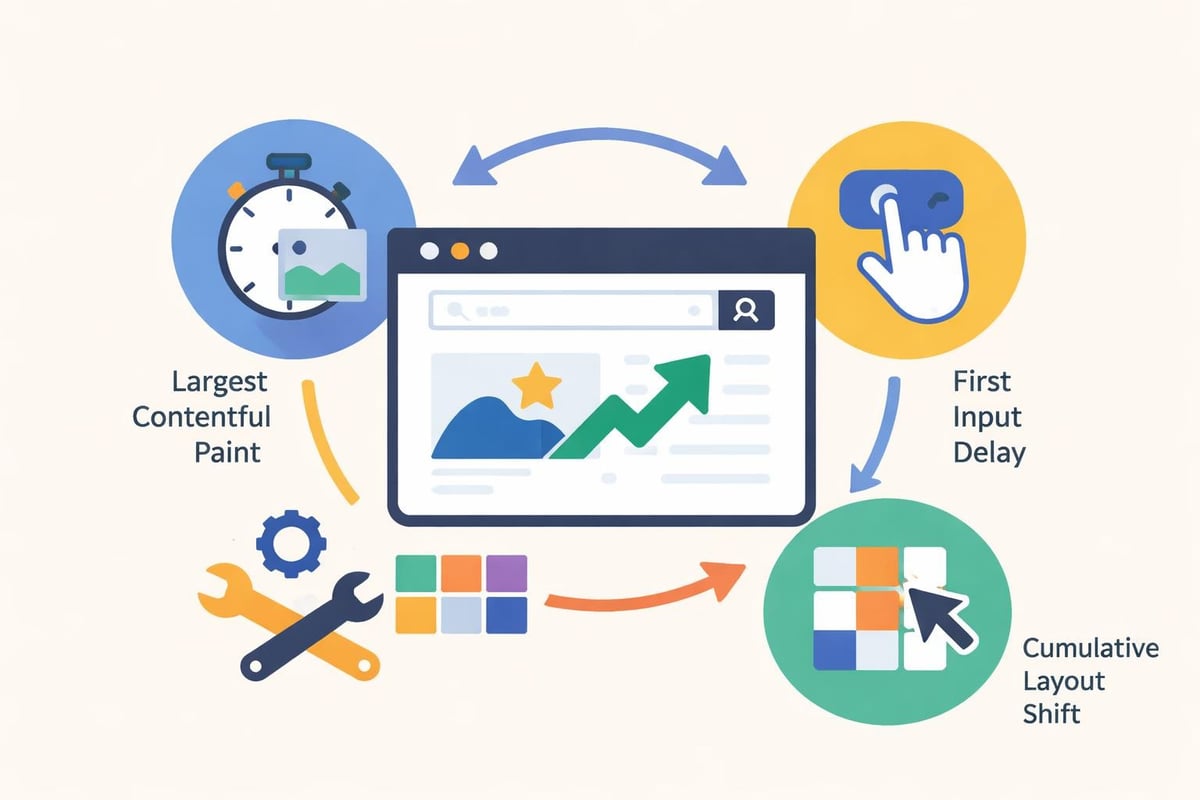
Page speed and Core Web Vitals have become non-negotiable elements of effective web design. Your design choices directly impact loading times, interaction responsiveness, and visual stability-the three pillars that Google measures through Largest Contentful Paint (LCP), First Input Delay (FID), and Cumulative Layout Shift (CLS).
Key performance considerations in your design:
- Image optimization and modern format implementation (WebP, AVIF)
- CSS and JavaScript efficiency and bundling strategies
- Server response optimization through hosting infrastructure
- Lazy loading implementation for below-fold content
- Font loading strategies that prevent layout shifts
Mobile-first design has evolved from a best practice to a fundamental requirement. With mobile-first indexing now standard, Google primarily uses the mobile version of your design for ranking purposes. Your design must deliver full functionality, readable content, and intuitive navigation on smartphone screens without compromising on features.
Creating User-Centric Design That Converts
Your design must prioritize human visitors while satisfying algorithmic requirements. The most successful websites in 2026 achieve this balance by focusing on user intent and behavior patterns rather than gaming ranking systems.
Behavioral metrics such as dwell time, bounce rate, and pages per session provide search engines with quality signals about your design effectiveness. When visitors spend time engaging with your content, exploring multiple pages, and returning to your site, these patterns indicate valuable, well-designed resources that deserve higher rankings.
Navigation and Information Architecture
Clear navigation structures help both users and search crawlers understand your site organization. Your design should implement breadcrumb navigation, logical category hierarchies, and intuitive menu systems that make information discovery effortless.
| Navigation Element | User Benefit | SEO Benefit |
|---|---|---|
| Breadcrumbs | Contextual awareness | Internal linking structure |
| Mega menus | Quick access to subsections | Crawl depth reduction |
| Search functionality | Direct information retrieval | User engagement signals |
| Related content links | Extended engagement | Topic clustering |
Your design should guide visitors through intentional pathways that align with their search intent. Someone arriving from a specific keyword search expects immediate visual confirmation they've found the right resource. Strategic use of headings, whitespace, and visual hierarchy ensures your design communicates value within seconds.
The future of interaction design emphasizes adaptive interfaces that respond to user context and preferences. Implementing these principles in your design creates experiences that feel personalized and relevant, increasing engagement metrics that influence rankings.
Optimizing Your Design for AI Search Visibility
AI-powered search platforms like Google AI Overviews, ChatGPT, Perplexus, and Claude evaluate websites differently than traditional algorithms. Your design must now accommodate these AI systems that prioritize content clarity, structured data, and semantic relationships.
Structured data implementation becomes critical when optimizing your design for AI visibility. Schema markup helps AI platforms extract precise information from your pages, increasing the likelihood your content appears in AI-generated responses and featured snippets.
Content Presentation for AI Comprehension
Your design should present information in formats that AI systems can easily parse and understand. This means implementing clear content hierarchies, descriptive headings that accurately reflect section content, and logical information flow that matches how people ask questions.
AI platforms favor content that answers specific questions directly and comprehensively. When planning your design, consider how visitors will interact with your content through voice search and conversational AI interfaces. Ranking on ChatGPT requires thinking beyond traditional keyword optimization toward natural language patterns and comprehensive topic coverage.
- Implement FAQ sections with structured data markup
- Use descriptive headings that mirror common search queries
- Create comprehensive resource pages that cover topics exhaustively
- Structure content in scannable formats with bullet points and tables
- Include relevant internal links that establish topical authority
Your design should make expertise, authority, and trustworthiness (E-A-T) immediately apparent. Visual design choices like professional photography, clear author attribution, trust badges, and security indicators all contribute to the credibility signals that influence AI platform recommendations.

Visual Design Elements That Influence Rankings
Aesthetics and usability are inseparable in modern web design. Your design's visual appeal affects perceived credibility, which directly influences user behavior metrics that search engines monitor.
Typography choices impact readability across devices and screen sizes. Your design should implement responsive font sizing, appropriate line heights, and sufficient contrast ratios that ensure accessibility for all visitors. Poor typography leads to higher bounce rates and lower engagement-negative signals that suppress rankings.
Color psychology plays a subtle but significant role in how visitors perceive your brand and content. Your design should use color strategically to guide attention, establish visual hierarchy, and create emotional connections that encourage deeper engagement.
Accessibility as a Ranking Factor
Accessible design isn't just ethical-it's essential for search performance. Your design must accommodate visitors with disabilities through proper heading structures, alternative text for images, keyboard navigation support, and screen reader compatibility.
When you design with accessibility in mind, you simultaneously improve your site's semantic clarity for search engines. The same structural elements that help screen readers navigate your content also help search crawlers understand information relationships and hierarchy.
Modern agencies like Creotivity use AI to accelerate development while maintaining these crucial accessibility and performance standards, delivering custom websites that rank well without the traditional timeline constraints.
Content Strategy Integration in Your Design
Your design framework should support and enhance your content marketing efforts. The most effective websites treat design and content as interconnected elements of a unified strategy rather than separate concerns.
Visual content integration affects both user engagement and search visibility. Your design should accommodate various content types-blog posts, videos, infographics, case studies, and interactive tools-while maintaining consistent branding and usability patterns across formats.
Internal Linking Architecture
Strategic internal linking distributes authority throughout your site and helps search engines discover and understand content relationships. Your design should facilitate natural internal linking through related content widgets, contextual links within body content, and navigational elements that connect topically related pages.
Internal linking best practices for your design:
- Implement automated related content suggestions based on categories and tags
- Design content templates that encourage contextual linking within body text
- Create hub pages that organize content clusters around core topics
- Use descriptive anchor text that indicates link destination content
- Design navigational elements that surface deep content to crawlers
Your design should make it effortless for content creators to implement proper internal linking without requiring technical expertise. Template-based systems with built-in related content modules ensure consistency across your site while distributing link equity effectively.
Mobile Design Considerations for 2026
Mobile design extends far beyond responsive layouts in 2026. Your design must deliver native-quality experiences that leverage mobile-specific capabilities while maintaining performance on varying network conditions and device capabilities.
Progressive Web App (PWA) functionality has become standard for competitive websites. Your design should incorporate offline functionality, push notifications, and app-like interactions that increase engagement and return visit rates.
| Mobile Design Element | Impact on User Experience | Impact on Rankings |
|---|---|---|
| Touch-optimized controls | Easier interaction | Lower bounce rates |
| Simplified navigation | Faster information access | Improved dwell time |
| Optimized images | Faster loading | Better Core Web Vitals |
| Readable typography | Enhanced content consumption | Increased engagement |
| Strategic whitespace | Reduced cognitive load | Lower exit rates |
Your design must account for thumb-friendly interaction zones, ensuring primary calls-to-action and navigation elements fall within easily reachable screen areas. This attention to mobile usability details translates directly into improved conversion rates and positive behavioral signals.

Conversion-Focused Design Elements
Your design should guide visitors toward specific actions that align with your business objectives. Conversion rate optimization (CRO) and SEO are complementary disciplines-both benefit from clear user pathways, compelling value propositions, and friction-free experiences.
Strategic placement of calls-to-action within your design affects both conversion performance and user engagement metrics. Your design should present relevant CTAs at natural decision points within the user journey without creating intrusive experiences that increase bounce rates.
Trust Signals and Social Proof
Your design must communicate credibility through visual trust signals that reassure visitors about your legitimacy and expertise. Client logos, testimonials, case studies, certifications, and security badges all contribute to perceived trustworthiness when integrated thoughtfully into your design.
Authenticity matters more than ever in 2026. Your design should showcase genuine social proof through verified reviews, detailed case studies, and transparent information about your team and processes. AI platforms increasingly evaluate authenticity signals when determining which sources to reference in generated responses.
Maintaining Design Performance Over Time
Your design requires ongoing optimization to maintain competitive rankings. Technical debt accumulates as content expands, new features get added, and external dependencies update. Regular performance audits identify opportunities to refine your design for better speed and user experience.
Maintenance considerations for long-term design success:
- Quarterly Core Web Vitals assessments and optimization
- Regular accessibility audits using automated and manual testing
- Mobile usability testing across diverse devices and screen sizes
- Content inventory reviews to identify outdated or underperforming pages
- Security updates for design frameworks and dependencies
Your design should be built on maintainable foundations that allow for evolution without complete rebuilds. Modular design systems, well-documented code, and scalable architecture ensure your site can adapt to changing search algorithms and user expectations.
Analytics integration should be fundamental to your design planning. Tools like Google Analytics provide behavioral data that reveals how real visitors interact with your design, identifying friction points and optimization opportunities that pure theory cannot uncover.
Brand Consistency Across Design Elements
Your design serves as the primary expression of your brand identity in digital spaces. Consistency across visual elements, messaging, tone, and user experience creates recognition and trust that influences both direct conversions and indirect ranking factors.
Typography systems, color palettes, imagery styles, and interface patterns should remain consistent across your entire digital presence. This consistency extends beyond your website to social media profiles, email communications, and digital advertising-creating a cohesive brand experience that reinforces recognition.
When visitors encounter your brand across multiple touchpoints, consistent design builds familiarity that increases click-through rates from search results. Higher CTRs send positive engagement signals to search engines, creating a virtuous cycle where strong branding improves search visibility, which in turn strengthens brand recognition.
The comprehensive resources at Creotivity explore how integrated branding and technical optimization work together to create competitive advantages in crowded markets.
Security and Trust in Modern Design
Security features have become visible design elements rather than invisible technical requirements. Your design should prominently display HTTPS encryption indicators, privacy policy links, and clear data handling explanations that reassure security-conscious visitors.
Cookie consent implementations, GDPR compliance interfaces, and transparent data collection notices are now standard design components that affect both legal compliance and user trust. Your design should handle these requirements gracefully without degrading the user experience or obscuring primary content.
Security breaches damage both user trust and search rankings. Your design should incorporate security best practices from the foundation-secure hosting configurations, regular software updates, secure forms with spam protection, and protection against common vulnerabilities.
Your design represents the intersection of aesthetics, functionality, and strategic visibility in 2026's complex digital ecosystem. The most successful websites balance beautiful visual presentations with technical excellence, user-centric experiences with search engine requirements, and immediate appeal with long-term performance. As search continues evolving toward AI-powered platforms, investing in design that prioritizes clarity, accessibility, and genuine value creation positions your business for sustained visibility and growth. Creotivity specializes in building modern websites that excel across traditional and AI search platforms, combining accelerated development timelines with the strategic depth required for competitive rankings and meaningful conversions.