
Agency Rank: Metrics, Methods, and What Really Matters
Understanding how agencies are evaluated and ranked has become increasingly important for businesses seeking the right partner for their digital transformation. Agency rank isn't just about size or revenue-it encompasses performance metrics, client satisfaction, industry recognition, and the tangible results delivered to businesses. As the marketing landscape evolves in 2026, knowing what drives these rankings helps companies make informed decisions about which agencies can truly deliver on their promises.
What Agency Rank Actually Measures
Agency rank serves as a composite indicator of an agency's overall market position and capability. Rather than relying on a single metric, ranking systems evaluate multiple dimensions to create a comprehensive picture of agency performance.
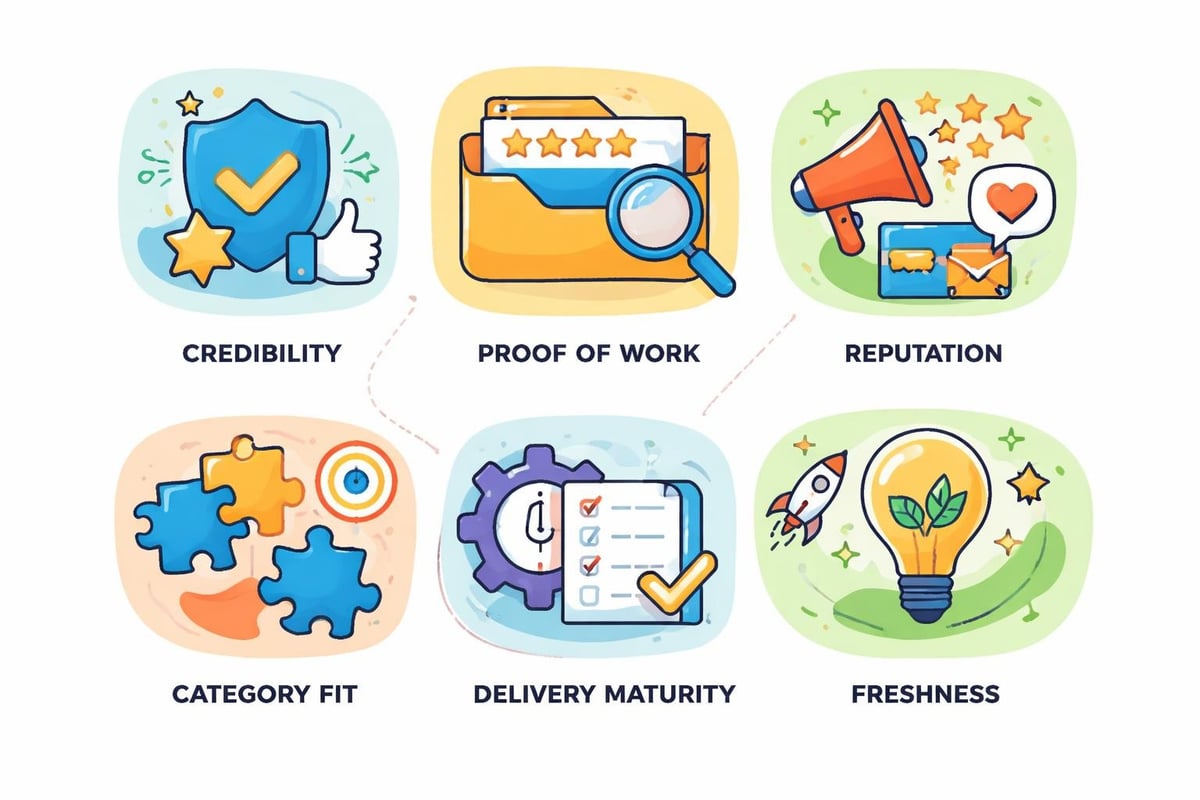
The most credible ranking methodologies assess credibility, proof of work, reputation, category fit, delivery maturity, and freshness as core evaluation criteria. Each component offers unique insights into different aspects of agency capability. Credibility examines the agency's track record and industry standing. Proof of work validates actual deliverables and case studies. Reputation captures client testimonials and peer recognition.
Category fit determines how well an agency's expertise aligns with specific industry needs. A healthcare-focused agency might rank differently than one specializing in technology startups, even if both excel in their respective niches.
Performance-Based Ranking Systems
Performance-based rankings focus on measurable outcomes rather than subjective assessments. The Effie Index exemplifies this approach by identifying and ranking the most effective marketers, brands, and agencies worldwide based on actual campaign results.
These systems prioritize:
- Campaign effectiveness measured by ROI and KPIs
- Client retention rates indicating long-term satisfaction
- Revenue growth demonstrating business impact
- Award recognition from industry competitions
- Innovation metrics showing thought leadership
Performance rankings often segment agencies by size, specialty, and geographic market to ensure fair comparisons. A boutique agency serving 20 clients with exceptional results might rank higher in its category than a large network agency with broader but less impressive outcomes.
The Evolution of Agency Rankings in the Digital Age
Traditional agency rank focused heavily on billing volume and headcount. In 2026, the criteria have fundamentally shifted toward digital capability, AI integration, and measurable business outcomes.
Modern ranking frameworks recognize that a smaller, specialized team with advanced technology can outperform larger traditional agencies. This democratization has allowed innovative boutique agencies to compete effectively with established players.
| Traditional Criteria | Modern 2026 Criteria |
|---|---|
| Total billing revenue | Client ROI and retention |
| Number of employees | Team expertise and specialization |
| Years in business | Technology adoption and innovation |
| Office locations | Remote capability and global reach |
| Industry awards | Client testimonials and case studies |
The shift toward outcome-based evaluation has made agency rank more meaningful for businesses seeking partners. Rather than choosing based on size alone, companies can now identify agencies that demonstrate proven expertise in their specific needs.
Industry-Specific Ranking Considerations
Different industries weight ranking criteria differently. Real estate agencies are evaluated on transaction volume and market share, while marketing agencies face scrutiny on campaign performance and client satisfaction.
For businesses looking to improve their visibility across both traditional search engines and AI platforms, understanding how AIO specialists are ranked helps identify agencies that stay ahead of technological shifts. These agencies demonstrate expertise in optimizing for Google AI Overviews, ChatGPT, Claude, Perplexity, and other generative search platforms.
Key Metrics That Influence Agency Rank
Quantifiable metrics form the backbone of credible ranking systems. These measurements provide objective data points that businesses can use to compare agencies effectively.
Client satisfaction scores typically carry the most weight in comprehensive rankings. Agencies that maintain high Net Promoter Scores (NPS) and client retention rates demonstrate consistent value delivery. Industry benchmarks suggest that top-ranked agencies maintain retention rates above 85% annually.
Project success rates measure how often agencies deliver on time, on budget, and meet stated objectives. Leading agencies track this metric internally and share aggregated results with ranking organizations. Success rates above 90% typically indicate mature delivery processes and experienced teams.
Revenue and Growth Indicators
Revenue metrics provide insight into market demand and business stability:
- Year-over-year revenue growth demonstrates market competitiveness
- Revenue per employee indicates operational efficiency
- Client concentration reveals dependency risks
- Service line diversity shows adaptability
Agencies that rank consistently high typically show steady revenue growth of 15-25% annually, balanced client portfolios where no single client represents more than 20% of revenue, and multiple service offerings that protect against market shifts.

Client-Centric Evaluation Methods
The most valuable agency rank systems incorporate direct client feedback through structured surveys and interviews. These assessments capture qualitative dimensions that raw numbers cannot reveal.
Client evaluations typically examine communication quality, strategic thinking, creative excellence, technical capability, and responsiveness. The best agencies excel across all dimensions rather than specializing in just one or two areas.
Transparency in Ranking Methodologies
Credible ranking organizations publish their methodologies openly, allowing agencies and clients to understand exactly what drives the rankings. This transparency helps businesses weight different ranking systems according to their specific priorities.
For example, a business prioritizing SEO performance would value rankings that heavily weight search visibility outcomes. Understanding that websites appearing in Google requires specific technical and content strategies helps contextualize which agency rank indicators matter most.
The Role of Employee Satisfaction
Employee satisfaction directly impacts agency rank through multiple channels. Federal government workplace rankings demonstrate how employee engagement correlates with organizational effectiveness across sectors.
High employee satisfaction leads to:
- Better client service and retention
- Higher quality creative output
- Lower turnover and preserved institutional knowledge
- Stronger culture and team collaboration
- Enhanced innovation and problem-solving
Agencies appearing in workplace satisfaction rankings often simultaneously rank highly in client satisfaction surveys. The connection between happy employees and successful client outcomes is well-documented across industries.
Specialized Rankings and Industry Recognition
Beyond general agency rankings, specialized recognition systems evaluate specific capabilities. These niche rankings help businesses identify agencies with proven expertise in particular domains.
Design excellence awards recognize agencies that deliver exceptional creative work. Technology innovation rankings highlight firms that leverage cutting-edge tools and platforms. Industry-specific recognition validates deep expertise in sectors like healthcare, finance, or technology.
For businesses operating in competitive markets, partnering with agencies that rank highly in relevant specialized categories often yields better results than choosing generalist firms based solely on overall size or revenue.
Geographic and Market Segment Rankings
Market-specific rankings account for regional differences and competitive dynamics. An agency that ranks first in Brussels might not appear in London rankings, reflecting different client bases and market conditions.
| Market Segment | Key Ranking Factors | Typical Evaluation Frequency |
|---|---|---|
| Enterprise B2B | Strategic capability, scale, proven results | Annual |
| SMB/Mid-market | Cost efficiency, flexibility, responsiveness | Quarterly |
| Startup/Growth | Innovation, speed, risk tolerance | Continuous |
| Local/Regional | Community ties, cultural fit, accessibility | Annual |
Understanding which market segment ranking applies to your business helps filter relevant agencies from the broader landscape. A local business doesn't need an enterprise-ranked agency, and a multinational corporation needs more than regional recognition.

How Businesses Should Interpret Agency Rank
While agency rank provides valuable information, it shouldn't be the sole decision factor. Rankings offer a starting point for identifying credible agencies, but the best fit depends on alignment between agency capabilities and business needs.
Question the ranking source. Independent, transparent methodologies carry more weight than self-reported rankings or pay-to-play directories. Research who conducts the ranking, how data is collected, and whether the methodology aligns with your priorities.
Consider recency. Rankings can change as agencies evolve. A high ranking from three years ago may not reflect current capabilities. Look for current-year rankings and recent client case studies.
Beyond the Numbers
Schedule conversations with agencies to understand their approach, culture, and specific expertise in your domain. Ask about:
- Recent client projects similar to your needs
- Team composition and who would actually work on your account
- Technology stack and process methodologies
- How they measure and report success
- Client references in comparable industries
The agency that ranks highest overall may not be the best choice for your specific situation. A boutique firm with deep expertise in your niche might deliver better results than a top-ranked generalist agency.
Future Trends in Agency Evaluation
Agency rank methodologies continue evolving as the marketing landscape transforms. Several trends are reshaping how agencies are evaluated in 2026 and beyond.
AI capability assessment has become a standard ranking criterion. Agencies demonstrating expertise in AI-driven search optimization and ranking on platforms like ChatGPT receive recognition for future-focused capabilities.
Sustainability and social responsibility increasingly influence agency rank. Businesses want partners whose values align with their own, making ethical practices and environmental consciousness relevant evaluation factors.
Real-time performance tracking is replacing annual rankings. Some platforms now offer continuous agency performance monitoring based on live client feedback and project outcomes. This shift provides more current information than traditional annual rankings.
Making Agency Rank Work for Your Business
Use agency rank as one tool in a comprehensive evaluation process. Combine ranking data with:
- Direct client references from businesses similar to yours
- Portfolio review examining work quality and relevance
- Capability assessment testing specific skills you need
- Cultural alignment ensuring compatible working styles
- Pricing transparency confirming budget compatibility
The most successful agency partnerships emerge when businesses look beyond rank to find genuine alignment. An agency ranking 50th overall but specializing in your exact needs often outperforms the number-one ranked generalist.
Start by defining your specific requirements, then use rankings to create a shortlist of agencies demonstrating relevant expertise. From there, conduct deeper evaluation to identify the best long-term partner.
Agency rank provides valuable insights into capability, reputation, and performance across the marketing industry. However, the most important ranking is how well an agency delivers results specifically for your business. Whether you need enhanced visibility in traditional search, emerging AI platforms, or a complete digital presence overhaul, partnering with the right agency makes all the difference. Creotivity specializes in building websites optimized for both Google and AI search engines, helping businesses stay visible as search technology evolves. Ready to work with an agency focused on measurable results? Let's discuss how we can help you achieve your goals.