
How to Build AI Website: Complete 2026 Guide
Artificial intelligence has fundamentally transformed how businesses approach web development in 2026. What once required weeks of manual coding and design work can now be accomplished in days through intelligent automation. Companies looking to build AI website solutions face a new landscape where machine learning algorithms handle everything from layout generation to content optimization. Understanding how to leverage these tools while maintaining human oversight determines whether your site merely exists online or actively drives business growth through strategic visibility on both traditional search engines and AI-powered platforms.
Understanding AI Website Building in 2026
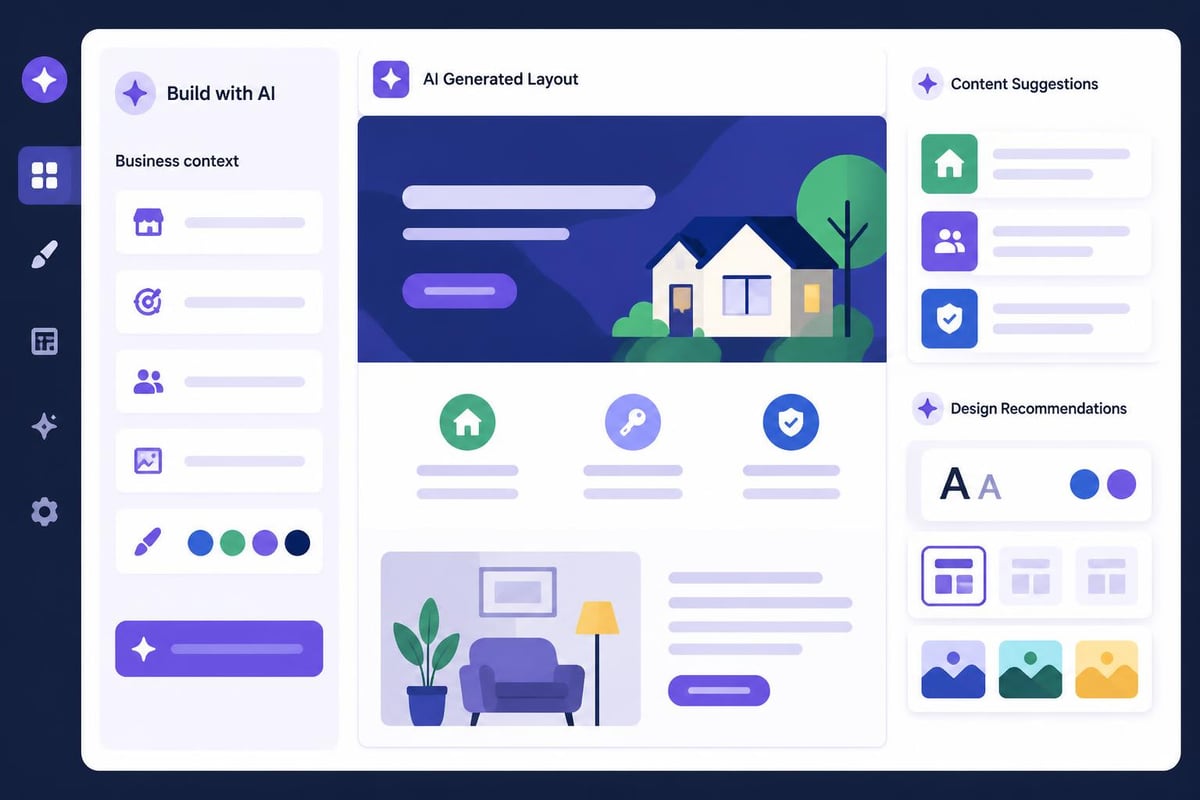
The modern approach to build AI website projects combines automated generation with strategic customization. AI website builders analyze millions of successful sites to recommend layouts, color schemes, and structural elements that align with your industry and brand identity. These platforms use natural language processing to interpret your business goals and translate them into functional designs.
Core AI capabilities now include:
- Automated responsive design across all devices
- Dynamic content generation based on user behavior
- Real-time A/B testing and optimization
- Predictive analytics for user experience improvements
- Automated accessibility compliance
The technology has matured beyond simple templates. Modern AI website builders now incorporate sophisticated algorithms that understand design principles, user psychology, and conversion optimization. They analyze your competitors, identify industry-specific best practices, and generate unique designs that differentiate your brand.
Choosing the Right AI Website Platform
Platform selection impacts both immediate development speed and long-term scalability. Different AI builders excel in specific areas depending on your business model and technical requirements.
| Platform Type | Best For | Key Strength | Limitation |
|---|---|---|---|
| Full AI Automation | Quick launches | Speed to market | Less customization |
| Hybrid AI-Manual | Custom brands | Balance of control | Steeper learning curve |
| AI-Assisted Development | Complex sites | Maximum flexibility | Requires technical knowledge |
| Specialized Industry Tools | Niche businesses | Pre-built integrations | Limited to specific sectors |
When evaluating platforms, prioritize those that offer granular control over SEO elements. The ability to customize meta tags, structured data, and URL structures proves critical for visibility. Platforms designed for AI-powered web design should provide transparency into how algorithms make decisions about layout and content placement.
Optimizing Your AI-Built Website for Search Visibility
Building the site represents only half the challenge. Making it discoverable requires strategic optimization for both traditional search engines and emerging AI platforms. Google's AI Overviews, ChatGPT, Claude, and Perplexity all evaluate websites differently than classic algorithms.
Technical Foundation for AI Search
Search engines and AI platforms prioritize sites with clean technical architecture. Your AI builder should automatically implement these elements, but verification remains essential.
Critical technical requirements include:
- Mobile-first responsive design that adapts seamlessly across all screen sizes
- Core Web Vitals compliance with loading speeds under 2.5 seconds
- Logical URL structures that reflect content hierarchy
- Comprehensive structured data using Schema.org markup
- XML sitemaps that update automatically when content changes
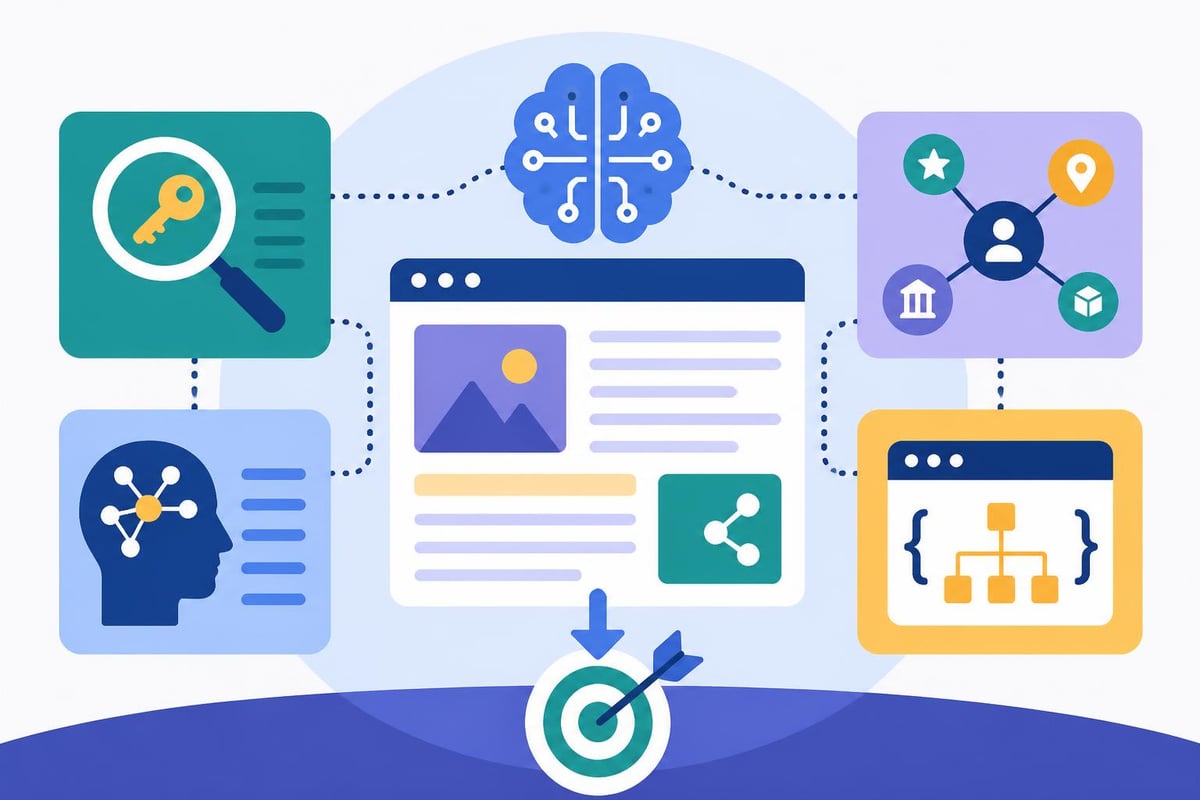
AI website optimization best practices emphasize the importance of semantic HTML and clear content relationships. AI platforms extract meaning from your site structure, so hierarchical organization directly impacts how these systems interpret and reference your content.
The shift toward AI-driven search means your website must communicate clearly with machine learning models. These systems analyze context, relationships between ideas, and authoritativeness signals differently than traditional keyword-based algorithms. Optimizing websites for AI visibility requires understanding how generative search platforms extract and present information.
Content Strategy for AI Platforms
AI search engines favor comprehensive, authoritative content that directly answers user queries. When you build AI website content, focus on depth over volume.
Short, superficial pages rarely appear in AI-generated responses. Instead, create detailed resources that explore topics thoroughly. Structure content with clear headings, logical progression, and explicit answers to common questions.
Effective content characteristics:
- Answer-focused paragraphs that directly address specific questions
- Supporting evidence through data, examples, and expert perspectives
- Clear attribution and source citation for claims
- Regular updates reflecting current information and trends
- Natural language that reads conversationally while maintaining expertise
Customization and Brand Identity
AI-generated designs provide excellent starting points but require human refinement to capture unique brand personalities. The most successful projects balance automation efficiency with strategic customization.
Crafting effective prompts for AI website builders determines output quality. Specific, detailed instructions produce better results than vague descriptions. Instead of "create a professional homepage," try "create a homepage for a B2B software company targeting enterprise clients, emphasizing security, integration capabilities, and ROI, with a clean, trustworthy aesthetic."
Visual Identity Integration
Your AI-built site should reflect established brand guidelines. Upload logos, specify exact color codes, and provide font families to maintain consistency. Most platforms allow custom CSS for elements requiring precise control.
Professional branding extends beyond surface aesthetics into functional design decisions. Button placement, whitespace usage, and information hierarchy all communicate brand values. A luxury brand requires different spacing and typography than a discount retailer, even if both use AI builders.
The relationship between web design and branding becomes increasingly important as markets grow more competitive. Visual identity creates immediate recognition and trust, while strategic design decisions guide users toward conversion actions.
Advanced Features and Functionality
Modern AI website builders incorporate sophisticated features that previously required custom development. These capabilities transform static sites into dynamic business tools.
E-Commerce and Transaction Processing
For businesses selling products or services, AI platforms now generate complete e-commerce systems. Automated product page creation, intelligent upselling recommendations, and personalized shopping experiences all come standard.
Platforms like Kida Digital demonstrate how specialized AI tools can accelerate specific types of development, particularly for e-commerce businesses requiring rapid deployment. Their approach combines AI efficiency with human expertise for conversion-optimized results.
Payment gateway integration, inventory management, and customer relationship management systems connect seamlessly through API-driven architectures. AI handles the technical configuration while you focus on product strategy and customer experience.
Personalization and User Experience
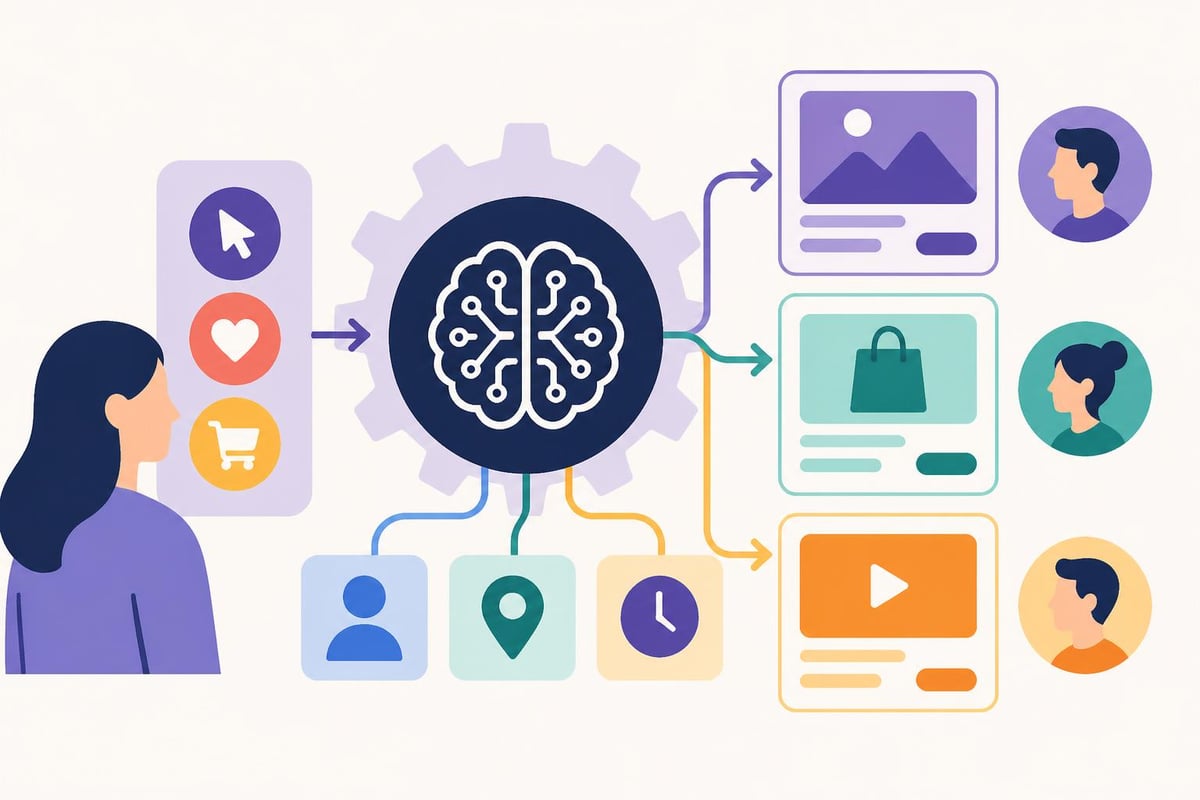
AI excels at creating dynamic experiences tailored to individual visitors. Machine learning algorithms analyze behavior patterns to predict user needs and adjust content accordingly.
Real-time personalization includes:
- Geographic customization showing location-relevant content
- Behavioral triggers that display offers based on browsing patterns
- Progressive profiling that builds user understanding over time
- Predictive search that anticipates queries before completion
- Dynamic pricing and product recommendations
These features increase engagement and conversion rates by reducing friction in the user journey. Visitors find relevant information faster, leading to higher satisfaction and improved business outcomes.
SEO Integration and Performance Monitoring
Effective SEO requires ongoing attention beyond initial setup. When you build AI website projects, establish monitoring systems that track performance and identify optimization opportunities.
Automated SEO Management
AI tools now handle many routine SEO tasks automatically. These include meta tag optimization, image alt text generation, internal linking suggestions, and sitemap updates. Platforms like RankPill automate content creation and SEO optimization, generating human-quality blog posts with proper keyword targeting and competitor analysis.
However, automation complements rather than replaces strategic thinking. Human oversight ensures AI-generated content aligns with brand voice, business objectives, and user intent. Best practices for AI website makers emphasize the importance of review processes that catch errors and maintain quality standards.
Analytics and Continuous Improvement
| Metric Category | Key Indicators | Optimization Actions |
|---|---|---|
| Traffic Sources | Organic, AI search, referral | Adjust content strategy |
| Engagement | Bounce rate, time on page | Improve content relevance |
| Conversions | Form fills, purchases | Refine CTAs and user flows |
| Technical Health | Page speed, mobile usability | Address performance issues |
Regular analysis reveals patterns that inform strategic decisions. If certain pages consistently rank well, analyze what makes them effective and replicate those elements. If specific keywords drive traffic but don't convert, adjust content to better match user intent.
Maintaining and Scaling Your AI Website
Launch represents the beginning, not the end, of your website's lifecycle. Ongoing maintenance ensures continued performance and relevance.
Content Updates and Expansion
Search algorithms favor sites that regularly publish fresh, valuable content. AI tools facilitate consistent content creation while you maintain editorial control. Establish publishing schedules, topic calendars, and quality benchmarks.
Understanding how AI assists website building helps you leverage automation for maximum efficiency. AI can draft initial content, suggest topics based on search trends, and identify content gaps in your existing library.
Sustainable content strategies include:
- Monthly blog posts addressing customer questions
- Quarterly resource guides exploring industry topics
- Regular case studies showcasing results and expertise
- Video content transcribed and optimized for text search
- Interactive tools and calculators that provide unique value
Technical Maintenance and Security
Even AI-built sites require regular updates to maintain security and functionality. Platform updates, plugin patches, and security certificates all need attention.
Automated monitoring tools alert you to issues before they impact users. Regular backups protect against data loss. Performance optimization ensures loading speeds remain competitive as content libraries grow.
Future-Proofing Your Digital Presence
The web development landscape continues evolving rapidly. Building sites that remain effective requires anticipating trends and adapting accordingly.
AI-friendly web design principles for 2026 emphasize mobile-first approaches and lightning-fast loading speeds. These fundamentals ensure compatibility with emerging technologies and shifting user expectations.
Preparing for Agentic Web Interfaces
Research into web interfaces optimized for AI agents suggests the next evolution involves sites specifically designed for machine navigation. While still emerging, this concept points toward a future where AI assistants browse and interact with websites on behalf of users.
Forward-thinking businesses structure content to serve both human visitors and AI interpreters. Clear information architecture, explicit relationships between concepts, and comprehensive metadata all facilitate both use cases simultaneously.
Integration with Business Systems
Your website should connect seamlessly with other business tools. CRM integration, marketing automation, analytics platforms, and customer service systems all enhance functionality and efficiency.
API-driven architectures allow different systems to share data and trigger actions automatically. When a visitor completes a contact form, their information flows to your CRM, triggers a welcome email sequence, and alerts your sales team-all without manual intervention.
Quality Control and Human Oversight
AI generates impressive results but lacks human judgment about nuance, brand alignment, and strategic positioning. Editing AI-generated websites requires critical evaluation of automated outputs.
Review every AI-generated element before publication. Verify accuracy, check for brand consistency, and ensure messaging resonates with your target audience. AI excels at pattern recognition and generation but can't replicate your unique understanding of customer needs and market positioning.
Critical review areas include:
- Content accuracy and source verification
- Brand voice consistency across all copy
- Visual element alignment with brand guidelines
- User experience flow and conversion optimization
- Mobile responsiveness across multiple devices
- Accessibility compliance for all users
Quality control processes separate mediocre AI websites from exceptional ones. Establish review workflows, maintain style guides, and document decisions to ensure consistency as your site grows.
Successfully building an AI-powered website requires balancing automation efficiency with strategic human oversight. The technology enables rapid development and sophisticated functionality, but thoughtful customization and ongoing optimization determine actual business results. Whether you're launching a new digital presence or modernizing an existing site, Creotivity combines AI-powered development with expert optimization for both traditional search engines and emerging AI platforms. Our team helps businesses create websites that not only look professional but actively drive discovery, engagement, and conversion across all digital channels.