Design AI Tools: Transform Your Creative Workflow in 2026
The creative industry has undergone a fundamental transformation with the emergence of artificial intelligence. Design AI tools now handle tasks that once required hours of manual work, from generating initial concepts to refining complex visual compositions. These platforms have become essential for designers, agencies, and businesses seeking to maintain competitive advantage while delivering exceptional visual experiences. Understanding which tools to use and how to integrate them into your workflow determines whether you stay ahead or fall behind in 2026.
The Evolution of Design AI Tools
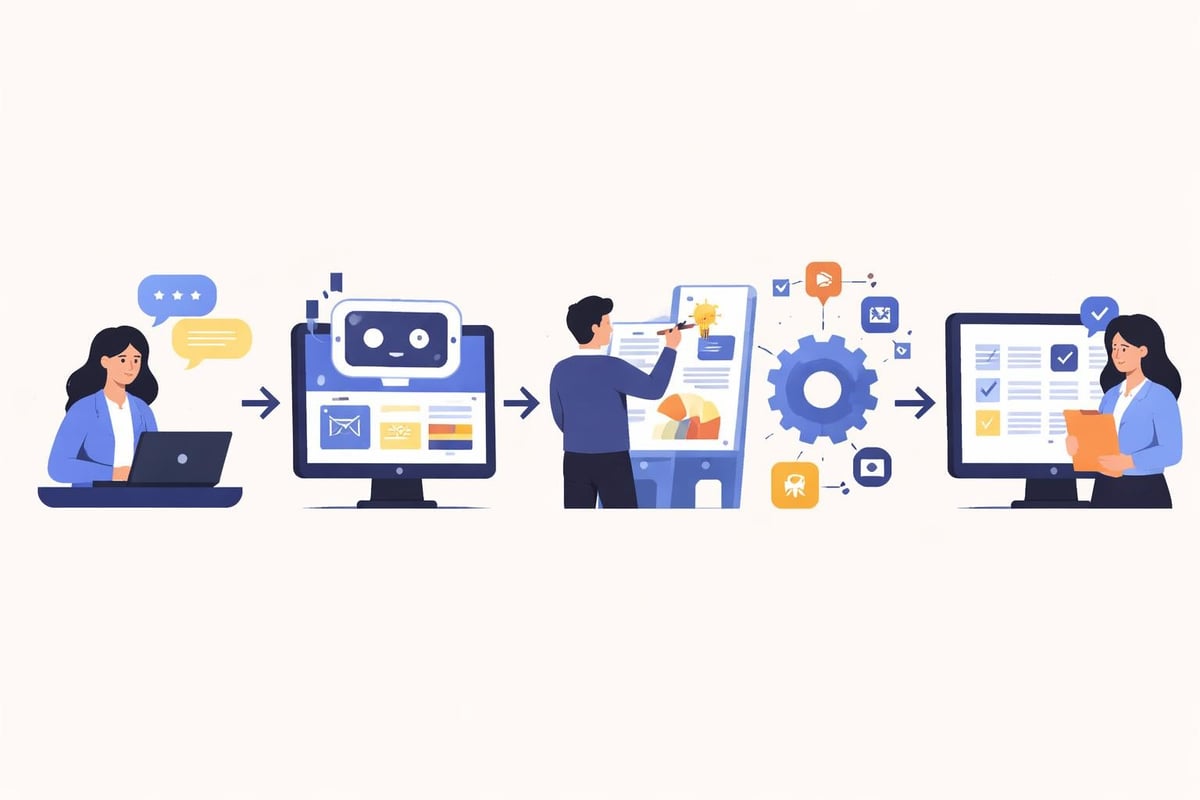
Artificial intelligence has moved from experimental technology to production-ready solutions that power daily design operations. Modern design AI tools leverage machine learning models trained on millions of design examples, enabling them to understand composition principles, color theory, and user experience patterns at a sophisticated level.
The transition from basic automation to intelligent assistance marks a significant shift in how creative professionals approach their work. Early design automation simply repeated predefined actions, while today's AI systems make contextual decisions based on project requirements, brand guidelines, and industry best practices.
Key capabilities that define current design AI tools include:
- Generative design that produces multiple variations from a single prompt
- Intelligent layout systems that adapt to content and screen sizes
- Automated asset management and version control
- Style transfer that applies brand consistency across projects
- Predictive analytics for design performance
These capabilities have created opportunities for businesses to scale their visual output without proportionally scaling their design teams. The tools handle repetitive tasks while human designers focus on strategic decisions and creative direction.
Categories of Design AI Tools Reshaping Creative Work
Generative Image and Graphics Platforms
Generative AI has revolutionized how visual assets come to life. Platforms like Midjourney, DALL-E, and Stable Diffusion create images from text descriptions, while specialized tools generate logos, icons, and illustrations tailored to specific design requirements.
These systems excel at rapid prototyping and concept exploration. A designer can generate dozens of variations in minutes, identifying promising directions before investing significant time in refinement. The technology has become sophisticated enough to understand nuanced instructions about style, mood, and composition.
However, effective use requires understanding how to write AI website builder prompts like a high-end design agency. Precision in prompting determines output quality, making prompt engineering an essential skill for modern designers.
Layout and Interface Design Systems
AI-powered layout tools analyze content and automatically generate responsive designs that work across devices. These platforms understand design principles like hierarchy, spacing, and alignment, applying them consistently throughout a project.
Tools such as Figma's AI features, Adobe Sensei, and specialized platforms like Uizard transform wireframes into polished interfaces. They suggest improvements based on accessibility standards and user experience research, catching potential issues before they reach development.
The integration of design AI tools into existing workflows has accelerated significantly. Many platforms now offer plugins and APIs that connect with project management systems, version control, and deployment pipelines, creating seamless end-to-end processes.
| Tool Category | Primary Use Case | Time Savings | Best For |
|---|---|---|---|
| Generative Image AI | Concept creation, asset generation | 60-80% | Marketing materials, rapid prototyping |
| Layout Automation | Interface design, responsive layouts | 40-60% | Web design, app development |
| Brand Identity AI | Logo design, style guides | 50-70% | Startups, rebranding projects |
| Color Intelligence | Palette generation, accessibility | 30-50% | Consistent brand application |
Practical Applications Across Design Disciplines
Design AI tools have found applications in virtually every creative discipline. Understanding where they add the most value helps teams allocate resources effectively and achieve better results.
Web Design and Development
The intersection of design and code has become increasingly automated. Modern design AI tools generate production-ready HTML, CSS, and JavaScript from visual designs, reducing the gap between concept and deployment. This acceleration benefits businesses seeking to launch quickly without sacrificing quality or customization.
Platforms like Framer, Webflow AI, and emerging specialized tools understand both design principles and web standards. They create responsive layouts that perform well across devices while maintaining pixel-perfect control where needed. For businesses looking to establish a strong online presence, these tools enable faster iteration and testing of design concepts.
When working with web design agencies, AI acceleration in the development process translates to faster project timelines and lower costs without compromising customization or quality.
Branding and Visual Identity
Creating cohesive brand identities traditionally required extensive iteration between designers and clients. Design AI tools now generate comprehensive brand packages including logos, color palettes, typography systems, and application examples in a fraction of the time.
These systems analyze industry trends, competitor positioning, and brand attributes to suggest distinctive visual directions. While human oversight remains essential for strategic alignment, the AI handles exploration and variation generation.
Branding applications of design AI tools:
- Logo concept generation from brand keywords and values
- Color palette creation with accessibility validation
- Typography pairing based on brand personality
- Brand guideline documentation and asset libraries
- Social media template systems maintaining brand consistency
Marketing and Content Creation
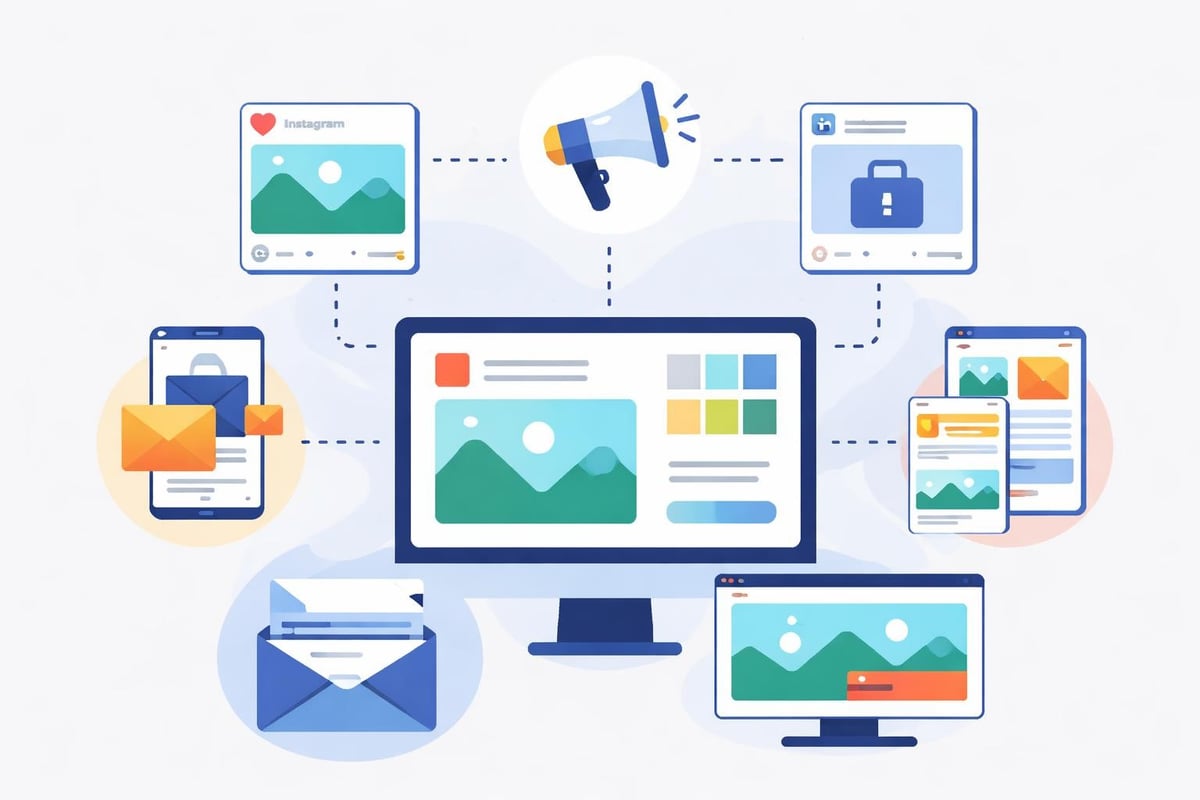
Marketing teams use design AI tools to maintain consistent visual quality across high-volume content production. From social media graphics to email templates and digital advertisements, AI ensures brand compliance while enabling rapid customization for different audiences and platforms.
The ability to generate variations for A/B testing has become particularly valuable. Instead of manually creating multiple versions of each asset, designers specify parameters and let AI generate options for testing, accelerating the optimization cycle.
Integration Strategies for Maximum Impact
Successfully implementing design AI tools requires more than purchasing software licenses. Organizations must develop integration strategies that align with their workflows, team capabilities, and business objectives.
Building AI-Enhanced Design Workflows
The most effective implementations treat AI as a collaborative partner rather than a replacement. Designers maintain creative control while delegating time-consuming tasks to automated systems.
Workflow integration steps:
- Audit current design processes to identify repetitive tasks
- Select tools that integrate with existing software ecosystems
- Establish quality standards and review checkpoints
- Train team members on prompt engineering and tool capabilities
- Create feedback loops for continuous improvement
Many successful teams adopt a hybrid approach where AI generates initial concepts or handles bulk processing while humans refine, make strategic decisions, and ensure alignment with brand values and business goals.
Quality Control and Brand Consistency
While design AI tools offer tremendous efficiency gains, maintaining quality requires structured oversight. Establishing clear guidelines for when AI output needs human review prevents inconsistencies from reaching customers.
Smart teams create prompt libraries and style guides specifically for their AI tools. These resources ensure that anyone on the team can generate on-brand assets without deep design expertise, democratizing creative production while maintaining standards.
The relationship between AI-generated designs and search visibility has become increasingly important. As platforms like ChatGPT and Perplexity begin citing sources in their responses, ensuring your design assets are optimized for AI discovery matters. Learning about AI visibility optimization helps businesses understand how their visual content performs in generative search contexts.
Selecting the Right Design AI Tools
The landscape of available tools continues to expand rapidly. Comprehensive reviews of AI tools help narrow options, but selection should align with specific business needs rather than chasing features.
Evaluation Criteria
Budget considerations extend beyond subscription costs to include training time, integration expenses, and potential workflow disruption during adoption. Tools with steeper learning curves may offer more power but require greater investment in team capability building.
Integration compatibility determines how smoothly new tools fit into existing processes. Platforms that offer robust APIs, plugin ecosystems, and format compatibility reduce friction and accelerate adoption.
Output quality varies significantly across different design AI tools, even within the same category. Testing tools with real project requirements reveals which platforms deliver results that meet your standards with minimal refinement.
| Consideration | Questions to Ask | Impact Level |
|---|---|---|
| Business Fit | Does it solve our specific design challenges? | Critical |
| Team Capability | Can our team learn this in a reasonable timeframe? | High |
| Scalability | Will it grow with our needs? | High |
| Support & Community | Are resources available for troubleshooting? | Medium |
| Data Privacy | Does it meet our security requirements? | Critical |
Specialized vs. General-Purpose Tools
Some design AI tools excel at specific tasks while others attempt to cover broad creative needs. Specialized platforms often deliver superior results in their focus area, while general-purpose tools reduce the number of subscriptions and simplify workflows.
For eCommerce businesses running on platforms like Shopify, connecting with communities such as Talk Shop provides insights into which design AI tools work best for product photography, marketing assets, and storefront optimization based on real merchant experiences.
Advanced Techniques for Professional Results
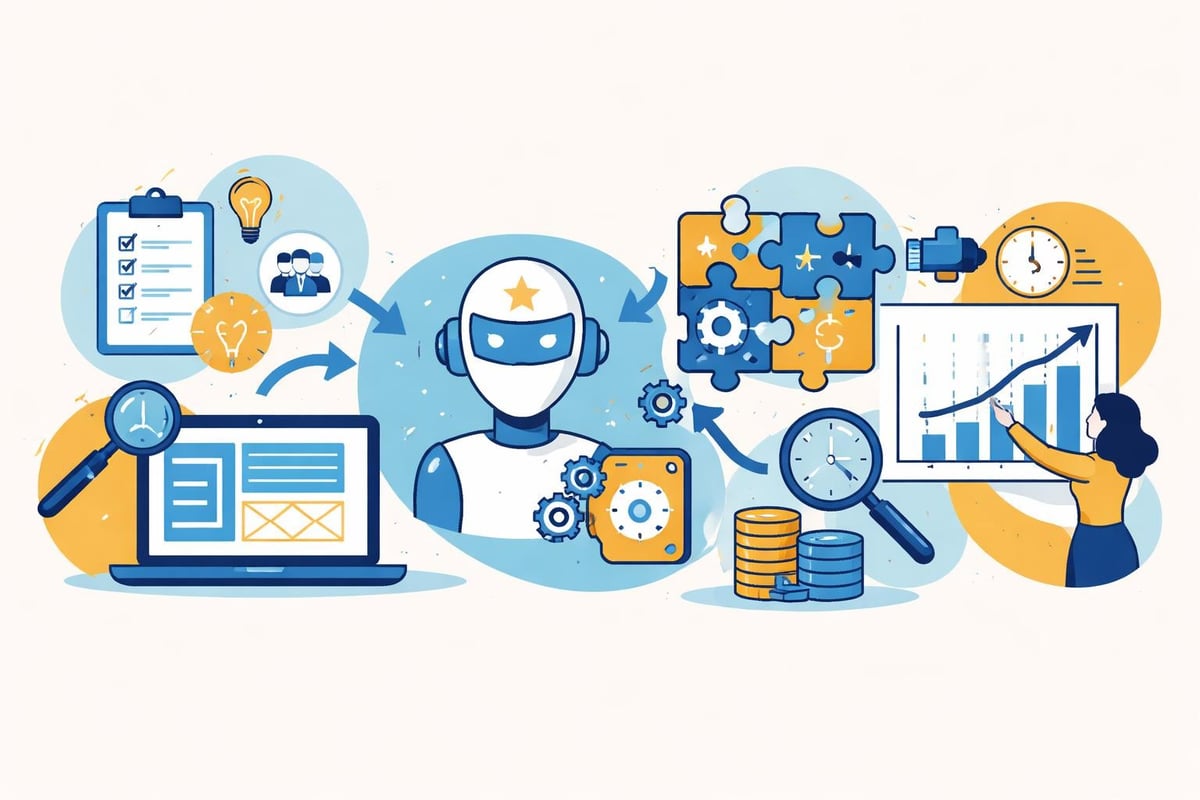
Moving beyond basic usage unlocks the full potential of design AI tools. Professional designers develop techniques that combine multiple tools, leverage custom training, and create systematic approaches to AI-assisted creation.
Prompt Engineering Mastery
The quality of AI-generated designs correlates directly with prompt quality. Effective prompts include specific details about style, composition, color, mood, and technical requirements rather than vague descriptions.
Advanced prompting strategies include:
- Referencing specific design movements or artists for style guidance
- Specifying technical parameters like aspect ratios and resolution
- Using negative prompts to exclude unwanted elements
- Iterating with variations to refine toward desired outcomes
- Creating prompt templates for consistent brand output
Developing a library of proven prompts that generate on-brand results accelerates production and ensures consistency across team members and projects.
Combining Multiple AI Systems
The most sophisticated workflows chain multiple design AI tools together, using each for its strengths. One tool might generate initial concepts, another refines composition, a third optimizes for accessibility, and a fourth handles export and formatting.
This orchestration requires understanding data formats and handoff points between systems. Investment in integration pays dividends through dramatically accelerated production without quality compromise.
Understanding how AI systems determine source authority becomes relevant when optimizing design assets for discovery in generative search results, an emerging consideration for brand visibility.
Training and Capability Development
Implementing design AI tools successfully requires investing in team capability development. The technology evolves rapidly, making continuous learning essential for maintaining competitive advantage.
Building Internal Expertise
Organizations that develop internal AI design expertise gain flexibility and reduce dependence on external resources. Creating training programs, documentation, and knowledge-sharing systems accelerates capability development across teams.
Training program components:
- Tool-specific tutorials covering core features and workflows
- Prompt engineering workshops focused on your brand and industry
- Case study reviews of successful AI-assisted projects
- Regular skill-sharing sessions where team members demonstrate techniques
- External learning budgets for courses and certifications
Teams that treat AI literacy as a core competency position themselves to adapt quickly as new capabilities emerge and tools evolve.
Balancing Automation and Craft
The most successful implementations preserve the creative judgment and strategic thinking that define excellent design while automating mechanical execution. This balance prevents over-reliance on AI while capturing efficiency gains.
Establishing clear guidelines about when human oversight is required maintains quality standards. High-stakes projects, brand-defining assets, and customer-facing materials typically warrant more human involvement than internal documents or draft concepts.
Measuring Impact and ROI
Quantifying the value of design AI tools helps justify investment and guides optimization efforts. Metrics should capture both efficiency gains and quality improvements.
Productivity Metrics
Time-to-completion for standard design tasks provides clear before-and-after comparisons. Tracking how long it takes to produce social media assets, website mockups, or marketing materials reveals where tools deliver the greatest impact.
Output volume measures how many design assets teams can produce in a given timeframe. Increases in production capacity without proportional staffing growth demonstrate scaling efficiency.
Iteration speed captures how quickly teams can test and refine concepts. Faster iteration cycles lead to better final results through more extensive exploration and testing.
| Metric | Measurement Method | Target Improvement |
|---|---|---|
| Asset Production Time | Hours per deliverable | 40-60% reduction |
| Design Variations Generated | Count per project | 3-5x increase |
| Revision Cycles | Number before approval | 20-30% reduction |
| Team Satisfaction | Survey scores | 15-25% improvement |
Quality and Business Impact
Beyond efficiency, design AI tools should improve business outcomes. Tracking metrics like conversion rates, engagement scores, and brand perception reveals whether AI-assisted designs perform as well as or better than traditionally created assets.
A/B testing AI-generated variations against human-created designs provides objective quality comparisons. Many teams discover that AI excels at certain asset types while human designers still lead in others, informing optimal task allocation.
Emerging Trends and Future Directions
The capabilities of design AI tools continue expanding rapidly. Staying informed about emerging trends helps organizations prepare for the next wave of innovation and maintain competitive positioning.
Multimodal AI and Design
Next-generation systems combine multiple input types such as text, images, sketches, and voice to create more intuitive design interfaces. Designers will describe concepts conversationally, sketch rough ideas, and reference visual examples while AI synthesizes inputs into cohesive designs.
This evolution reduces the technical barrier to using design AI tools, enabling more team members to contribute to creative production without deep design expertise.
Personalization at Scale
AI-powered design systems increasingly generate personalized variations for individual users or micro-segments. Instead of creating one design for all audiences, brands will deploy AI that adapts visual presentations based on user preferences, behavior, and context.
This capability transforms how businesses approach design from creating static assets to orchestrating dynamic visual systems that optimize themselves based on performance data.
Integration with Development and Deployment
The gap between design and implementation continues narrowing as design AI tools generate production-ready code and assets. Future systems will understand technical constraints, performance optimization, and platform-specific requirements, producing designs that deploy directly without developer translation.
For businesses focused on web presence, understanding how design integrates with technical optimization becomes crucial. Exploring resources about website design and SEO reveals how visual decisions impact search performance and AI visibility.
Ethical Considerations and Best Practices
As design AI tools become more capable, ethical questions about originality, attribution, and job displacement require thoughtful consideration. Organizations should establish policies that address these concerns proactively.
Copyright and Ownership
The legal landscape surrounding AI-generated content remains evolving. Understanding current regulations about ownership, copyright, and commercial use protects businesses from potential disputes.
Best practices include:
- Reviewing terms of service for commercial usage rights
- Documenting the creative process including human contributions
- Consulting legal counsel for high-value brand assets
- Considering custom-trained models for unique brand needs
- Maintaining transparency about AI involvement in creation
Preserving Creative Employment
While design AI tools automate certain tasks, they also create opportunities for designers to focus on higher-value strategic work. Organizations should frame AI as augmentation rather than replacement, investing in upskilling programs that help team members evolve their roles.
The most successful implementations elevate human designers to strategic positions where they guide AI systems, make creative decisions, and ensure brand alignment while delegating execution to automated tools.
Understanding how AI-driven design automation works provides context for both the capabilities and limitations of these systems, helping set realistic expectations and appropriate use cases.
Building a Sustainable AI Design Practice
Long-term success with design AI tools requires more than adopting technology. Organizations must build sustainable practices that evolve with capabilities while maintaining quality standards and team morale.
Continuous Learning Culture
Creating environments where experimentation with new tools and techniques is encouraged accelerates capability development. Allocating time for exploration, sharing discoveries, and iterating on processes keeps teams at the forefront of AI-enabled design.
Regular reviews of tool performance, workflow efficiency, and output quality identify optimization opportunities and ensure that AI integration continues delivering value as business needs evolve.
Vendor Relationships and Platform Strategy
As reliance on design AI tools grows, platform stability and vendor viability become strategic concerns. Diversifying across multiple tools reduces risk while maintaining relationships with key vendors ensures access to support and early feature access.
Participating in user communities, providing feedback to developers, and staying informed about product roadmaps helps organizations anticipate changes and adapt strategies accordingly.
Design AI tools have fundamentally transformed creative workflows, enabling businesses to produce higher-quality visual content faster and more cost-effectively than ever before. Successfully leveraging these capabilities requires strategic tool selection, thoughtful integration, and continuous capability development. Whether you're looking to accelerate your design production, maintain brand consistency at scale, or optimize your visual presence for both traditional and AI-driven search platforms, Creotivity combines expert design with AI optimization to build websites and brands that perform exceptionally across all channels. Ready to transform your visual presence with AI-enhanced design and search visibility?