
Webdesign AI: Transforming How Websites Are Built in 2026
The intersection of artificial intelligence and web development has fundamentally changed how businesses approach digital presence. Webdesign ai represents more than just automation tools or template generators. It embodies a complete paradigm shift in how websites are conceptualized, built, and optimized for modern search ecosystems. As we navigate 2026, the integration of machine learning algorithms, natural language processing, and predictive analytics into the design process has created unprecedented opportunities for businesses to launch high-performance websites faster and more cost-effectively than ever before.
The Evolution of Webdesign AI Technologies
Artificial intelligence has progressed from simple automation scripts to sophisticated design partners capable of understanding user intent and business objectives. Modern webdesign ai platforms analyze millions of design patterns, user behavior data, and conversion metrics to generate websites that align with both aesthetic preferences and performance requirements.
The transformation began with rudimentary template systems but has evolved into intelligent platforms capable of contextual decision-making. Wix's Harmony platform exemplifies this evolution, combining human creativity with AI efficiency through natural language commands that execute complex design tasks.
Key Components Driving AI Web Design
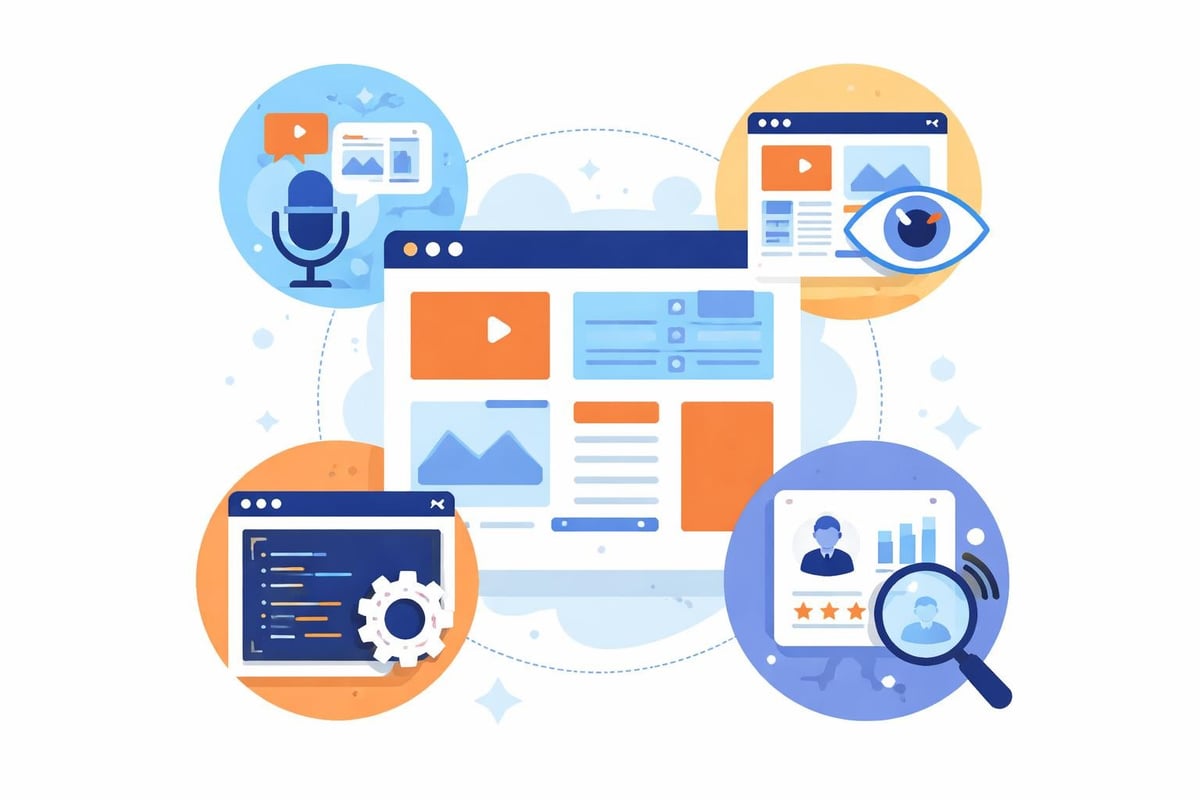
Several technological pillars support the current generation of webdesign ai systems:
- Natural Language Processing (NLP) enables designers to communicate design intentions conversationally
- Computer Vision analyzes visual hierarchies and predicts user attention patterns
- Generative Adversarial Networks (GANs) create unique design elements and layouts
- Predictive Analytics forecasts user behavior and optimizes conversion pathways
- Automated Code Generation translates design concepts into production-ready code
These technologies work in concert to reduce manual coding time while maintaining design quality and performance standards.
How Webdesign AI Accelerates Development Cycles
Traditional web development follows a linear process: wireframing, design mockups, client revisions, front-end development, back-end integration, testing, and deployment. This sequence typically spans months and requires extensive coordination between designers, developers, and stakeholders.
Webdesign ai compresses these timelines dramatically by automating repetitive tasks and enabling parallel workflows. Modern platforms can generate multiple design variations simultaneously, allowing stakeholders to evaluate options quickly without waiting for manual iterations.
Speed Without Sacrificing Quality
The relationship between velocity and quality traditionally required trade-offs. Faster delivery often meant compromised customization or generic templates. Current webdesign ai systems challenge this assumption by maintaining quality standards while accelerating production.
Advanced AI platforms now merge AI capabilities with human oversight, addressing scalability and customization challenges that plagued earlier generations of automated builders. This hybrid approach ensures that efficiency gains don't come at the expense of brand differentiation or user experience quality.
Agencies leveraging Web Design capabilities powered by AI can drastically accelerate coding and structural setup, launching custom, high-performance websites in weeks rather than months while passing cost savings directly to clients.
| Development Phase | Traditional Timeline | AI-Accelerated Timeline | Time Saved |
|---|---|---|---|
| Initial Design Concepts | 2-3 weeks | 2-3 days | 85-90% |
| Client Revisions | 1-2 weeks per round | 1-2 days per round | 80-85% |
| Front-end Development | 4-6 weeks | 1-2 weeks | 65-75% |
| Responsive Optimization | 1-2 weeks | 2-3 days | 75-85% |
| Total Project Duration | 12-16 weeks | 3-5 weeks | 70-75% |
Intelligent Design Decision-Making
Beyond speed, webdesign ai introduces data-driven design intelligence that surpasses human intuition in specific domains. Machine learning models trained on millions of user interactions can predict which layouts, color schemes, and content hierarchies will perform best for specific audiences.
This predictive capability extends to accessibility compliance, mobile responsiveness, and cross-browser compatibility. AI systems automatically test designs across thousands of device and browser combinations, identifying potential issues before they reach production environments.
Personalization at Scale
One of the most powerful applications of webdesign ai involves dynamic personalization. Traditional websites deliver identical experiences to all visitors, regardless of their interests, behavior history, or demographic characteristics.
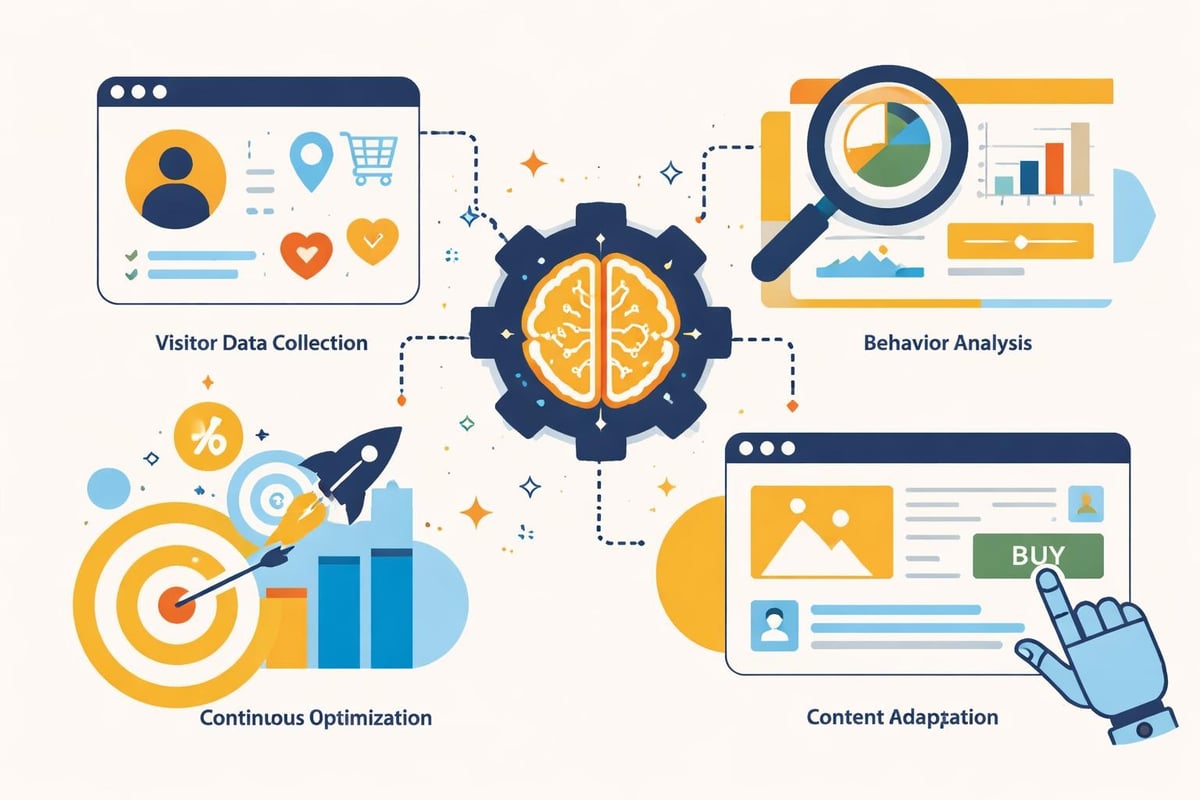
Modern AI-powered websites adapt in real-time based on visitor data:
- Initial visitor assessment analyzes referral source, device type, and geographic location
- Behavioral tracking monitors navigation patterns, scroll depth, and engagement signals
- Content optimization adjusts messaging, imagery, and calls-to-action based on visitor profile
- Conversion optimization presents personalized pathways toward desired actions
- Continuous learning refines personalization algorithms based on conversion data
This level of individualization was previously feasible only for enterprise platforms with dedicated development teams. Webdesign ai democratizes these capabilities for businesses of all sizes.
Integration with Modern Search Ecosystems
The relationship between webdesign ai and search visibility represents a critical consideration for 2026. Search has evolved beyond traditional keyword matching to encompass AI-generated overviews, conversational queries, and multimodal results that include text, images, and structured data.
Websites must now satisfy both traditional search engine algorithms and AI-powered answer engines like ChatGPT, Claude, and Perplexity. This dual optimization requirement influences fundamental design decisions around content structure, semantic markup, and information architecture.
Structured Data and AI Comprehension
Webdesign ai platforms increasingly incorporate structured data implementation as a core design element rather than a post-launch addition. Research on web interaction standards demonstrates how embedding structured metadata enables efficient human-AI collaboration and reduces computational overhead in AI-assisted interactions.
Smart webdesign ai systems automatically generate schema markup that helps AI engines understand page context, relationships between content elements, and the specific questions each page answers. This structured approach directly impacts visibility in AI-powered search platforms that prioritize content they can confidently interpret and cite.
The Human-AI Collaboration Model
Despite rapid advancement in automation capabilities, the most effective webdesign ai implementations maintain human expertise at strategic decision points. AI excels at pattern recognition, rapid prototyping, and optimization within defined parameters, but human designers contribute strategic thinking, brand understanding, and creative innovation that machines cannot replicate.
This collaboration model positions AI as an amplification tool rather than a replacement for human creativity. Designers focus on high-value activities like brand strategy, user journey mapping, and creative direction while delegating technical implementation and repetitive tasks to AI systems.
Design Exploration Tools
Innovative approaches to design exploration enable designers to rapidly evaluate thousands of layout variations using lightweight markup and algorithmic generation. These tools transform the design process from sequential iteration to parallel exploration, where multiple directions develop simultaneously.
The designer's role evolves toward curator and editor, selecting optimal solutions from AI-generated options rather than manually creating every element from scratch. This shift allows more time for strategic thinking about user needs, business objectives, and competitive differentiation.
Accessibility and Compliance Automation
Webdesign ai significantly improves accessibility compliance by automating checks against WCAG guidelines and other accessibility standards. Manual accessibility testing requires specialized expertise and extensive time investment across multiple assistive technologies and user scenarios.
AI systems continuously monitor designs for accessibility issues:
- Color contrast ratios that meet minimum readability standards
- Proper heading hierarchies for screen reader navigation
- Alternative text for images and multimedia content
- Keyboard navigation functionality for all interactive elements
- Form field labels and error message clarity
Beyond compliance checking, advanced webdesign ai platforms suggest remediation strategies and automatically implement corrections when appropriate. This proactive approach prevents accessibility issues from reaching production rather than addressing them retroactively.
Cost Implications and Business Value
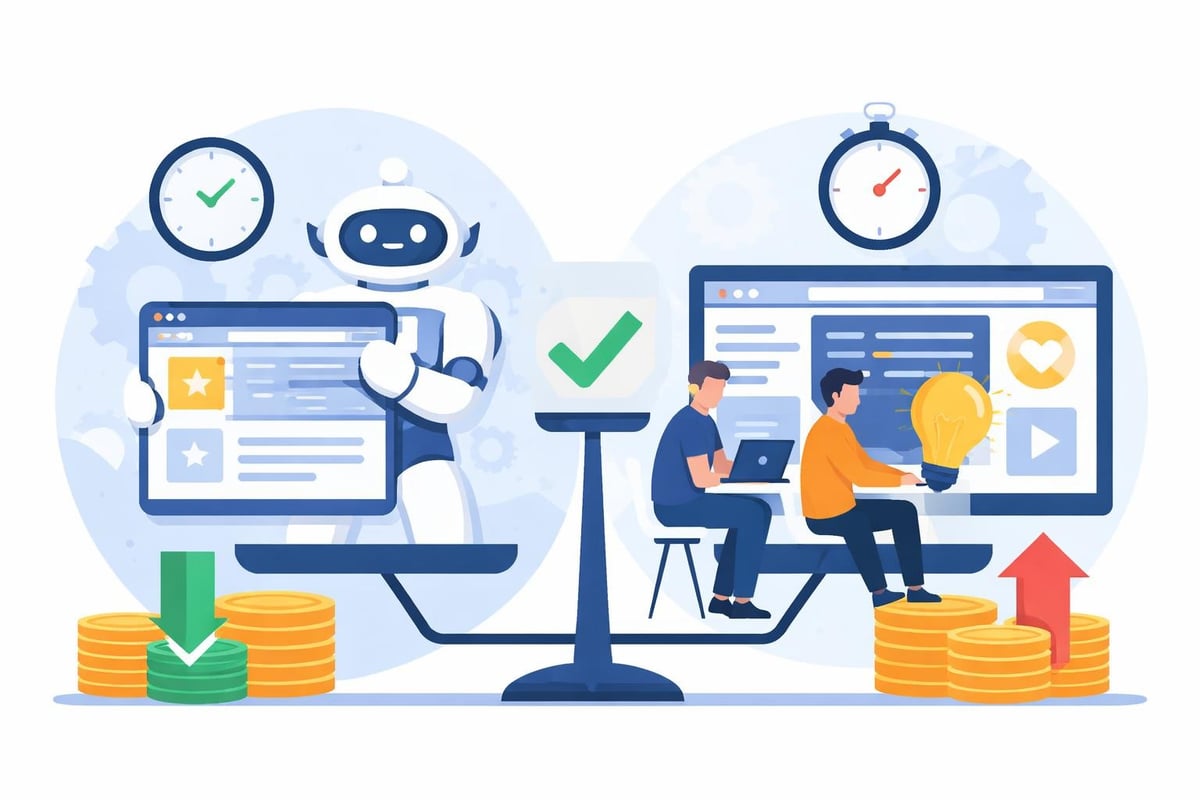
The economic impact of webdesign ai extends beyond reduced development timelines. Businesses gain access to enterprise-grade design capabilities without enterprise-level budgets, democratizing professional web presence for small and medium-sized organizations.
| Cost Factor | Traditional Development | AI-Accelerated Development | Savings |
|---|---|---|---|
| Designer Hours | 120-200 hours | 40-80 hours | 60-70% |
| Developer Hours | 200-300 hours | 60-120 hours | 60-70% |
| Revision Cycles | $2,000-$5,000 | $500-$1,500 | 70-75% |
| Testing & QA | $3,000-$6,000 | $1,000-$2,000 | 65-70% |
| Total Project Cost | $25,000-$50,000 | $8,000-$18,000 | 64-72% |
These savings compound over time as AI-powered websites require less maintenance and adapt more efficiently to changing business needs.
Platform Ecosystem and Tool Selection
The webdesign ai landscape includes diverse platforms serving different market segments and use cases. Understanding these options helps businesses select appropriate tools aligned with their technical requirements and growth objectives.
Enterprise Platforms
Large-scale implementations benefit from platforms offering extensive customization, team collaboration features, and enterprise integrations. These systems typically include:
- Advanced version control and workflow management
- Multi-site management capabilities
- Complex permission structures for large teams
- Custom AI model training on brand-specific data
- Dedicated support and service level agreements
Mid-Market Solutions
Growing businesses require balance between capability and complexity. Mid-market webdesign ai platforms provide robust features without overwhelming smaller teams. The Wix AI Website Builder exemplifies this category, generating fully functional websites based on user input while integrating with broader ecosystem tools.
Specialized Tools
Certain webdesign ai applications focus on specific aspects of the design process rather than end-to-end website creation. Microsoft Designer targets graphic and image creation, helping mainstream users leverage AI for visual content generation that complements broader web design efforts.
Content Generation and Optimization
Modern webdesign ai extends beyond visual design into content strategy and creation. AI-powered content systems analyze search intent, competitive content, and user engagement patterns to generate copy that serves both human readers and search algorithms.
This integration ensures design and content develop cohesively rather than as separate workstreams. Visual hierarchies adapt to content length and structure while content formatting responds to design constraints and user interface requirements.
SEO-Integrated Content Creation
The relationship between web design and SEO optimization becomes seamless when AI coordinates both disciplines. Content generation considers keyword targeting, semantic relationships, and topical authority while design systems ensure proper content presentation, internal linking structures, and conversion optimization.
Businesses focused on ranking in AI-powered search results benefit from webdesign ai platforms that understand modern search requirements and automatically implement best practices for AI visibility alongside traditional search optimization.
Responsive Design and Device Optimization
Webdesign ai platforms inherently understand responsive design principles, automatically generating layouts that adapt gracefully across device categories. Historical development of responsive website creation demonstrates the progression from manual responsive coding to automated solutions that create device-compatible websites from the outset.
Modern systems go beyond basic responsive frameworks to optimize specific elements for device contexts:
- Touch target sizing for mobile interfaces
- Progressive image loading based on connection speed
- Simplified navigation patterns for small screens
- Desktop-optimized content density and information architecture
- Tablet-specific layouts leveraging intermediate screen sizes
This comprehensive approach ensures optimal user experience regardless of how visitors access the website.
Security and Performance Considerations
Webdesign ai platforms increasingly incorporate security and performance optimization as foundational design elements. Traditional workflows often addressed these concerns late in development, leading to compromised implementations or costly refactoring.
AI systems analyze security vulnerabilities during design phases, recommending architectures that minimize attack surfaces and implement security best practices by default. Performance optimization similarly occurs throughout development rather than as a post-launch activity.
Core Web Vitals Optimization
Google's Core Web Vitals significantly influence search rankings and user experience quality. Webdesign ai platforms automatically optimize for these metrics:
- Largest Contentful Paint (LCP) through optimized image delivery and resource prioritization
- First Input Delay (FID) via efficient JavaScript execution and interaction readiness
- Cumulative Layout Shift (CLS) through defined element sizing and stable layouts
These optimizations happen automatically during design implementation rather than requiring manual performance audits and corrections.
Future Trajectories in Webdesign AI
The webdesign ai field continues rapid evolution with several emerging trends shaping future capabilities. Voice-driven design interfaces will enable completely conversational website creation where designers describe desired outcomes verbally and AI systems translate those descriptions into functional implementations.
Multimodal AI models will process design inspiration from images, sketches, existing websites, and natural language descriptions simultaneously, synthesizing inputs into cohesive design directions that capture intent across communication channels.
Advanced personalization will extend beyond content variation to structural adaptation, where websites reorganize themselves based on individual user preferences, behavior patterns, and predicted needs. This dynamic architecture represents a fundamental shift from static pages to fluid interfaces that evolve with each visitor interaction.
Industry-Specific Applications
Different industries derive unique value from webdesign ai capabilities tailored to their specific requirements. E-commerce platforms benefit from AI-driven product presentation optimization, dynamic pricing displays, and conversion-focused checkout experiences. Professional services firms leverage AI to create authority-building content architectures and trust-signal optimization.
Healthcare organizations use webdesign ai to ensure HIPAA compliance while creating patient-friendly interfaces that balance information density with accessibility. Educational institutions benefit from learning-optimized content structures and engagement-focused interactive elements.
Understanding how webdesign ai adapts to industry context helps businesses select platforms and implementations aligned with their sector's unique challenges and opportunities.
Implementation Strategy and Change Management
Successful webdesign ai adoption requires thoughtful implementation planning beyond simply selecting tools. Organizations must consider team training, workflow integration, and change management to realize the full value of AI-powered design systems.
Key implementation considerations include:
- Skill development programs helping existing team members leverage AI capabilities effectively
- Process redesign adapting workflows to capitalize on AI acceleration while maintaining quality controls
- Quality benchmarks establishing metrics that ensure AI-generated designs meet brand and performance standards
- Continuous improvement systems capturing learnings and refining AI implementations over time
- Stakeholder communication managing expectations and demonstrating value throughout transformation
Businesses exploring comprehensive web design approaches that integrate AI capabilities benefit from structured implementation frameworks that reduce risk while accelerating value realization.
Webdesign ai has fundamentally transformed how businesses approach digital presence, delivering enterprise-grade capabilities at accessible price points while dramatically accelerating time-to-market. The convergence of intelligent automation, data-driven optimization, and human creativity creates unprecedented opportunities for businesses to establish compelling online experiences that perform across traditional and AI-powered search platforms. Creotivity specializes in building modern websites that leverage AI for faster development while maintaining the strategic design thinking and optimization expertise that drives real business results across Google, AI search engines, and every platform where your customers discover solutions.