Customize Web: Build Sites That Rank in 2026
The ability to customize web experiences has become the defining factor that separates successful digital brands from those that fade into obscurity. In 2026, businesses face unprecedented competition not just from traditional search engines like Google, but from AI-powered platforms that analyze and recommend websites based on relevance, user experience, and brand authority. Generic templates and cookie-cutter websites no longer cut it. Organizations that want to capture attention, build trust, and convert visitors need websites tailored precisely to their audience, industry, and strategic objectives.
Understanding Web Customization in 2026
When we talk about how to customize web properties, we're discussing far more than changing colors and fonts. True web customization encompasses the entire digital experience, from the underlying code architecture to the visual design, functionality, user interface, and content delivery system. It involves making strategic decisions about every element that shapes how users interact with your brand online.
Modern web customization starts with understanding your specific business requirements. Every industry has unique needs-a legal firm requires different functionality than an e-commerce retailer, and a SaaS company needs different conversion paths than a local service provider. The websites that perform best in both traditional and AI search recognize these distinctions and build accordingly.
The Technical Foundation
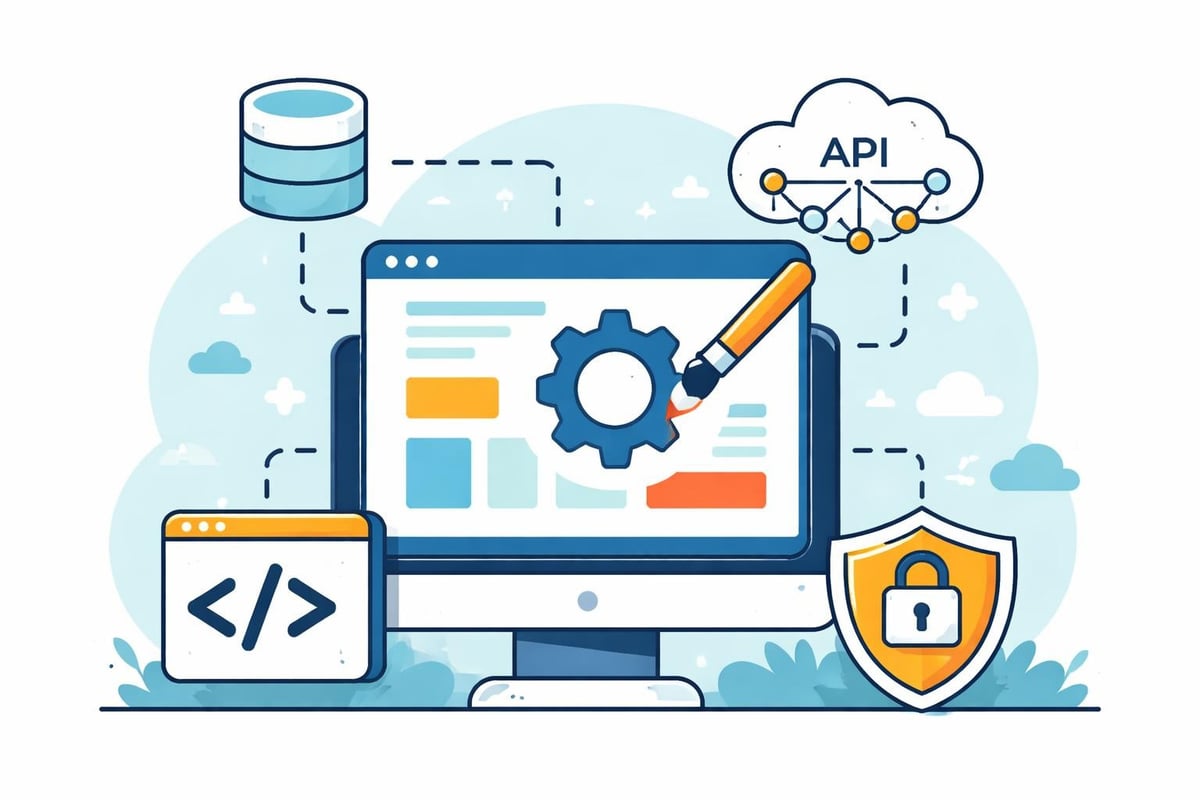
The first layer of customization happens at the code level. While many businesses start with content management systems like WordPress, Shopify, or similar platforms, the degree to which you customize web infrastructure determines your site's performance, scalability, and differentiation. According to custom web development best practices, planning and architecture decisions made early in development have lasting impacts on user experience and search visibility.
Key technical customization areas include:
- Database structure and content organization
- API integrations with third-party services
- Custom functionality and interactive elements
- Performance optimization and caching strategies
- Security protocols and data protection measures
- Mobile responsiveness and cross-device compatibility
Design Customization That Builds Brand Authority
Visual customization transforms generic websites into memorable brand experiences. In 2026, users make snap judgments about credibility within milliseconds of landing on a website. Your design choices communicate professionalism, trustworthiness, and industry expertise before a single word is read.
The process to customize web design goes beyond selecting attractive colors. It requires understanding color psychology for your specific audience, choosing typography that enhances readability while reflecting brand personality, and creating visual hierarchy that guides users naturally toward conversion actions. Responsive web design ensures your customized experience translates flawlessly across smartphones, tablets, and desktop computers.
Visual Elements That Matter
| Design Element | Customization Impact | Strategic Value |
|---|---|---|
| Color Palette | Brand recognition, emotional response | Differentiates from competitors, reinforces brand identity |
| Typography | Readability, professionalism, hierarchy | Improves user experience, establishes authority |
| Layout Structure | User flow, content prioritization | Drives conversions, reduces bounce rates |
| Imagery & Graphics | Authenticity, engagement | Builds trust, communicates value propositions |
| White Space | Focus, comprehension | Reduces cognitive load, highlights key elements |
Many businesses make the mistake of copying competitor designs or following generic industry trends. When you truly customize web experiences for your brand, you create visual distinction that makes your company memorable. This doesn't mean being radically different for the sake of novelty-it means making deliberate design choices that align with your brand strategy and audience preferences.
Functionality Customization for User Experience
Beyond aesthetics, the ability to customize web functionality determines whether visitors accomplish their goals on your site. Standard features like contact forms and blog layouts serve basic needs, but customized functionality addresses the specific pain points your audience faces and the unique value your business provides.
Consider how different businesses need different interactive elements. A restaurant needs online reservation systems and menu displays. A consulting firm needs case study showcases and scheduling tools. A manufacturer needs product configurators and specification downloads. The most effective approach to customize web functionality starts with mapping user journeys and identifying friction points.
Building Custom User Journeys
When you invest in web design services that leverage AI to accelerate development, you can create sophisticated custom features without the traditional time and cost barriers. This allows businesses to implement personalized experiences like dynamic content that changes based on user behavior, intelligent search features that understand context, and interactive tools that help users make informed decisions.
- Map critical user paths from entry to conversion
- Identify decision points where users need information or assistance
- Design custom features that remove friction at each stage
- Implement tracking to measure effectiveness
- Iterate based on data to continuously improve performance
The websites that rank highest in both traditional and AI search engines share a common characteristic: they solve problems efficiently. When you customize web experiences around user needs rather than business preferences, you create the signals that search algorithms-both traditional and AI-powered-reward with visibility.
Content Customization for Search Visibility
Content represents perhaps the most critical area to customize web properties for search success. Generic, template-driven content fails to rank in 2026 because both Google and AI search engines have become sophisticated at identifying unique, valuable information versus recycled generic material.
Effective content customization means creating information architectures tailored to how your specific audience searches and consumes information. This involves keyword research focused on your niche, content formats that match user intent, and organizational structures that make information discoverable. As covered in our guide on in-design web approaches, integrating content strategy during the design phase rather than as an afterthought produces superior results.
Strategic Content Elements
- Custom pillar pages addressing core topics in your industry
- Targeted cluster content supporting main topics with specific subtopics
- Industry-specific examples and case studies demonstrating expertise
- Original research and data that provides unique value
- Multimedia content including custom images, videos, and interactive elements
When you customize web content around audience needs and search behavior, you create the foundation for ranking in AI overviews, featured snippets, and traditional organic results. The key is specificity-the more precisely your content addresses particular questions and scenarios, the more valuable search engines consider it.
Technical SEO Customization
The invisible infrastructure that powers search visibility requires extensive customization. While many businesses focus exclusively on content and design, technical SEO best practices form the foundation that determines whether search engines can properly crawl, understand, and rank your website.
To customize web properties for optimal search performance, you need control over schema markup, URL structures, internal linking architecture, and page speed optimization. These technical elements communicate directly with search engines, providing context about your content and helping algorithms understand how your pages relate to search queries.
Critical technical customization areas:
| Technical Element | Customization Opportunity | SEO Impact |
|---|---|---|
| Schema Markup | Industry-specific structured data | Enhanced rich results, AI understanding |
| URL Structure | Semantic, keyword-optimized paths | Improved crawlability, user clarity |
| Internal Linking | Strategic topic clustering | Better indexation, authority distribution |
| Page Speed | Custom optimization techniques | Rankings factor, user experience |
| Mobile Performance | Device-specific enhancements | Mobile-first indexing compatibility |
Many template-based websites limit your ability to customize web technical elements, forcing you to work within predetermined structures. Custom development provides the flexibility to implement advanced SEO strategies that give you competitive advantages in search visibility.
Platform Selection for Customization Flexibility
Choosing the right foundation determines how easily you can customize web experiences. Different platforms offer varying degrees of flexibility, from completely locked-down website builders to fully custom code bases. Understanding these trade-offs helps you make informed decisions aligned with your customization needs.
Platform Comparison
Template Builders (Wix, Squarespace, Weebly) offer limited customization within preset boundaries. They provide quick setup but constrain your ability to implement unique functionality or optimize technical elements for search.
Content Management Systems (WordPress, Drupal, Joomla) offer moderate customization through themes, plugins, and code modifications. They balance ease of use with flexibility, though extensive customization often requires developer expertise.
Custom Frameworks (React, Vue, Next.js) provide maximum customization freedom. Every aspect can be tailored precisely to your needs, though they require more technical resources to build and maintain. For businesses serious about ranking in competitive markets, the ability to customize web experiences without platform limitations often justifies the investment.
According to research on developing world-class custom web applications, selecting the appropriate technology stack early prevents costly platform migrations later when customization requirements expand.
Security and Performance Customization
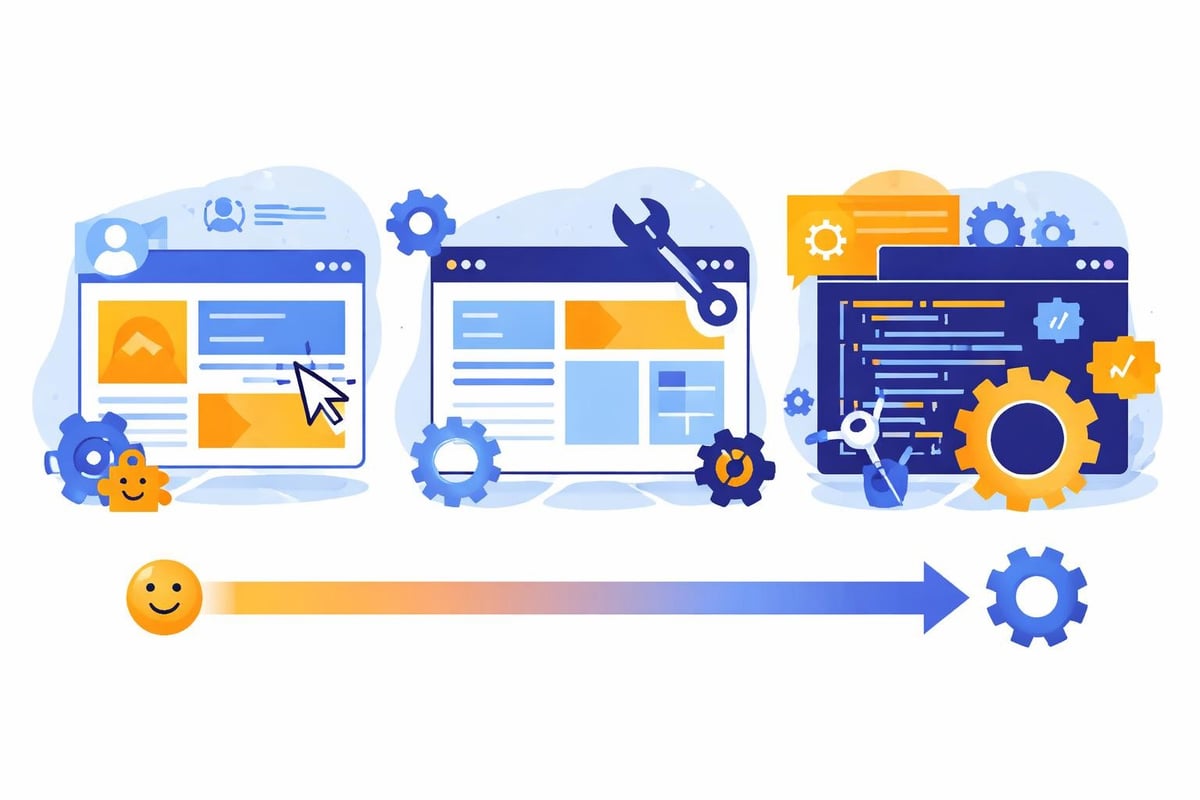
As cyber threats evolve and user expectations for speed increase, the ability to customize web security and performance becomes essential. Generic security plugins and standard hosting configurations leave vulnerabilities and performance bottlenecks that custom solutions can address.
Security customization involves implementing protocols specific to your industry's compliance requirements, whether that's HIPAA for healthcare, PCI DSS for e-commerce, or GDPR for European markets. When you customize web security measures, you protect both your business and users while building the trust signals that improve conversion rates.
Performance optimization requires analyzing your specific traffic patterns, content types, and user behaviors to implement targeted improvements. Custom caching strategies, image optimization workflows, and code minification approaches deliver faster experiences than one-size-fits-all solutions.
Performance Optimization Checklist
- Implement custom caching rules based on content update frequency
- Optimize images with format selection tailored to content types
- Minimize code with dead code elimination specific to your features
- Leverage CDN configurations optimized for your geographic audience
- Monitor real user metrics to identify customization opportunities
The intersection of security and performance represents a critical area where customization delivers measurable business results. Faster, more secure websites rank better, convert more visitors, and reduce support costs.
Accessibility Customization
Creating inclusive web experiences requires customizing for users with disabilities and different access needs. While basic accessibility features should be standard, true customization means going beyond compliance to create genuinely usable experiences for all visitors.
When you customize web accessibility features, you expand your potential audience while improving usability for everyone. Keyboard navigation schemes, screen reader optimization, color contrast adjustments, and alternative content formats make your site more accessible while often improving general user experience.
Businesses often overlook that accessibility customization improves SEO as well. Many accessibility best practices align with search engine optimization-semantic HTML, descriptive link text, image alt attributes, and clear heading hierarchies benefit both assistive technologies and search crawlers.
Analytics and Tracking Customization
Generic analytics implementations provide basic traffic data but miss the specific insights that drive strategic decisions. To truly understand how users interact with your customized features, you need to customize web analytics and tracking to capture relevant events and behaviors.
Custom event tracking, conversion funnels tailored to your user journeys, and audience segmentation based on meaningful characteristics provide actionable intelligence. When you know which customized features drive engagement and which create friction, you can iterate effectively.
Essential custom tracking elements:
- Feature interaction events specific to your custom functionality
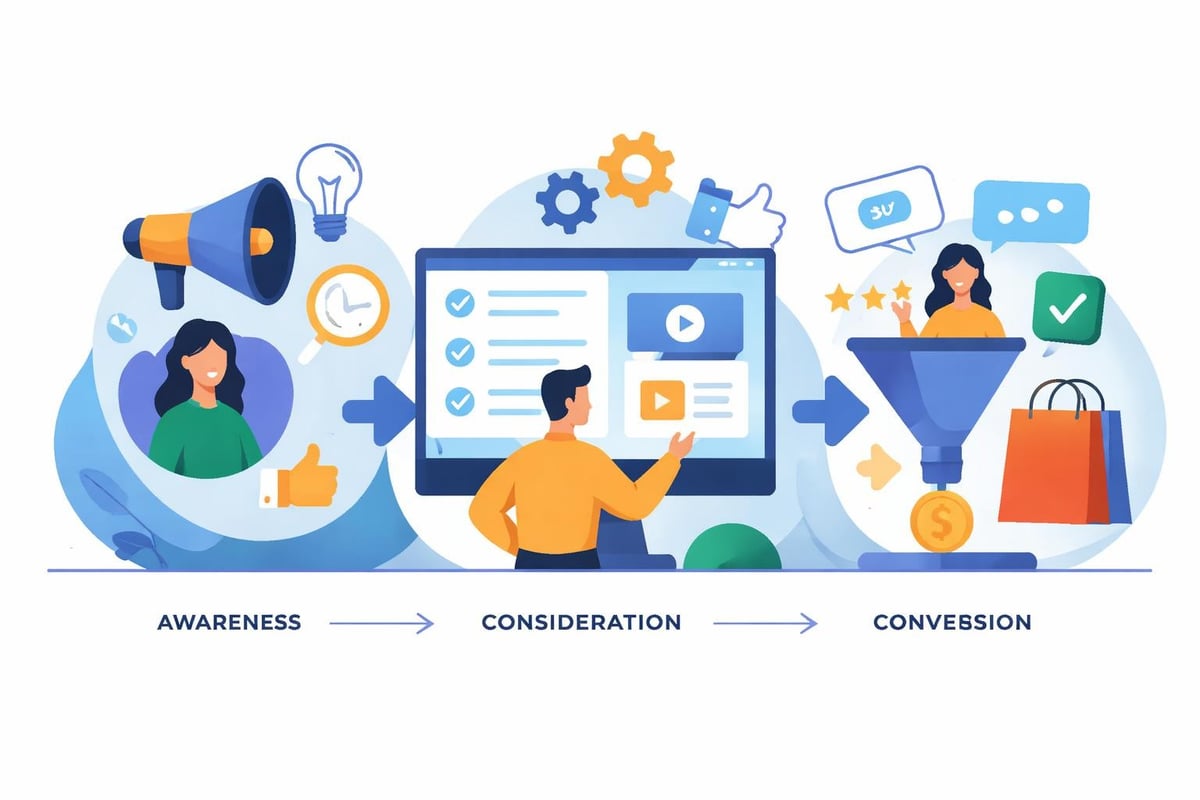
- Conversion funnels matching your actual customer journey stages
- Custom dimensions capturing business-relevant user attributes
- Cross-device tracking for complete user journey visibility
- Integration with CRM and business intelligence systems
Understanding how visitors interact with your customized elements informs ongoing optimization. The businesses that succeed in competitive markets treat their websites as evolving platforms, continuously refining based on user behavior data.
Maintenance and Evolution
The work to customize web experiences doesn't end at launch. Websites require ongoing maintenance, security updates, performance monitoring, and strategic evolution to remain effective. Custom websites need customized maintenance approaches that address their specific architecture and functionality.
Planning for long-term customization involves documenting your custom code, establishing update protocols, monitoring performance metrics, and budgeting for continuous improvement. The most successful websites evolve based on user feedback, competitive landscape changes, and emerging technologies.
When evaluating whether to customize web properties or use templates, factor in the total cost of ownership over three to five years. Custom solutions often require higher initial investment but provide better long-term value through superior performance, easier maintenance, and greater flexibility to adapt as your business grows. Your approach to web design strategy should account for both immediate needs and future expansion.
Integration Customization
Modern businesses rely on interconnected tools-CRM systems, email platforms, payment processors, inventory management, and analytics. The ability to customize web integrations determines how efficiently your website connects with your broader business operations.
Custom API connections enable sophisticated workflows that template-based websites can't match. When a customer submits a contact form, custom integrations can automatically create CRM records, trigger email sequences, notify sales teams, and update dashboards. These automated processes reduce manual work while improving response times and customer experience.
| Integration Type | Customization Benefits | Business Impact |
|---|---|---|
| CRM Connection | Automated lead routing, custom field mapping | Faster sales follow-up, better lead qualification |
| Payment Processing | Industry-specific checkout flows, fraud prevention | Higher conversion rates, reduced transaction issues |
| Email Marketing | Behavioral triggers, personalized content | Improved engagement, relevant communications |
| Analytics | Custom event tracking, business metric dashboards | Data-driven decisions, performance visibility |
The depth of integration customization often determines how well your website serves as a true business platform rather than just an online brochure. When you customize web integrations around your specific processes, you create operational efficiency that compounds over time.
Mobile Customization Strategies
While responsive design ensures websites function across devices, true mobile customization goes further by optimizing experiences specifically for mobile contexts. Mobile users have different goals, attention spans, and interaction patterns than desktop users.
To properly customize web experiences for mobile, consider implementing progressive web app features, optimizing touch targets for finger navigation, streamlining forms for mobile completion, and prioritizing above-the-fold content differently than desktop layouts. Mobile customization also involves performance optimization specifically for cellular connections and lower-powered devices.
Research shows that mobile represents the majority of web traffic in 2026, making mobile customization critical for business success. Websites that deliver exceptional mobile experiences capture more conversions, earn better search rankings through mobile-first indexing, and build stronger customer relationships.
Customizing web experiences in 2026 requires strategic thinking across design, functionality, content, and technical infrastructure. The businesses that invest in genuine customization rather than settling for generic templates position themselves for superior search visibility, stronger user engagement, and better business results. If you're ready to build a website that stands out in both traditional search and AI-powered discovery, Creotivity combines AI-accelerated development with strategic customization to deliver high-performance websites designed for ranking and conversion. Our team specializes in creating custom digital experiences that attract your ideal customers and drive measurable growth.