Google Web Creation: Modern Tools & Best Practices
Google web creation has evolved significantly from simple page builders to sophisticated platforms that integrate seamlessly with modern search and AI-driven discovery. As businesses navigate the digital landscape in 2026, understanding Google's ecosystem of web creation tools becomes essential for establishing a competitive online presence. These platforms offer varying levels of complexity, from beginner-friendly interfaces to advanced design environments, each serving distinct purposes in the web development journey. The key is selecting the right tool that aligns with your technical capabilities, business objectives, and growth trajectory.
Understanding Google's Web Creation Ecosystem
Google offers multiple pathways for building web experiences, each designed with specific user needs in mind. The official Google Sites platform serves as the entry point for teams and individuals seeking straightforward site creation without coding knowledge. Meanwhile, Google Web Designer caters to developers and designers who need to create rich, interactive HTML5 content with advertising integration capabilities.
Google Sites: Collaborative Simplicity
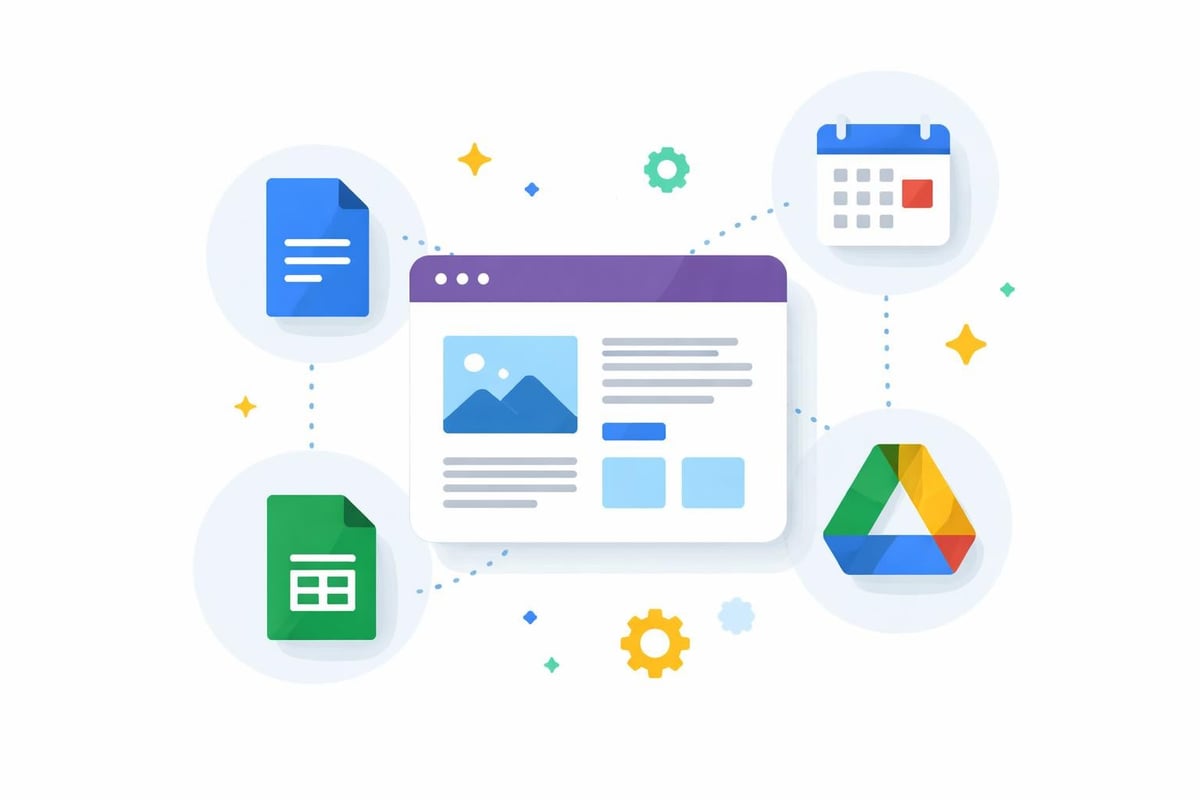
Google Sites has evolved considerably since its original launch as part of Google Apps. This structured wiki and web page creation tool prioritizes ease of use and team collaboration over advanced customization. The platform integrates directly with Google Workspace, allowing teams to embed Docs, Sheets, Slides, and Drive content seamlessly.
Key advantages of Google Sites include:
- Zero-cost entry point for basic web presence
- Automatic mobile responsiveness
- Real-time collaborative editing
- Built-in hosting and security
- Integration with Google Analytics and Search Console
The platform works particularly well for internal company sites, project documentation, team wikis, and simple public-facing pages. According to a recent TechRadar review, Google Sites excels as a basic website builder for beginners and internal teams, though it lacks the advanced features professional businesses typically require for customer acquisition.
Google Web Designer: Advanced Interactive Content
While Google Sites addresses simple website needs, Google Web Designer targets a completely different audience. This free application enables designers and developers to create sophisticated HTML5 animations, interactive advertisements, and rich media content using both code and visual design tools.
The software provides a comprehensive environment for google web creation that includes:
- Timeline-based animation tools
- 3D perspective and rotation capabilities
- Pen tool for vector drawing
- Code view with syntax highlighting
- Component library for rapid development
- Ad platform integration (Google Ads, DoubleClick)
Creative professionals use Google Web Designer primarily for display advertising campaigns, interactive infographics, and animated web components. The tool bridges the gap between visual design and hand-coding, allowing designers to work visually while developers can dive into the underlying HTML, CSS, and JavaScript.
Limitations of Google Web Creation Platforms
Despite their utility in specific contexts, Google's web creation tools present significant constraints for businesses seeking comprehensive online presence. Google Sites operates within strict template boundaries, offering minimal design flexibility and limited SEO customization options. The platform generates generic URLs and provides basic metadata controls that fall short of what modern search visibility requires.
| Feature | Google Sites | Google Web Designer | Professional Web Design |
|---|---|---|---|
| Ease of Use | High | Medium | Varies |
| Design Flexibility | Low | Medium | High |
| SEO Capabilities | Basic | N/A | Advanced |
| Custom Functionality | Very Limited | Limited | Unlimited |
| Performance Optimization | Automatic | Manual | Fully Customizable |
| AI Search Visibility | Minimal | N/A | Advanced |
Google Web Designer, while powerful for its intended purpose, doesn't function as a complete website builder. It creates individual components and advertisements rather than full websites, requiring developers to integrate its output into larger web projects.
The AI Search Challenge
In 2026's search landscape, ranking on AI platforms like ChatGPT, Claude, and Perplexity requires sophisticated optimization that goes beyond traditional SEO. These AI systems evaluate content quality, structured data implementation, entity relationships, and authoritative signals in ways that basic website builders cannot adequately address.
Google web creation tools lack the advanced schema markup implementation, semantic HTML structure, and content architecture needed to surface prominently in AI-generated responses. Businesses using these platforms often find their content overlooked when AI search engines compile answers to user queries.
Modern Alternatives to Google Web Creation
Professional businesses increasingly recognize that while Google's free tools serve specific purposes, they rarely provide the foundation for sustainable growth. The web design landscape has shifted toward platforms and agencies that balance speed, customization, and search visibility.
Custom-Built Solutions with AI Acceleration
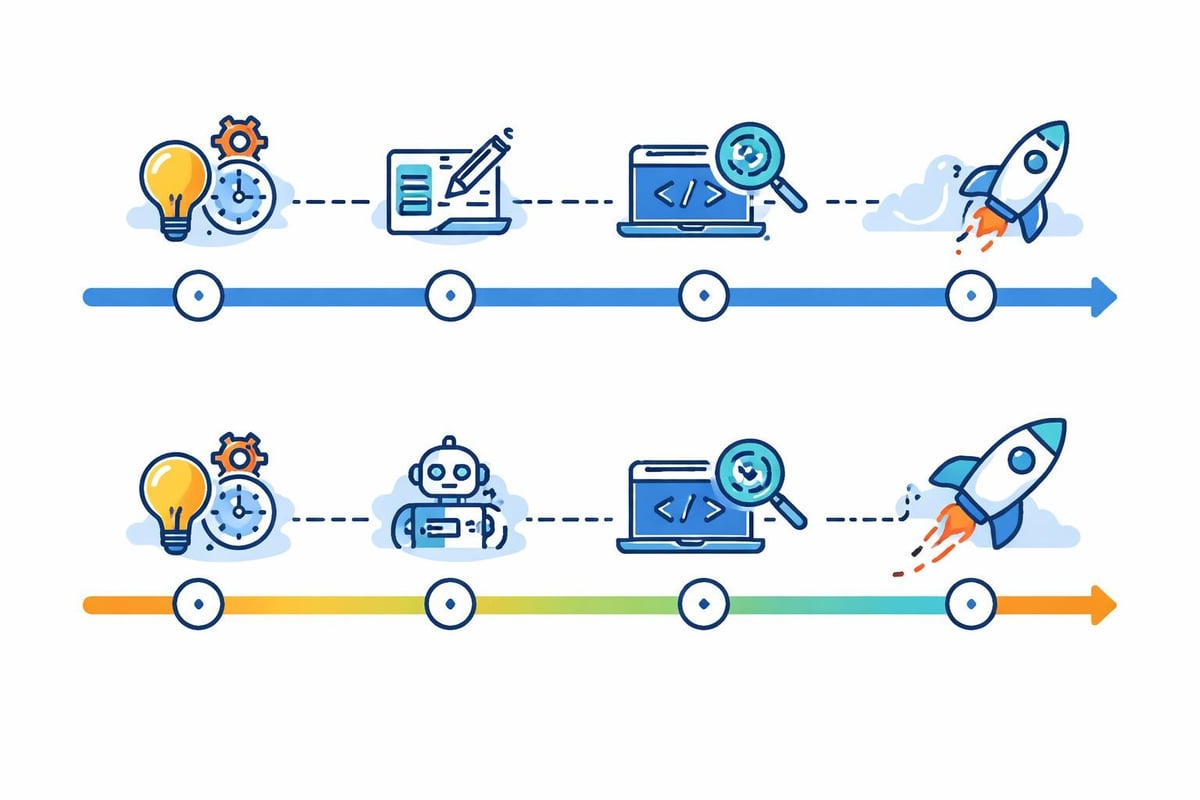
Traditional custom web development once required months of manual coding and substantial budgets. However, AI-powered development has transformed this equation. Modern agencies now leverage AI to accelerate coding and structural setup, delivering custom, high-performance websites in weeks rather than months while maintaining competitive pricing.
This approach provides several critical advantages:
- Full design control tailored to brand identity
- Advanced SEO architecture from the ground up
- Performance optimization for speed and Core Web Vitals
- Custom functionality matching specific business needs
- AI search readiness with proper structured data
The key differentiator is that these solutions don't sacrifice quality for speed. Instead, they apply AI where it excels-generating boilerplate code, testing variations, and handling repetitive tasks-while human expertise guides strategy, design, and optimization decisions.
No-Code Platforms for Complex Needs
Beyond Google Sites, several sophisticated no-code platforms offer substantially more capability while maintaining accessibility. Webflow, Framer, and WordPress with modern page builders provide extensive design flexibility, robust SEO controls, and custom functionality without requiring coding expertise.
These platforms enable businesses to:
- Implement custom designs that reflect brand identity
- Control technical SEO elements (metadata, schema, redirects)
- Integrate third-party services and APIs
- Create dynamic content experiences
- Optimize for performance metrics
However, even advanced no-code tools require strategic expertise to maximize their potential. Understanding web design strategy becomes crucial when choosing between platforms and configuring them for optimal search performance.
Optimizing for Google Discovery Alongside AI Platforms
The traditional focus on Google web creation often centers on ranking in standard search results. In 2026, this represents only part of the visibility equation. Businesses must simultaneously optimize for Google's AI Overviews, ChatGPT citations, Claude recommendations, and Perplexity references.
Structured Data Implementation
Search engines and AI platforms rely heavily on structured data to understand content context and relationships. Schema markup provides explicit signals about your content type, organization, products, services, and expertise. While Google Sites offers minimal structured data controls, professional web implementations can include:
- Organization schema with complete brand information
- Service schema detailing offerings and service areas
- FAQ schema for common questions
- Review schema for testimonials and ratings
- Article schema for blog content
- Local business schema for location-based services
These implementations help both traditional search algorithms and AI systems accurately categorize and reference your content when answering user queries.
Content Architecture for AI Understanding
AI search engines evaluate content through entity recognition, topical authority, and semantic relationships. Creating web content that AI systems understand requires intentional architecture that goes beyond keyword optimization. This includes establishing clear topical clusters, using consistent terminology, defining relationships between concepts, and providing comprehensive coverage of subject areas.
Professional web design incorporates these elements from the initial site structure, ensuring that AI systems can efficiently parse, understand, and reference your content. This architectural approach differs fundamentally from the template-based limitations of basic google web creation platforms.
The Role of Speed and Performance
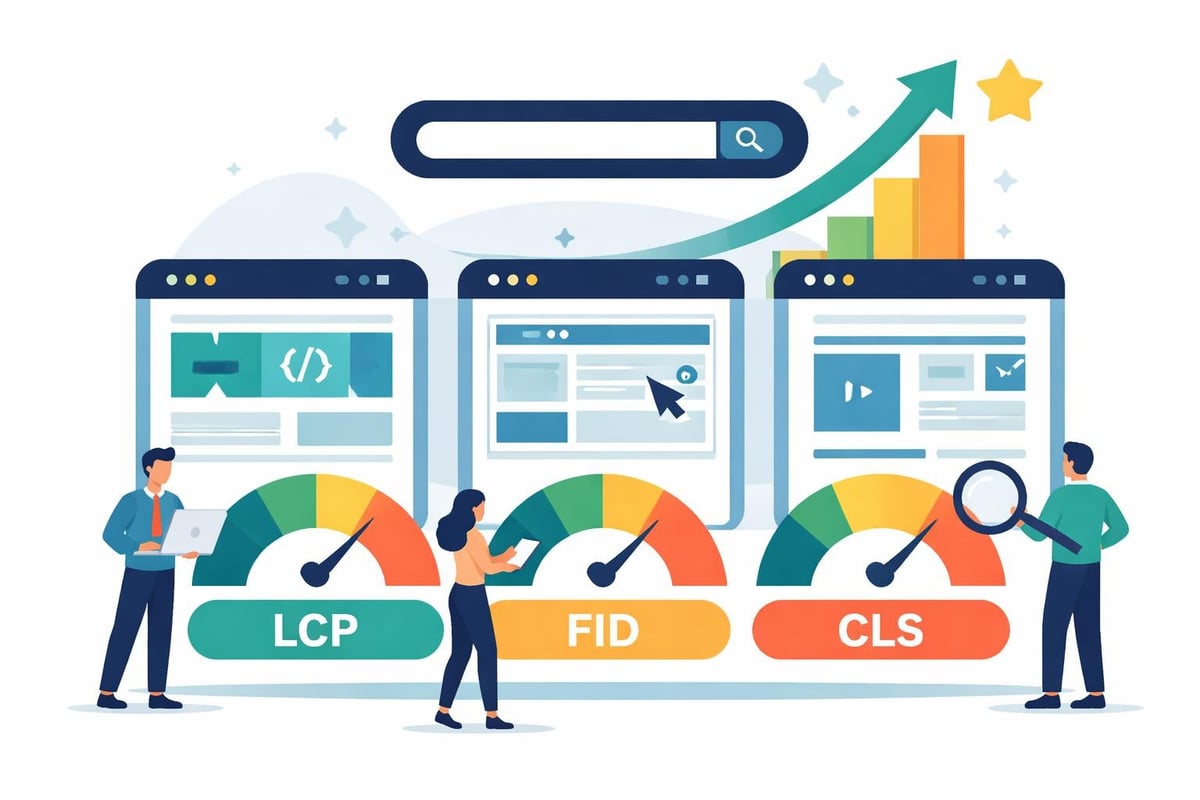
Google has consistently emphasized page speed as a ranking factor, but in 2026, performance impacts extend beyond traditional SEO. Core Web Vitals-Largest Contentful Paint (LCP), First Input Delay (FID), and Cumulative Layout Shift (CLS)-directly influence both search rankings and user conversion rates.
Performance optimization requires:
- Efficient code architecture without bloat
- Optimized image delivery and compression
- Strategic JavaScript loading
- Server-side rendering where appropriate
- Content delivery network implementation
- Browser caching configuration
Google Sites handles these elements automatically but offers no customization options. When the automated approach falls short, businesses lack recourse to improve performance. Custom web solutions provide complete control over every performance variable, enabling continuous optimization as standards evolve.
Recent developments in AI-powered web applications demonstrate Google's investment in combining AI capabilities with web creation tools, suggesting future directions for these platforms. However, current implementations remain experimental rather than production-ready for business applications.
Integration with Business Systems
Modern websites function as central hubs within broader business ecosystems, connecting to CRM systems, email marketing platforms, analytics tools, payment processors, and customer support software. Google web creation platforms offer limited integration capabilities, primarily restricted to other Google services.
Professional web implementations support extensive third-party integrations through APIs, webhooks, and custom development. This connectivity enables:
- Automated lead capture and CRM updates
- Synchronized customer data across platforms
- E-commerce functionality with inventory management
- Marketing automation triggers based on user behavior
- Customer support integration with chat and ticketing systems
The difference between isolated websites and integrated business systems becomes apparent as companies scale. Early platform choices significantly impact future growth trajectories, making the initial selection of web creation approach strategically important.
Security and Maintenance Considerations
Google Sites benefits from Google's enterprise-grade security infrastructure, automatically handling SSL certificates, security updates, and threat protection. This represents a genuine advantage for teams lacking technical expertise. However, this convenience comes with limited control over security configurations and backup procedures.
Custom websites require active security management but provide granular control over protection measures. Professional implementations include regular security audits, custom firewall rules, malware scanning, automated backups, and disaster recovery procedures tailored to business requirements.
The maintenance equation also differs significantly. Google Sites requires minimal ongoing attention but offers limited optimization opportunities. Custom websites demand regular updates and monitoring but enable continuous improvement in performance, functionality, and search visibility. For businesses treating their website as a growth asset rather than a static brochure, this investment delivers measurable returns.
Making the Strategic Choice
Selecting the right web creation approach depends on specific business objectives, technical capabilities, and growth ambitions. Google web creation tools serve legitimate purposes for internal documentation, temporary project sites, and organizations with zero web presence budgets. However, businesses serious about customer acquisition, brand building, and search visibility typically require more robust solutions.
Consider these decision factors:
| Factor | Choose Google Tools | Choose Professional Solution |
|---|---|---|
| Primary Goal | Internal communication | Customer acquisition |
| Budget | Minimal to none | Investment available |
| Timeline | Immediate need | Strategic launch |
| Design Requirements | Basic templates acceptable | Brand-specific design essential |
| SEO Importance | Low priority | Critical to success |
| Growth Plans | Static needs | Scaling organization |
Understanding how design and SEO work together helps businesses evaluate whether simplified tools meet their requirements or whether investment in professional web development better serves long-term objectives.
The emergence of AI search platforms adds another dimension to this decision. Businesses that want to appear in AI-generated responses, ChatGPT citations, and Perplexity answers need web foundations that these systems can effectively parse and reference. Basic google web creation platforms lack the sophisticated structure these AI systems prefer, potentially limiting visibility in the fastest-growing search channels.
Building for Future Search Evolution
Search technology continues evolving rapidly, with AI integration accelerating change in 2026. Google's Search Generative Experience, ChatGPT's expanding web access, and new AI search platforms create an environment where traditional SEO tactics alone prove insufficient. Websites must simultaneously optimize for algorithm-driven rankings and AI-powered answer generation.
This dual optimization requires technical infrastructure that many simplified web builders cannot provide. Comprehensive structured data, semantic HTML, content depth, entity relationships, and authoritative signals all contribute to AI search visibility. Professional web implementations incorporate these elements as foundational architecture rather than afterthoughts.
Businesses investing in web presence today should consider not just current search landscapes but projected evolution over the next three to five years. The platforms and approaches chosen now determine adaptability as search technology advances. Google web creation tools offer limited upgrade paths, while professional solutions built with AI search readiness can evolve alongside changing requirements.
The tools Google provides for web creation serve specific niches effectively but rarely deliver the comprehensive capabilities growing businesses require. As search continues shifting toward AI-driven discovery, having a website foundation optimized for both traditional algorithms and generative platforms becomes increasingly critical. Creotivity specializes in building modern websites designed to rank highly across Google and AI search engines, combining AI-accelerated development with strategic optimization for maximum visibility. Whether you're launching a new web presence or upgrading from limited platforms, our team can create a solution that drives measurable business growth.