
New Web Design: Modern Trends Shaping Digital Success
The landscape of digital presence has transformed dramatically over the past year. Businesses now compete not only for visibility on Google but also for recognition by AI-powered search platforms like ChatGPT, Claude, and Perplexity. New web design has evolved beyond aesthetics to become a strategic tool that balances user experience, technical performance, and discoverability across both traditional and generative search engines. Understanding these emerging design principles is essential for businesses seeking to maintain competitive advantage in 2026.
The Evolution of Design Standards in 2026
Modern websites must perform across multiple dimensions simultaneously. Speed, accessibility, and visual appeal remain foundational, but new web design now incorporates AI-friendly architecture and semantic structure that helps machines understand content context.
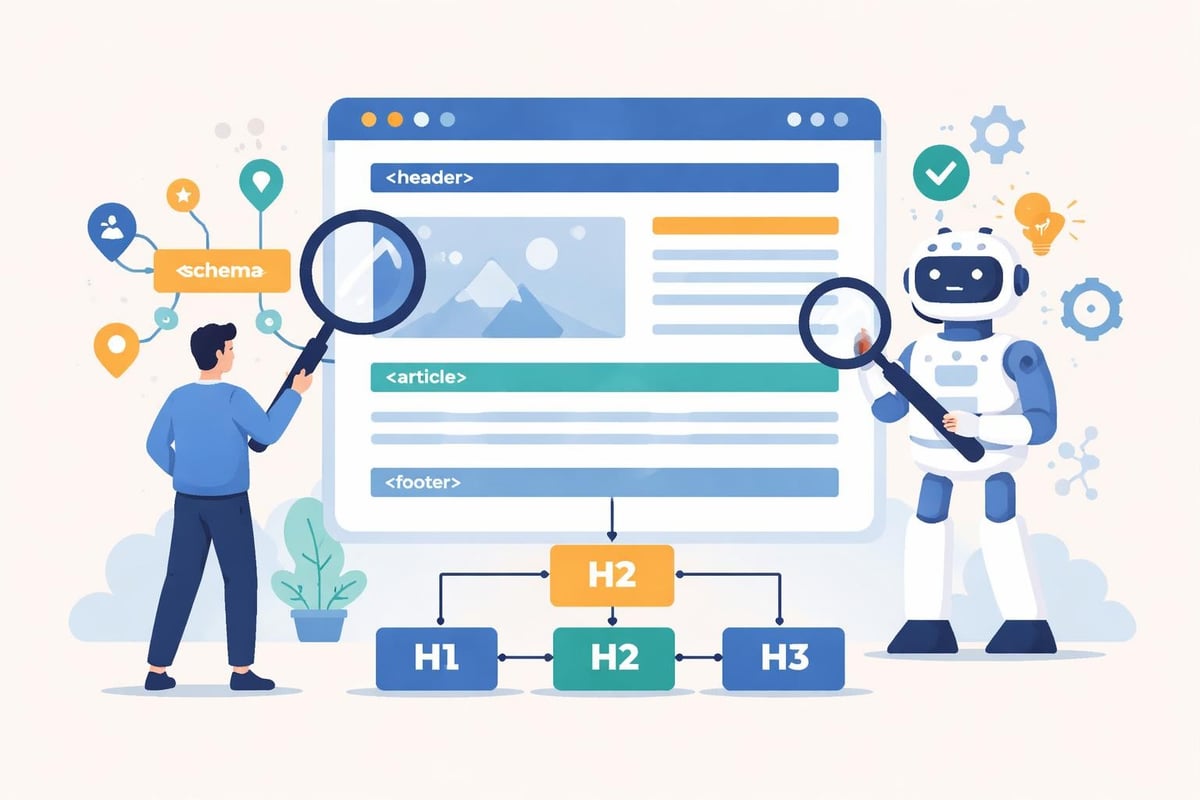
The shift toward AI-optimized experiences has fundamentally changed how designers approach information architecture. Rather than designing solely for human visitors, professional teams now build websites that serve both human readers and AI crawlers effectively. This dual-audience approach requires careful planning of content hierarchy, schema markup implementation, and semantic HTML structure.
Performance benchmarks have become more stringent. Core Web Vitals continue influencing search rankings, with Google prioritizing sites that load in under 2.5 seconds. The largest contentful paint (LCP), first input delay (FID), and cumulative layout shift (CLS) metrics directly impact both user satisfaction and search visibility.
Key Technical Requirements
- Mobile-first architecture with responsive breakpoints optimized for devices from 320px to 2560px
- Progressive web app capabilities including offline functionality and app-like interactions
- Serverless backend integration for scalable performance without infrastructure overhead
- Edge computing deployment to reduce latency by serving content from geographically distributed nodes
Accessibility compliance has transitioned from optional enhancement to mandatory requirement. WCAG 2.2 AA standards now serve as the baseline for professional websites, ensuring experiences work for users with diverse abilities.
Visual Trends Defining Professional Websites
The aesthetic direction of new web design in 2026 emphasizes clarity and intentionality. Minimalism continues evolving, but with increased warmth through strategic color usage and micro-interactions that guide attention without overwhelming users.
Bold typography has emerged as a primary design element. Large, custom typefaces create immediate visual hierarchy while improving readability across device sizes. Designers increasingly pair serif headers with sans-serif body text to balance authority with accessibility.
| Design Element | 2024 Approach | 2026 Evolution |
|---|---|---|
| Color Palettes | Vibrant gradients | Muted, earthy tones with strategic accent colors |
| Typography | Standard web fonts | Custom variable fonts with optical sizing |
| Layout Structure | Grid-based symmetry | Asymmetric layouts with intentional white space |
| Visual Hierarchy | Color-driven emphasis | Size and position-driven clarity |
Dark mode implementation has become standard rather than experimental. Users expect seamless switching between light and dark interfaces, with designs that maintain brand consistency across both modes. This requires careful consideration of contrast ratios, color temperature adjustments, and image optimization for different viewing contexts.
The integration of three-dimensional elements adds depth without sacrificing performance. WebGL and CSS 3D transforms enable immersive experiences that previously required heavy JavaScript frameworks. These elements work best when deployed strategically, enhancing key interactions rather than overwhelming the entire interface.
AI-Driven Personalization and Dynamic Content
New web design leverages machine learning to deliver customized experiences at scale. Modern platforms analyze user behavior, geographic location, device type, and referral source to adjust content presentation in real-time.
Personalization extends beyond simple A/B testing. Sophisticated systems now predict user intent based on navigation patterns and adjust calls-to-action, imagery, and information hierarchy accordingly. An e-commerce visitor researching products sees different content than someone ready to purchase immediately.
Implementation Approaches
- Behavioral tracking through privacy-compliant analytics that identify user segments
- Content variation systems that serve different headlines, images, or layouts based on user profiles
- Dynamic recommendation engines powered by collaborative filtering and content-based algorithms
- Predictive search that anticipates queries and surfaces relevant content proactively
The technical infrastructure supporting these capabilities has become more accessible. Cloud-based content delivery networks (CDNs) now include edge computing features that enable real-time personalization without backend server round-trips. This architecture reduces latency while maintaining the responsiveness users expect.
Ethical considerations guide implementation strategies. Transparent data collection practices, clear opt-out mechanisms, and respect for user privacy preferences build trust while enabling personalization benefits. Businesses following web development best practices balance customization with user control.
Performance Optimization as Design Foundation
Speed has become inseparable from visual design. The most beautiful interface fails if users abandon the site before content renders. New web design treats performance as a core design principle rather than a technical afterthought.
Image optimization techniques have advanced significantly. Next-generation formats like WebP and AVIF deliver superior compression while maintaining visual quality. Lazy loading ensures images load only when entering the viewport, reducing initial page weight dramatically.
Code splitting and component-level loading prevent JavaScript bloat. Modern frameworks enable granular control over what code loads when, ensuring users download only the resources needed for their current interaction. This approach particularly benefits mobile users on limited bandwidth connections.
Critical rendering path optimization focuses on delivering visible content instantly. Inline critical CSS, deferred non-essential scripts, and preloading key resources create the perception of instant loading even on slower connections.
The build process itself contributes to performance outcomes. Automated tools minify code, compress assets, and generate optimized delivery bundles. Continuous integration pipelines test performance metrics with each deployment, preventing regressions that degrade user experience.
Immersive Experiences Without Complexity
The challenge of new web design involves creating engaging experiences that don't require extensive technical knowledge to maintain. Business owners need websites they can update without developer assistance for routine content changes.
Micro-interactions provide feedback and delight without adding complexity. Subtle animations on button hovers, smooth transitions between states, and progress indicators for loading processes all contribute to perceived quality. These details signal professionalism and attention to user experience.
Scroll-triggered animations reveal content progressively as users navigate down pages. This technique maintains engagement while avoiding overwhelming information dumps. When implemented with intersection observer APIs rather than scroll event listeners, these effects perform smoothly even on modest hardware.

| Interaction Type | User Benefit | Implementation Consideration |
|---|---|---|
| Hover effects | Immediate feedback on clickable elements | Must include touch-equivalent for mobile |
| Loading states | Reduces perceived wait time | Should activate within 100ms of action |
| Form validation | Prevents errors before submission | Real-time checking without performance impact |
| Parallax scrolling | Creates depth and visual interest | Limited use prevents motion sickness |
Video content integration has matured beyond basic embedding. Background videos set atmosphere when optimized properly, using compressed formats and appropriate fallback images. Autoplay policies require muted playback, making this technique suitable for mood-setting rather than information delivery.
Semantic Structure for AI Discoverability
Search engines have evolved from keyword matching to context understanding. New web design incorporates structured data that helps AI systems comprehend content meaning, relationships, and relevance.
Schema markup transforms HTML into a rich information source for search engines. Product pages include detailed specifications, pricing, and availability. Articles specify author credentials, publication dates, and content categories. Local business pages provide hours, contact methods, and service areas.
The implementation process requires strategic planning. While automated tools generate basic schema, optimal results come from custom schemas aligned with specific business models. An e-commerce site needs different markup than a service provider or content publisher.
JSON-LD format has become the preferred implementation method. This approach separates structured data from visible content, simplifying maintenance and reducing errors. Validation tools confirm proper formatting before deployment, preventing issues that could confuse search crawlers.
Content hierarchy directly influences AI comprehension. Proper heading structure (H1, H2, H3) creates a logical outline that helps AI systems understand topic relationships. Main topics occupy H2 space, subtopics use H3, and supporting details follow in subsequent levels.
Design Systems for Consistency and Scalability
Organizations with multiple web properties benefit from unified design systems. These frameworks establish reusable components, consistent patterns, and shared design tokens that maintain brand coherence across digital touchpoints.
Component libraries accelerate development while ensuring quality. Pre-built, tested elements for navigation, forms, cards, and modals reduce duplication and prevent inconsistencies. Designers focus on arrangement and customization rather than rebuilding basic functionality repeatedly.
Design tokens abstract visual properties into reusable variables. Colors, typography scales, spacing units, and animation durations defined centrally propagate throughout the system. Updates to token values automatically cascade across all implementations, simplifying brand refreshes and maintaining consistency.
Version control for design assets has matured alongside code version control. Tools enable collaboration between designers and developers, tracking changes to components and maintaining documentation automatically. This infrastructure supports teams working across time zones and disciplines.
Professional agencies now use AI to drastically accelerate the coding and structural setup of websites, launching custom, high-performance sites in weeks rather than months while maintaining design system integrity.
Accessibility as Competitive Advantage
Inclusive design reaches broader audiences while improving experiences for all users. Features implemented for accessibility often benefit the entire user base, creating simpler, clearer interfaces.
Keyboard navigation support ensures functionality without mouse input. This capability serves users with motor impairments while also benefiting power users who prefer keyboard shortcuts. Focus indicators clearly show active elements, preventing confusion during tab-based navigation.
Color contrast ratios meeting WCAG standards improve readability in bright sunlight and for users with visual impairments. Testing tools verify contrast during design phases, preventing accessibility issues before implementation.
Essential Accessibility Features
- Alternative text for images describing content for screen reader users
- Descriptive link text providing context without surrounding content
- Form labels clearly associated with input fields
- ARIA landmarks identifying page regions for assistive technology
- Semantic HTML using appropriate elements for their intended purpose
Audio and video content includes captions and transcripts. This accommodation serves deaf and hard-of-hearing users while also benefiting non-native speakers and users in sound-sensitive environments. Automated transcription services have improved accuracy significantly, reducing manual effort.
Integration with AI Search Platforms
New web design acknowledges that users increasingly discover content through conversational AI rather than traditional search results. Optimizing for AI overviews and generative search platforms requires different strategies than conventional SEO.
Content structure emphasizes clear, direct answers to common questions. FAQ sections, how-to guides, and explanatory content formatted for easy extraction help AI systems surface your information when responding to relevant queries.

Entity relationships help AI systems understand business context. Clear descriptions of products, services, team members, and locations establish entities that AI can reference. Internal linking between related content strengthens these associations.
Citation-friendly formatting makes content easier for AI to attribute. Clear author bylines, publication dates, and source references position your content as authoritative information worth citing in AI-generated responses.
The measurement of AI visibility requires new metrics. Traditional analytics track clicks and impressions, but AI citations may occur without direct traffic. Monitoring brand mentions in AI responses and tracking assisted conversions provides insight into this emerging channel's impact.
Mobile-First Design in Practice
Mobile devices generate the majority of web traffic across most industries. New web design starts with mobile experiences, ensuring core functionality works perfectly on small screens before expanding to desktop layouts.
Touch targets sized for finger interaction prevent frustration. Minimum 44x44 pixel areas for buttons and links accommodate various finger sizes. Adequate spacing between interactive elements prevents accidental clicks on adjacent controls.
Navigation patterns optimized for mobile include hamburger menus, bottom tab bars, and swipe gestures. These approaches conserve screen space while maintaining accessibility. Progressive disclosure reveals additional options when needed without cluttering primary interfaces.
Form design for mobile requires particular attention. Input types trigger appropriate keyboards (numeric for phone numbers, email for addresses). Auto-fill support reduces typing burden. Progress indicators show multi-step form completion status.
Trends in web design for 2025 and beyond emphasize the continued importance of mobile optimization as screen sizes diversify and usage contexts expand.
Security and Trust Signals
Users have become more security-conscious. New web design incorporates visible trust indicators that reassure visitors their information remains protected.
HTTPS implementation has transitioned from best practice to absolute requirement. Browsers flag non-secure sites prominently, deterring visitors before they engage with content. SSL certificates from recognized authorities establish legitimacy.
Privacy policy visibility and cookie consent management demonstrate regulatory compliance. GDPR, CCPA, and similar regulations require transparent data handling practices. Clear, accessible privacy information builds trust while meeting legal obligations.
Visual security indicators include recognizable payment processor logos, security certification badges, and professional imagery that conveys legitimacy. These elements particularly matter for e-commerce sites and businesses collecting sensitive information.
Regular security audits identify vulnerabilities before exploitation. Automated scanning tools detect common issues while penetration testing uncovers sophisticated threats. Maintaining current software versions and dependencies prevents known exploits.
Content Strategy Aligned with Design
Effective new web design integrates content strategy from project inception. Visual design, information architecture, and content creation must work cohesively to achieve business objectives.
Content-first design approaches establish messaging before creating layouts. This methodology ensures visual design supports content goals rather than constraining them. Placeholder content during design phases often leads to mismatches when real copy arrives.
Readability optimization includes appropriate line lengths (50-75 characters), comfortable line spacing (1.5-1.6x font size), and generous paragraph breaks. These technical details significantly impact comprehension and engagement.
Scannable content uses subheadings, bullet lists, and highlighted key phrases to support quick information gathering. Most web visitors scan rather than read thoroughly, making this formatting essential for content effectiveness.
Calls-to-action receive prominent placement and clear wording. Action-oriented language ("Get Started," "Download Guide," "Schedule Consultation") outperforms passive phrasing. Contrasting colors and adequate white space ensure visibility.
Analytics-Driven Iteration
Launch represents the beginning of optimization rather than project completion. New web design embraces continuous improvement based on user behavior data and performance metrics.
Heatmap analysis reveals where users click, how far they scroll, and which elements attract attention. This behavioral data identifies navigation confusion, overlooked content, and optimization opportunities invisible in static mockups.
Conversion funnel tracking pinpoints abandonment points in critical user journeys. Whether completing purchases, submitting contact forms, or downloading resources, understanding where users disengage enables targeted improvements.
| Metric Category | Key Indicators | Optimization Focus |
|---|---|---|
| Engagement | Time on page, scroll depth, return visits | Content relevance and value |
| Performance | Page load time, interaction readiness, stability | Technical optimization |
| Conversion | Form completions, purchases, goal achievements | User experience and clarity |
| SEO | Organic traffic, keyword rankings, backlinks | Content quality and authority |
A/B testing validates hypotheses before full implementation. Testing headline variations, button colors, or layout arrangements with statistical significance prevents changes based on assumptions rather than evidence.
Leading web design trends incorporate data-driven decision making as standard practice, moving beyond subjective preferences to measurable outcomes.
Sustainable and Ethical Design Practices
Environmental consciousness influences new web design decisions. Digital carbon footprints matter as data centers consume significant energy. Optimization that improves performance also reduces environmental impact.
Efficient code and compressed assets minimize data transfer. Smaller page weights mean less energy consumption across the delivery chain from servers to user devices. Dark mode interfaces reduce screen energy usage, particularly on OLED displays.
Ethical design considers psychological impacts on users. Avoiding dark patterns that manipulate user behavior builds long-term trust. Transparent business practices and respect for user autonomy create sustainable customer relationships.
Content delivery network selection includes sustainability criteria. Providers using renewable energy and implementing carbon offset programs align technical decisions with environmental values.
Future-Proofing Design Investments
Technology evolves rapidly, but thoughtful architecture extends website lifespan. New web design balances current capabilities with flexibility for future enhancements.
Headless CMS architecture separates content management from presentation layers. This decoupling enables redesigns without content migration and supports content delivery to multiple channels (web, mobile apps, voice interfaces) from a single source.
Progressive enhancement builds core functionality that works universally, then adds advanced features for capable browsers. This approach ensures accessibility while leveraging modern capabilities where available.
Modular design systems simplify updates and expansions. Component-based architecture allows replacing or enhancing individual elements without comprehensive redesigns. This modularity reduces maintenance costs and extends platform value.
API-first development enables integration with emerging technologies. As new tools, platforms, and capabilities emerge, well-designed APIs facilitate connections without fundamental architecture changes.
New web design in 2026 represents a sophisticated balance of visual appeal, technical performance, and strategic optimization for both human users and AI search platforms. Success requires moving beyond surface aesthetics to embrace performance, accessibility, and discoverability as core design principles. Creotivity specializes in building modern websites that rank highly on Google and AI search engines, combining cutting-edge design with strategic optimization to help businesses attract and convert customers. Ready to elevate your digital presence with a website built for the AI era?