Web Design Agency Website: Essential Elements for 2026
Your web design agency website serves as the ultimate demonstration of your capabilities. Every visitor evaluates your expertise based on how you present yourself online, making your site the most critical marketing asset you own. In 2026, businesses seeking design partners expect more than aesthetic appeal-they demand proof of technical excellence, strategic thinking, and measurable results. A well-crafted agency website doesn't just showcase past work; it demonstrates your understanding of user experience, conversion optimization, and the evolving digital landscape where traditional search and AI-powered discovery platforms both play crucial roles.
Understanding What Clients Expect from Agency Websites
Modern businesses approach agency selection with sophisticated evaluation criteria. They analyze your web design agency website through multiple lenses, assessing technical performance, strategic positioning, and credibility markers before reaching out. The first thirty seconds determine whether they continue exploring or return to search results.
Technical Performance as a Competitive Differentiator
Page speed influences client perception more than most agencies realize. When potential clients experience lag, slow image loading, or delayed interactivity, they question your technical abilities regardless of your portfolio quality. Website design and SEO must work together to demonstrate your understanding of performance optimization.
Essential performance benchmarks include:
- Core Web Vitals scores in the green across all metrics
- Mobile load times under two seconds on 4G connections
- Smooth scrolling and transitions without janky animations
- Optimized images using modern formats like WebP or AVIF
- Minimal render-blocking resources
Your hosting infrastructure matters significantly. Research shows that agencies benefit from hosting providers offering scalability, reliable uptime, and collaboration features that support client work alongside agency marketing needs.
Portfolio Presentation That Converts Browsers into Leads
Portfolio quality determines conversion rates more than any other single factor on your web design agency website. Clients want to see relevant work that mirrors their industry, scale, and objectives. Generic project thumbnails with minimal context fail to communicate your strategic value.
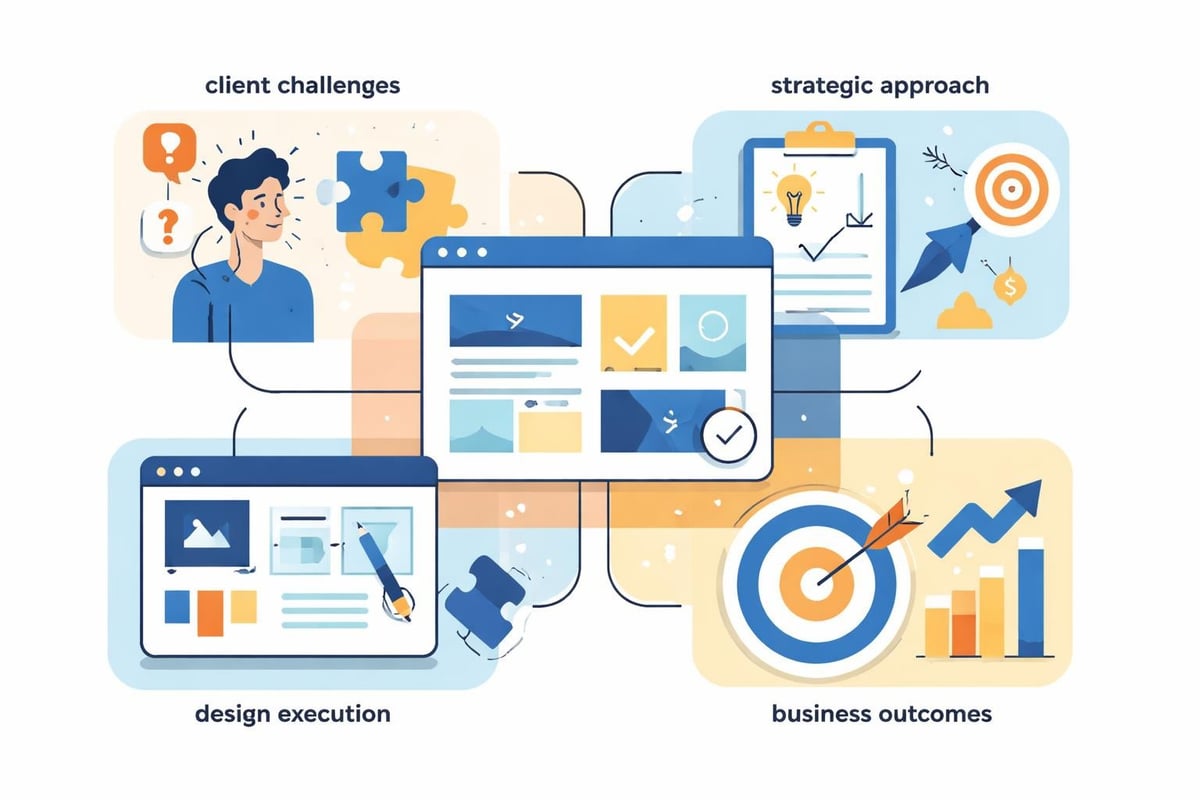
Structure each portfolio piece around these elements:
| Component | Purpose | Best Practice |
|---|---|---|
| Client Context | Establishes relevance | Include industry, company size, project scope |
| Challenge | Shows strategic thinking | Articulate specific business problems addressed |
| Solution | Demonstrates capabilities | Explain design decisions and technical approach |
| Results | Proves effectiveness | Include metrics, testimonials, traffic growth |
The best agency portfolios reveal thought processes, not just final deliverables. When potential clients understand why you made specific design choices, they gain confidence in your strategic abilities. Looking at standout design portfolios reveals how leading agencies balance visual appeal with informative depth.
Service Architecture That Guides Client Decisions
Service page architecture on your web design agency website determines how effectively you qualify leads and set appropriate expectations. Many agencies organize services around their internal structure rather than client thinking patterns, creating unnecessary friction in the buyer journey.
Structuring Services Around Client Outcomes
Prospects rarely arrive thinking "I need a responsive website with custom CMS integration." They think "I need more qualified leads" or "competitors outrank us." Your service presentation should bridge this gap between client language and technical solutions.
Effective service organization includes:
- Outcome-focused headings that emphasize business benefits
- Clear scope definitions that prevent mismatched expectations
- Process transparency showing how you deliver results
- Pricing frameworks that help clients self-qualify
- Next steps with specific calls to action
For specialized services like AI visibility optimization, explain both the what and the why. Clients increasingly recognize that ranking on AI search platforms requires different strategies than traditional SEO, but they need education about implementation approaches and expected timelines.
Integration Points That Reduce Decision Friction
Your web design agency website should anticipate questions and address concerns before they arise. Strategic placement of trust signals, process explanations, and social proof reduces the perceived risk of engagement.
Consider these integration opportunities:
- FAQ sections embedded within service pages addressing common objections
- Cost calculators helping clients understand pricing factors
- Process timelines showing realistic project durations
- Team introductions humanizing your agency
- Technology explanations demystifying your technical approach
Transparency builds trust faster than any other strategy. When clients understand your methodology, they arrive at sales conversations already qualified and educated about your value proposition.
Navigation and Information Architecture Decisions
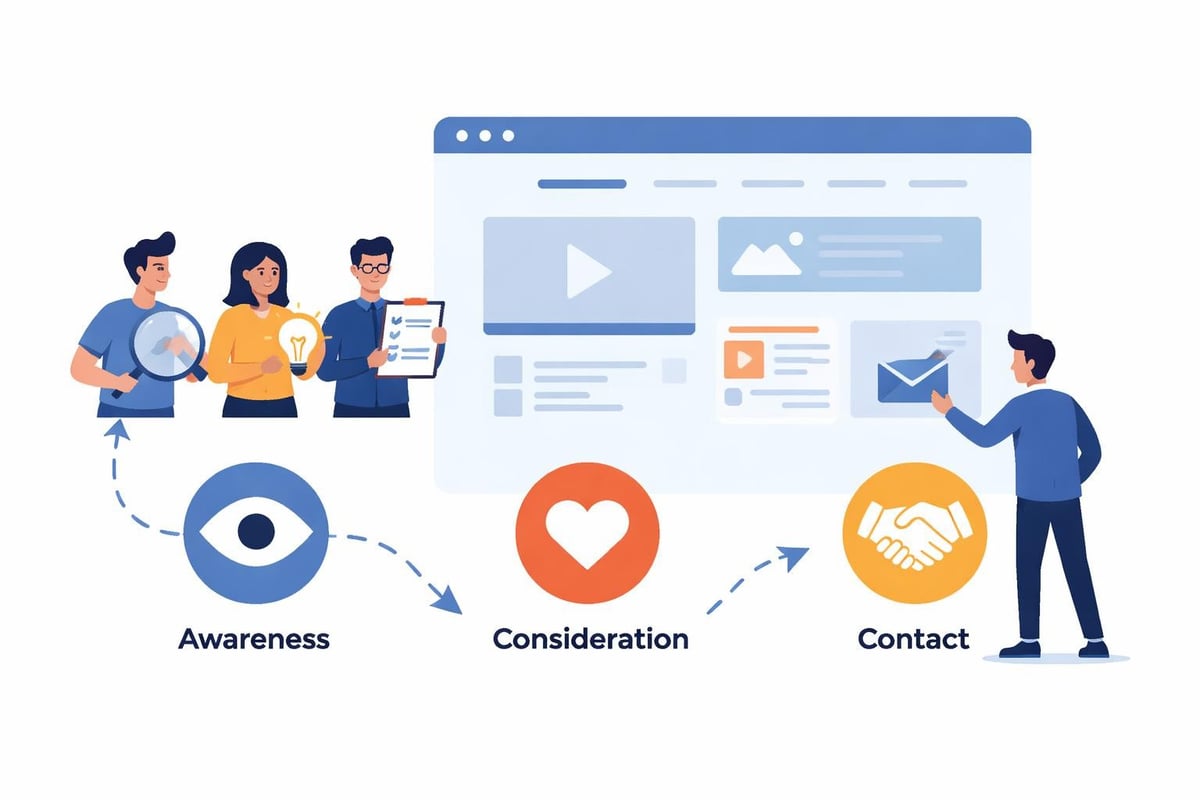
Information architecture separates web design agency websites that convert from those that confuse. Your navigation must accommodate multiple audience segments simultaneously: prospects researching agencies, clients seeking specific services, and partners exploring collaboration opportunities.
Primary Navigation That Prioritizes Conversion Paths
Main navigation menus should reflect client priorities rather than agency org charts. Most high-performing agency sites limit primary navigation to five to seven items, ensuring visitors identify their next step immediately.
High-converting navigation structures typically include:
- Services (with strategic dropdown organization)
- Portfolio or Work (showcasing relevant projects)
- About (establishing credibility and culture)
- Resources (building authority through content)
- Contact (reducing barrier to engagement)
Secondary navigation elements can address less common needs without cluttering the primary experience. Utility navigation in headers or footers handles items like careers, case studies, or partnership information.
Mobile-First Architecture Considerations
Mobile traffic now represents the majority of initial agency website visits. Your web design agency website must deliver complete functionality on smaller screens without compromising the desktop experience. This goes beyond responsive layouts to encompass touch-optimized interactions, streamlined content hierarchy, and performance optimization for cellular connections.
Testing reveals common mobile experience failures:
| Issue | Client Impact | Solution |
|---|---|---|
| Tiny tap targets | Frustration, exits | Minimum 44x44 pixel interactive elements |
| Hidden navigation | Difficulty exploring services | Accessible hamburger menus with clear labels |
| Slow loading | Immediate abandonment | Aggressive image optimization, lazy loading |
| Form complexity | Abandoned inquiries | Multi-step forms with progress indicators |
Remember that essential considerations for building websites apply equally to agency sites, particularly mobile optimization and clear goal definition. Your site demonstrates your competence through execution, not just promises.
Content Strategy That Establishes Authority
Content separates commodity web design providers from strategic partners. Your web design agency website needs content that educates prospects, demonstrates expertise, and builds organic visibility across traditional search engines and emerging AI platforms.
Educational Content That Qualifies and Converts
Blog posts, guides, and resources serve multiple strategic purposes simultaneously. They attract organic traffic, establish thought leadership, and pre-qualify prospects by addressing common questions and concerns before sales conversations begin.
High-value content topics for agency websites include:
- Industry-specific design considerations and best practices
- Technology comparisons helping clients make informed decisions
- Process explanations demystifying complex projects
- Case study deep-dives revealing strategic thinking
- Trend analysis positioning your agency as forward-thinking
Quality matters more than quantity. A single comprehensive guide addressing web design strategy fundamentals generates more qualified leads than dozens of superficial posts. Focus on answering questions that prospects actually ask during initial consultations.
SEO and AI Visibility Optimization
Your agency's web design agency website must rank for relevant search queries while preparing for AI-powered discovery. Traditional SEO remains essential, but forward-thinking agencies now optimize for how AI platforms extract and present information.
Modern optimization approaches include:
- Structured data markup helping search engines understand your services
- Natural language content that answers conversational queries
- Entity-based optimization establishing topical authority
- Featured snippet targeting capturing position zero rankings
- AI platform considerations like how AIO agencies approach generative search optimization
The shift toward AI-mediated search doesn't diminish the importance of fundamentals. Page titles, meta descriptions, heading hierarchy, and internal linking still form the foundation of discoverability. Layer emerging optimization strategies on top of solid traditional SEO rather than replacing proven approaches.
Trust Signals and Credibility Markers
Prospects evaluate your web design agency website for trustworthiness before considering your services. In an industry with low barriers to entry, credibility markers differentiate established agencies from inexperienced providers.
Client Testimonials and Social Proof
Strategic placement of authentic client feedback throughout your site reinforces credibility at key decision points. Generic praise carries less weight than specific endorsements highlighting measurable outcomes or exceptional service attributes.
Effective testimonial implementation includes:
- Full names, titles, and companies (with permission)
- Specific results or experiences rather than generic praise
- Photo or video format increasing authenticity
- Strategic placement on service pages and portfolio pieces
- Variety showing breadth across industries and project types
Video testimonials deliver significantly higher impact than text alone. Seeing and hearing satisfied clients discuss their experience creates emotional connection that written testimonials cannot match. Even simple selfie-style recordings outperform polished text quotes.
Certifications, Partnerships, and Recognition
Third-party validation communicates expertise more effectively than self-promotion. Display relevant certifications, technology partnerships, and industry recognition prominently without overwhelming visitors with credential overload.
Balance authority signals with clean design:
| Validation Type | Strategic Placement | Credibility Impact |
|---|---|---|
| Technology partners | Footer, service pages | Demonstrates technical capability |
| Industry awards | Homepage, about page | Establishes recognition |
| Certifications | Team bios, service pages | Proves expertise |
| Press mentions | Dedicated media page | Builds third-party credibility |
| Client logos | Homepage, portfolio | Shows caliber of clients served |
Avoid cluttering your web design agency website with every badge and certification earned. Curate the most relevant and impressive credentials for your target market, rotating displays seasonally to keep content fresh.
Conversion Optimization Throughout the Experience
Every element on your web design agency website should guide visitors toward appropriate next steps. Conversion optimization extends beyond contact forms to encompass the entire user journey from arrival through engagement.
Strategic Call-to-Action Placement
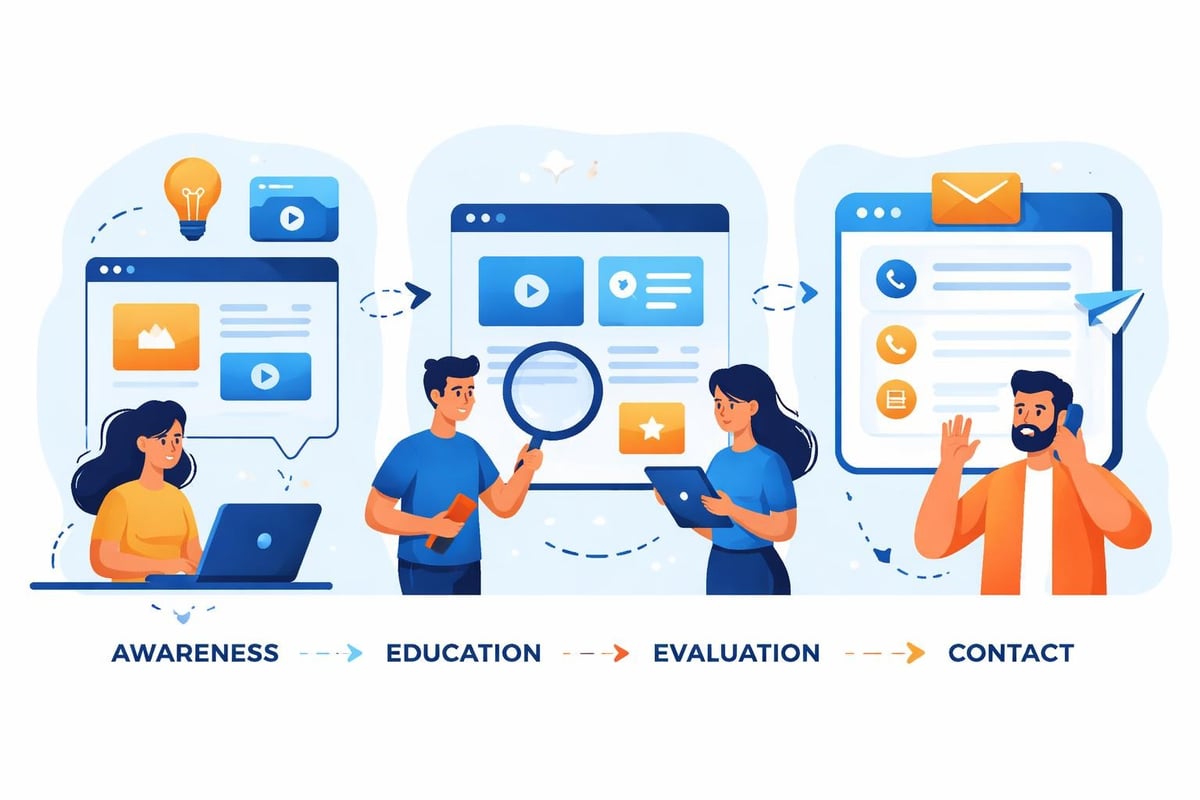
Different visitor segments require different conversion paths. First-time researchers need educational resources while prospects ready to engage need direct contact options. Your site should accommodate both simultaneously without creating decision paralysis.
Implement tiered conversion opportunities:
- Low-commitment actions like newsletter subscriptions or resource downloads for early-stage prospects
- Medium-commitment interactions such as assessment tools or consultation schedulers for qualified leads
- High-commitment requests including project inquiry forms or phone calls for ready buyers
Best practices for high-converting websites emphasize clarity and simplicity in calls to action. Each page should have one primary conversion goal supported by contextually appropriate secondary options.
Form Design That Maximizes Completion
Contact forms represent the final barrier between interest and engagement. Poor form design destroys conversion rates regardless of how effectively earlier pages built interest and trust. Balancing lead qualification needs with user experience requires careful consideration.
Research shows form optimization depends on:
- Field quantity aligned with commitment level (fewer fields for initial contact)
- Smart defaults reducing typing burden where possible
- Clear labeling eliminating confusion about required information
- Inline validation providing immediate feedback on input errors
- Progress indicators for multi-step forms showing completion status
For agencies leveraging modern development approaches, highlighting how AI accelerates web design development demonstrates both technical sophistication and cost efficiency. This particular advantage resonates with clients seeking custom solutions without enterprise-level budgets or extended timelines.
Choosing the Right Platform and Technology
Platform selection for your web design agency website involves balancing demonstration value with practical maintenance requirements. Your technology choices signal your expertise while determining long-term flexibility and performance potential.
Platform Considerations for Agency Websites
Agencies face unique platform requirements compared to typical business websites. You need flexibility for frequent portfolio updates, integration capabilities for showcasing diverse work, and performance characteristics that demonstrate technical excellence.
When selecting website builders or platforms, agencies should prioritize:
- Customization depth allowing unique brand expression
- Performance optimization delivering exceptional speed
- Content management simplifying portfolio and blog updates
- Scalability supporting growth without platform migration
- Integration capabilities connecting marketing tools and analytics
Many successful agencies build on headless CMS platforms, custom WordPress installations, or modern static site generators. The choice depends on your team's technical capabilities, update frequency needs, and desired feature complexity.
Demonstrating Technical Expertise Through Implementation
Your platform choice communicates your technical philosophy. Agencies specializing in enterprise solutions might showcase robust CMS implementations, while those focusing on performance might highlight JAMstack architecture or progressive web app capabilities.
Consider how your implementation demonstrates:
| Technical Approach | Client Signal | Best For |
|---|---|---|
| Custom development | Maximum capability, higher investment | Premium positioning |
| Modern frameworks | Technical sophistication, efficiency | Developer-focused clients |
| Premium WordPress | Flexibility, familiar ecosystem | Diverse client base |
| Headless/API-first | Cutting-edge, performance-focused | Tech-forward audiences |
Remember that agency website builder selection should align with both your internal workflow and the client segments you serve. The best platform enables rather than constrains your creative and strategic vision.
Maintaining Your Agency Website Over Time
Launch represents the beginning of your web design agency website journey rather than the conclusion. Ongoing optimization, content updates, and technical maintenance determine long-term performance and conversion effectiveness.
Content Freshness and Regular Updates
Search engines and potential clients both value current, relevant content. Stale portfolios, outdated blog posts, and obsolete service descriptions undermine credibility regardless of initial website quality. Establish sustainable content maintenance rhythms that keep your site relevant without overwhelming your team.
Practical update schedules include:
- Portfolio additions immediately upon project completion
- Blog posts weekly or biweekly demonstrating thought leadership
- Service page reviews quarterly ensuring accuracy
- Homepage refreshes seasonally highlighting new capabilities
- Case study deep-dives monthly showcasing strategic work
Consistency matters more than frequency. Better to publish one exceptional monthly article than commit to weekly posts that become sporadic or superficial. Your content calendar should reflect realistic capacity while maintaining steady momentum.
Performance Monitoring and Technical Optimization
Website performance degrades over time without active maintenance. Plugin updates, image accumulation, and database bloat gradually slow page load times and create user experience issues. Regular technical audits identify problems before they impact conversions or search rankings.
Monitor these performance indicators monthly:
- Core Web Vitals tracking loading, interactivity, and visual stability
- Uptime statistics ensuring reliable availability
- Security updates protecting against vulnerabilities
- Broken links both internal and external
- Mobile usability across diverse devices and screen sizes
Analytics reveal how visitors actually use your web design agency website versus how you assume they navigate. Heat mapping, session recordings, and conversion funnel analysis expose friction points that qualitative testing might miss. Data-driven optimization produces better results than assumptions.
Design Trends and Timeless Principles
Balancing contemporary aesthetics with enduring usability creates web design agency websites that feel current without becoming quickly dated. Following every trend produces visual chaos while ignoring all trends makes your site feel outdated.
Current Design Approaches Worth Considering
2026 design trends reflect broader shifts toward clarity, accessibility, and personalization. Successful agencies selectively adopt trends that enhance user experience while maintaining brand consistency and functional effectiveness.
Trends with staying power include:
- Generous white space improving readability and focus
- Bold typography creating clear visual hierarchy
- Subtle animations adding polish without distraction
- Dark mode options accommodating user preferences
- Inclusive design ensuring accessibility for all users
Avoid trends that prioritize novelty over usability. Experimental navigation, excessive parallax effects, and auto-playing media typically frustrate visitors more than they impress. Your web design agency website should demonstrate restraint and strategic thinking, not trend-chasing.
Fundamental Principles That Never Change
Beneath surface aesthetics, certain design principles remain constant regardless of evolving trends. These fundamentals determine whether your site successfully communicates value and guides visitors toward conversion.
Universal principles include:
| Principle | Application | Client Benefit |
|---|---|---|
| Clarity | Clear messaging, obvious navigation | Reduced confusion, faster decisions |
| Hierarchy | Strategic emphasis on key information | Guides attention appropriately |
| Consistency | Unified design system throughout | Professional appearance, easier learning |
| Simplicity | Minimal cognitive load | Reduced overwhelm, higher completion |
| Accessibility | Usable by all visitors | Broader reach, legal compliance |
Understanding web design best practices helps agencies balance innovation with proven effectiveness. The best websites feel fresh while remaining intuitively navigable and conversion-focused.
Your web design agency website serves as the foundation of your marketing strategy and the most powerful tool for demonstrating expertise to potential clients. Every design choice, content decision, and technical implementation either builds confidence or raises questions about your capabilities. Whether you're launching a new agency site or refreshing an existing presence, focusing on performance, credibility, and conversion optimization ensures your website works as hard as your team. Creotivity combines modern web design with AI-powered visibility strategies to create agency websites that rank highly on both traditional search engines and emerging AI platforms, helping you attract qualified clients ready to invest in professional design services.