
Website Conception: Strategic Planning for Success
Website conception represents the critical foundation upon which all successful digital projects are built. Before writing a single line of code or designing a single element, businesses must invest time in strategic planning that aligns their digital presence with business objectives, user needs, and market realities. This comprehensive planning phase determines whether a website becomes a powerful customer acquisition engine or an expensive digital brochure that fails to deliver measurable results. In 2026, with AI-driven search transforming how users discover and evaluate businesses, effective website conception has become more complex and more essential than ever before.
Understanding Website Conception Fundamentals
Website conception encompasses the complete strategic planning process that occurs before design and development begin. This phase includes defining business goals, researching target audiences, mapping user journeys, establishing technical requirements, and creating detailed specifications that guide the entire project.
The website conception process typically spans two to six weeks depending on project complexity. During this period, stakeholders collaborate to answer fundamental questions about purpose, audience, content, functionality, and success metrics.
The Business Case Foundation
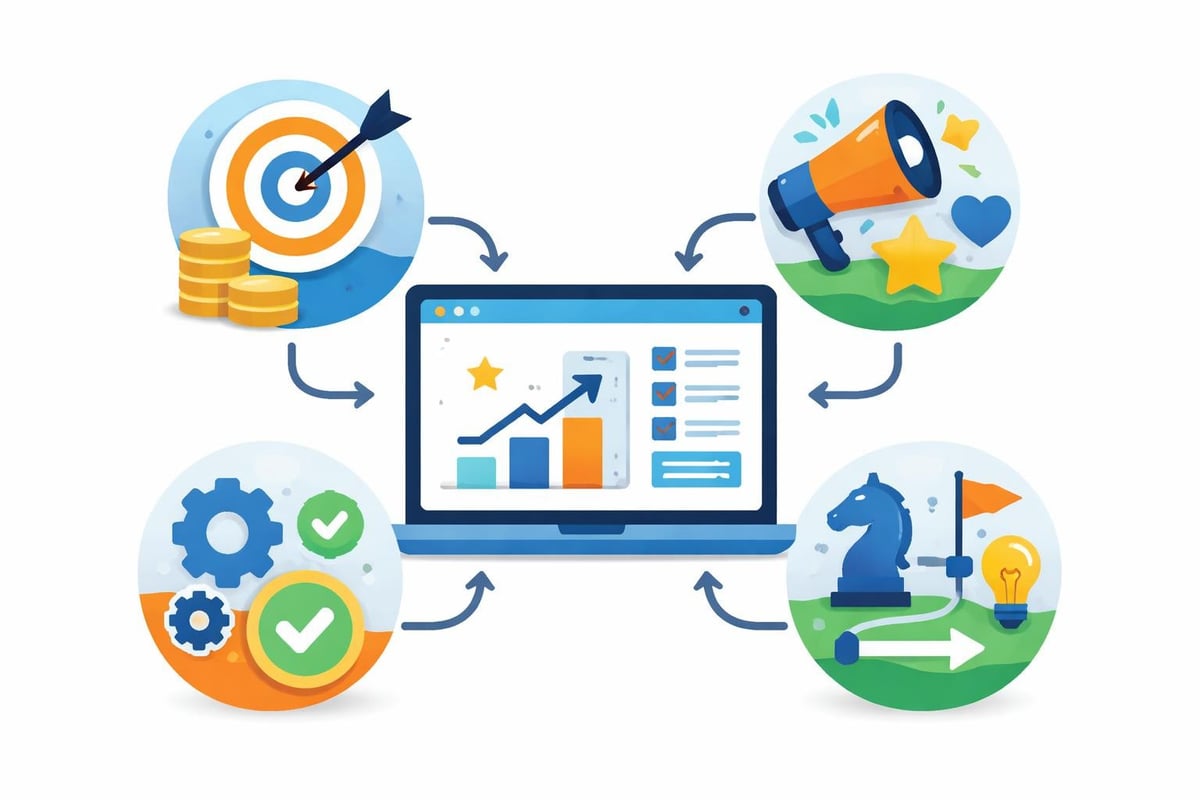
Every website conception begins with a clear business case that articulates why the website exists and what it must accomplish. This foundation includes:
- Revenue objectives: Direct sales, lead generation, or customer lifetime value targets
- Brand positioning goals: Market perception, authority establishment, differentiation from competitors
- Operational efficiencies: Customer self-service, support ticket reduction, process automation
- Strategic initiatives: Market expansion, product launches, partnership development
Without this clarity, teams make design and content decisions based on personal preferences rather than business requirements. The business case serves as the North Star throughout the entire project lifecycle.
Audience Research and Persona Development
Effective website conception requires deep understanding of who will use the site and why. This goes far beyond demographic data to encompass behavioral patterns, pain points, motivations, and decision-making criteria.
Primary research methods include customer interviews, surveys, analytics review, and competitive analysis. According to UC Berkeley's website planning guide, user interviews should explore current challenges, information needs, preferred communication channels, and decision-making processes.
| Research Method | Insights Gained | Time Investment |
|---|---|---|
| Customer interviews | Deep motivations, pain points, language patterns | 2-4 weeks |
| Analytics review | Behavior patterns, content performance, conversion paths | 1 week |
| Surveys | Quantitative validation, preference ranking | 1-2 weeks |
| Competitive analysis | Market standards, differentiation opportunities | 1 week |
Personas synthesize this research into representative user archetypes. Each persona should include goals, challenges, information needs, technical proficiency, and preferred engagement patterns. These personas inform every subsequent decision in the website conception process.
Mapping User Journeys and Information Architecture
Once you understand who your users are, website conception shifts to mapping how they will move through your site to accomplish their goals. This journey mapping reveals the optimal structure, navigation, and content organization.
Creating Effective User Journey Maps
User journey maps visualize the complete experience from initial awareness through conversion and beyond. Each journey includes trigger points, questions users need answered, potential obstacles, and required content or functionality at each stage.
Consider a B2B software buyer's journey. They might progress from problem awareness to solution research, vendor comparison, stakeholder buy-in, and finally purchase decision. Your website conception must address each stage with appropriate content and calls-to-action.
Journey maps should account for multiple entry points. Users rarely land on your homepage first. They arrive through search results, social media, paid ads, or referrals, often deep-linking to specific content pages. Your information architecture must support these varied entry points.
Structuring Information Architecture
Information architecture organizes content in ways that match user mental models and support intuitive navigation. The website planning approach from 10Web emphasizes that clear organization directly impacts both user experience and SEO performance.
Start by conducting card sorting exercises where users organize content topics into logical categories. This reveals how your audience naturally thinks about your offerings versus how your organization structures them internally.
Common information architecture patterns include:
- Hierarchical structures: Parent-child relationships ideal for product catalogs or service portfolios
- Hub-and-spoke models: Central landing pages connecting to detailed resources
- Sequential flows: Step-by-step processes for onboarding or complex purchases
- Matrix structures: Multiple navigation paths supporting different user needs
Your sitemap should emerge organically from this user-centered architecture work rather than from internal organizational charts. The comprehensive planning guide from Website Planning Guide provides detailed frameworks for translating user needs into functional site structures.
Content Strategy and Planning
Website conception must address what content will populate the structure you've designed. This content planning ensures you can deliver on the promises your architecture makes to users.
Content Inventory and Gap Analysis
Begin by cataloging existing content assets including written materials, images, videos, data sheets, and customer testimonials. Evaluate each asset for quality, relevance, and alignment with user needs identified during research.
Gap analysis reveals where you need to create new content. These gaps typically emerge in areas like competitive differentiators, objection handling, technical specifications, or implementation guidance.
Priority content categories include:
- Educational resources that address user pain points
- Product or service explanations tailored to different personas
- Social proof including case studies and testimonials
- Conversion-focused landing pages
- Support and self-service resources
The Milanote content planning guide recommends creating detailed content outlines for key pages during the conception phase, specifying messaging hierarchy, required information, and supporting media.
Messaging Framework Development
Your messaging framework establishes the voice, tone, and key messages that will permeate all website content. This framework should differentiate your business while resonating with target personas.
Develop messaging hierarchies for each major content section:
- Primary headline: The single most important message for that page
- Supporting benefits: Three to five key value propositions
- Proof points: Evidence supporting your claims
- Call-to-action: Specific next step you want users to take

Technical Requirements and Platform Selection
Website conception must establish technical requirements that support your business goals, user needs, and content strategy. These decisions have long-term implications for scalability, performance, and total cost of ownership.
Functional Requirements Definition
Functional requirements specify what the website must do. Create a prioritized list categorized as must-have, should-have, and nice-to-have features.
Common functional requirements include:
- Content management: Ability to update specific content without developer involvement
- E-commerce capabilities: Shopping cart, payment processing, inventory management
- User accounts: Registration, login, personalized experiences
- Search functionality: Site search with filtering and faceting
- Forms and lead capture: Contact forms, quote requests, newsletter signup
- Integrations: CRM connectivity, marketing automation, analytics platforms
Each requirement should include acceptance criteria that define what successful implementation looks like. This specificity prevents scope creep and miscommunication during development.
Platform and Technology Selection
Your platform choice depends on technical requirements, budget, timeline, and internal capabilities. The GoDaddy planning resource outlines key considerations for evaluating different website platforms.
| Platform Type | Best For | Considerations |
|---|---|---|
| Custom development | Unique functionality, complete control | Higher cost, longer timeline |
| WordPress | Flexibility, extensive ecosystem | Requires maintenance, security vigilance |
| Shopify | E-commerce focus | Transaction fees, customization limits |
| Webflow | Designer control, visual development | Learning curve, hosting costs |
Modern approaches often leverage AI-accelerated development to reduce costs and timelines. Professional web design services increasingly use AI to handle repetitive coding tasks while human expertise focuses on strategy and customization, delivering custom sites in weeks rather than months.
Design Direction and Visual Planning
While detailed design occurs after the conception phase, this planning period should establish design direction, create mood boards, and define brand application guidelines.
Establishing Visual Direction
Visual direction aligns aesthetic decisions with brand identity and user expectations. Review competitor sites, identify design patterns users expect in your industry, and determine where differentiation adds value versus where it creates confusion.
Design best practices from Marq emphasize consistency in typography, color application, spacing, and component design. These standards should be documented during conception.
Create mood boards that capture the intended feeling and aesthetic. Include websites, photography styles, color palettes, and typography examples that resonate with your brand positioning and audience preferences.
Wireframing Key Templates
Wireframes translate information architecture and content strategy into visual layouts without the distraction of colors, images, or final copy. These blueprints show content hierarchy, navigation placement, and functional elements.
Focus wireframing efforts on template pages that will be reused throughout the site:
- Homepage layout and sections
- Service or product landing page
- Resource or blog article page
- Contact or conversion page
- About or team page
Wireframes facilitate stakeholder alignment before investing in high-fidelity design. They make it easier to iterate on layout and content organization when changes require minimal effort.
Success Metrics and Measurement Planning
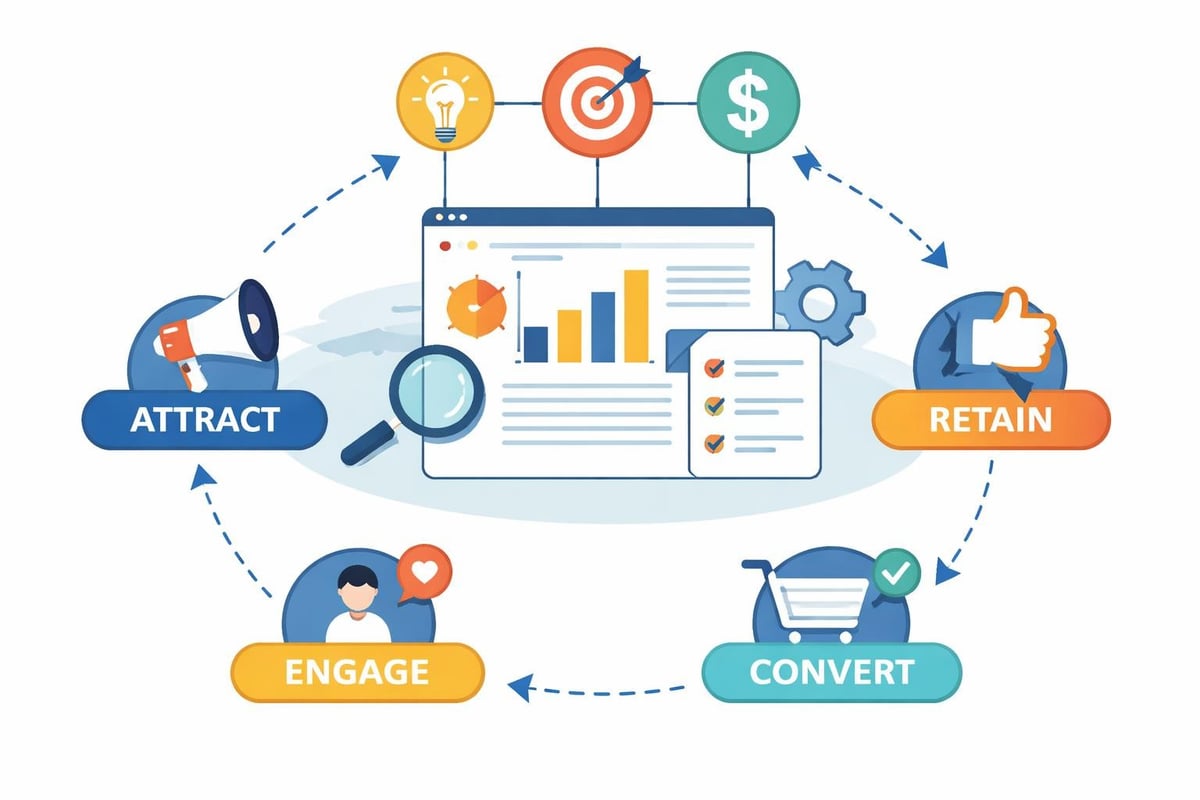
Website conception must define how success will be measured. These metrics inform both the initial design and ongoing optimization after launch.
Defining Key Performance Indicators
Select three to seven KPIs that directly connect to business objectives established in your initial business case. Avoid vanity metrics like total page views in favor of indicators that reflect real business value.
Common website KPIs include:
- Conversion rate (leads, sales, signups)
- Average session duration
- Pages per session
- Bounce rate for key landing pages
- Form completion rate
- Customer acquisition cost through website channel
Each KPI requires baseline measurement and target goals. These benchmarks guide design decisions and prioritize features during development.
Analytics Implementation Planning
Plan analytics implementation during conception rather than treating it as an afterthought. Specify required tracking including page views, events, conversions, and custom dimensions that capture persona or traffic source data.
The analytics setup approach you choose should support your defined KPIs. Configure goal tracking, e-commerce events, and conversion funnels that reveal where users succeed or drop off in their journey.
Consider implementing both quantitative analytics and qualitative feedback mechanisms. Heat mapping, session recording, and on-page surveys provide context that explains the behavior your analytics reveal.
Governance and Maintenance Planning
Effective website conception extends beyond launch to consider long-term governance, maintenance, and evolution. These operational considerations prevent websites from becoming outdated and ineffective over time.
Content Governance Structures
Establish clear ownership for content creation, approval, publication, and maintenance. The Wikipedia overview of website governance describes organizational structures that maintain website quality and consistency.
Define workflows for different content types:
- Routine updates: Product changes, pricing adjustments, staff profiles
- Campaign content: Promotional landing pages, seasonal offers
- Thought leadership: Blog posts, resources, guides
- Emergency updates: Critical announcements, service disruptions
Each workflow should specify roles, approval requirements, quality standards, and publication schedules. This structure prevents bottlenecks and ensures consistent quality.
Technical Maintenance and Security
Plan for ongoing technical maintenance including software updates, security patches, performance optimization, and compatibility testing. These operational requirements impact hosting selection, platform choice, and budget allocation.
Modern websites require regular attention to maintain security and performance. The Fireart Studio practices guide emphasizes that mobile responsiveness and loading speed require ongoing optimization as devices and user expectations evolve.
Budget allocation should include hosting costs, security certificates, backup systems, monitoring tools, and developer support for troubleshooting and updates.
Project Planning and Resource Allocation
Website conception concludes with detailed project planning that transforms strategy into executable workstreams with assigned resources, timelines, and dependencies.
Timeline Development
Create realistic timelines that account for content creation, design iteration, development sprints, testing phases, and launch preparation. The Oneupweb planning guide provides frameworks for estimating effort across different project phases.
| Project Phase | Typical Duration | Key Deliverables |
|---|---|---|
| Conception and planning | 2-6 weeks | Strategy document, sitemap, wireframes |
| Content creation | 4-8 weeks | Page copy, images, videos |
| Design | 3-6 weeks | Visual designs, component library |
| Development | 6-12 weeks | Functional website, CMS implementation |
| Testing and refinement | 2-4 weeks | QA reports, fixes, optimizations |
| Launch preparation | 1-2 weeks | Migration, training, monitoring setup |
Build buffer time into schedules for stakeholder reviews, revision cycles, and unexpected challenges. Rushed timelines compromise quality and increase stress.
Budget and Resource Planning
Translate project requirements into budget estimates covering strategy, design, development, content, photography, and ongoing operations. Consider both one-time launch costs and recurring expenses.
Resource planning identifies who will execute each workstream. This includes internal team members, external agencies, freelance specialists, and technology vendors. Clear role definition prevents gaps and duplication.
Establish communication protocols, review schedules, and decision-making authority. These structures keep projects moving forward while ensuring appropriate stakeholder input at critical junctures.
Integrating SEO and AI Visibility from Conception
In 2026, website conception must account for both traditional search engine optimization and emerging AI-driven discovery channels. These considerations influence architecture, content, and technical decisions from the earliest planning stages.
Building SEO Foundations
SEO success begins during conception through keyword research, content planning, and technical architecture decisions. Identify primary and secondary keywords for each major content section, ensuring your site addresses the language your audience uses when searching.
The AI visibility optimization strategies businesses implement in 2026 extend beyond traditional SEO to include optimization for AI overviews, chatbot citations, and generative search results. This requires structured data implementation, authoritative content creation, and entity-based content organization.
Technical SEO considerations during conception include URL structure, internal linking strategy, page speed requirements, mobile-first design, and schema markup implementation. These foundational decisions are difficult to change after launch.
Preparing for AI-Driven Discovery
AI search engines and chatbots represent growing discovery channels that require different optimization approaches. During website conception, plan content that provides clear, authoritative answers to user questions while demonstrating expertise and trustworthiness.
Structure content to support both human readers and AI processing. This includes clear headings, concise paragraphs, bulleted key points, and explicit relationships between concepts. AI systems excel at extracting and synthesizing this type of well-structured information.
Consider how ranking in AI-powered platforms requires demonstrating topical authority through comprehensive, interconnected content rather than isolated pages optimized for individual keywords.
Effective website conception transforms digital projects from expensive experiments into strategic assets that drive measurable business results. By investing time upfront to align business goals with user needs, structure information logically, plan comprehensive content, and establish governance frameworks, you create the foundation for websites that perform today and evolve with changing technology tomorrow. Creotivity specializes in strategic website conception that integrates modern design, SEO best practices, and AI visibility optimization to build sites that rank highly across both traditional search engines and emerging AI platforms, turning your digital presence into a powerful customer acquisition engine.