
Website Design Services: A Complete 2026 Guide
The digital landscape has fundamentally transformed how businesses connect with customers, and your website serves as the cornerstone of that connection. Professional website design services have evolved far beyond simple page creation to encompass strategic planning, user experience optimization, and visibility across both traditional search engines and emerging AI platforms. In 2026, businesses need websites that not only look exceptional but also perform flawlessly across devices, load instantly, and rank prominently when potential customers search for solutions.
Understanding Modern Website Design Services
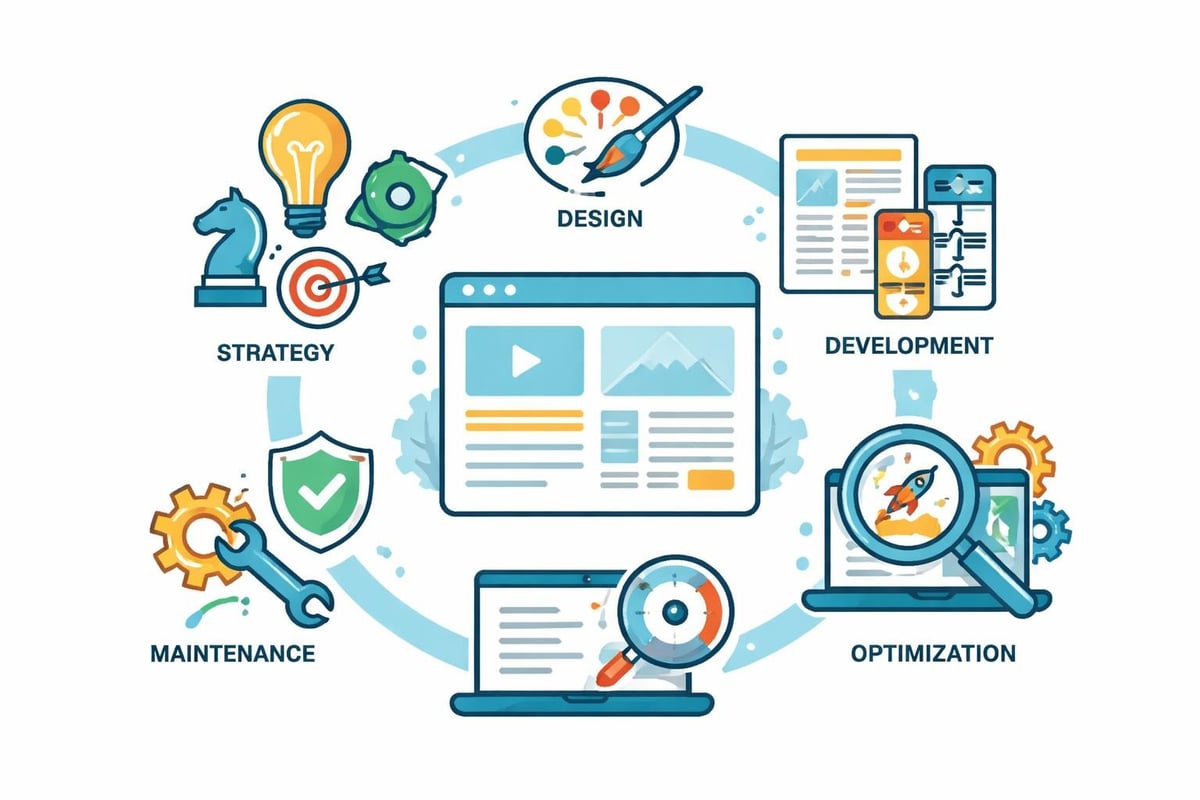
Website design services encompass a comprehensive suite of offerings that address every aspect of creating and maintaining an effective online presence. These services have expanded significantly beyond basic template customization to include strategic consulting, custom development, performance optimization, and ongoing maintenance.
Professional agencies now integrate multiple disciplines into their website design services. User experience design ensures visitors can navigate intuitively and complete desired actions. Visual design creates brand-aligned aesthetics that build trust and credibility. Technical development implements the functionality needed to support business operations. Search optimization ensures visibility when customers actively seek your offerings.
The website design services market continues to expand rapidly as businesses recognize the return on investment from professionally designed websites. This growth reflects increasing competition for online visibility and the rising complexity of creating sites that perform well across all channels.
Core Components of Professional Services
- Strategic discovery and planning sessions
- Brand alignment and visual identity integration
- Custom design mockups and prototyping
- Responsive development for all devices
- Content management system implementation
- Performance optimization and speed testing
- Security protocols and SSL certification
- Ongoing maintenance and support packages
The Business Impact of Quality Website Design
Investing in professional website design services delivers measurable returns across multiple business metrics. Companies with well-designed websites experience higher conversion rates, longer visitor engagement, and improved brand perception compared to competitors with outdated or poorly structured sites.
According to industry research, 75% of users admit to making judgments about a company's credibility based on website design. This first impression forms within milliseconds, making professional design a critical business investment rather than an optional expense.
Revenue impact manifests through improved conversion rates. A well-designed website guides visitors naturally toward desired actions, whether purchasing products, requesting quotes, or scheduling consultations. Brand perception strengthens when design quality aligns with the professionalism customers expect from your industry.
| Business Metric | Impact of Professional Design |
|---|---|
| Conversion Rate | 200-400% increase typical |
| Bounce Rate | 35-50% reduction |
| Average Session Duration | 2-3x improvement |
| Return Visitor Rate | 45-60% higher |
| Customer Trust Score | 70-85% improvement |
Modern website design services from agencies like Creotivity leverage AI to accelerate development timelines while maintaining custom quality. This approach delivers enterprise-grade websites in weeks rather than months, making professional design accessible to businesses of all sizes.
Responsive Design and Mobile Optimization
Mobile devices now generate more than 60% of web traffic, making responsive design a non-negotiable component of website design services. Responsive websites automatically adjust layout, content, and functionality based on the device accessing them, ensuring optimal experiences across smartphones, tablets, and desktop computers.
The technical implementation of responsive design requires careful planning and testing. Fluid grid systems allow content to resize proportionally. Flexible images scale without losing quality or breaking layouts. Media queries apply device-specific styling rules. Touch-friendly interfaces accommodate finger navigation on touchscreens.
Best practices for mobile optimization extend beyond simple responsiveness. Page speed becomes even more critical on mobile networks where connection quality varies. Navigation must simplify for smaller screens without hiding important content. Forms should minimize typing through smart defaults and input types.
Mobile Optimization Checklist
- Test on actual devices, not just browser simulators
- Optimize images for faster loading on cellular networks
- Implement touch-friendly buttons (minimum 44x44 pixels)
- Simplify navigation menus for thumb-friendly access
- Use legible font sizes (minimum 16px for body text)
- Eliminate horizontal scrolling on all screen sizes
- Prioritize above-the-fold content for immediate value
Many businesses underestimate how responsive design impacts overall website performance and user satisfaction. Mobile visitors who encounter poorly optimized sites typically abandon them within seconds, directly impacting conversion rates and search rankings.
AI Integration and Future-Proofing
The emergence of AI-powered search represents a fundamental shift in how users discover websites. ChatGPT, Google AI Overviews, Perplexity, and Claude now answer user queries directly, changing the visibility dynamics for businesses. Website design services must now optimize for both traditional search engines and these AI platforms.
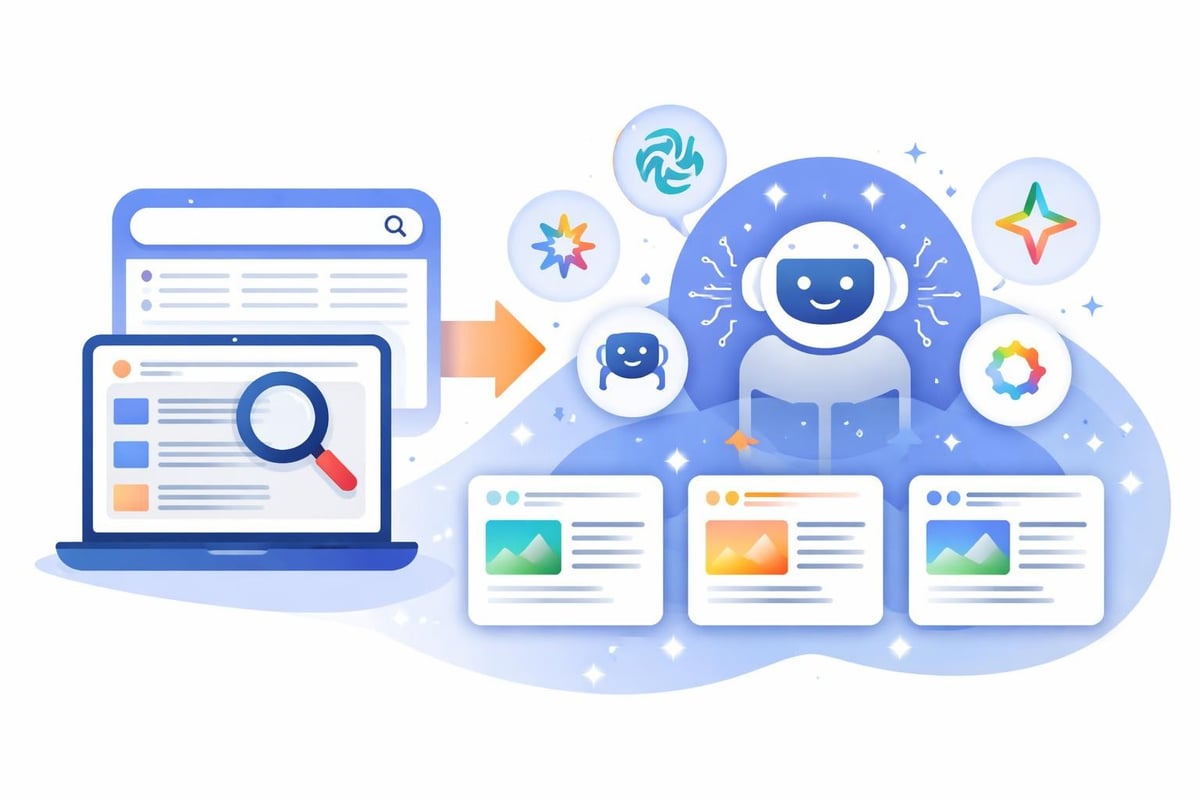
AI visibility requires structured data implementation, semantic content organization, and authoritative information architecture. Schema markup helps AI understand page content and context. Entity relationships clarify how your business connects to topics, locations, and services. Contextual relevance ensures AI platforms recognize your content as authoritative for specific queries.
The role of AI in website design itself continues expanding. As explored in discussions about how AI might transform web agencies, these tools accelerate certain development tasks while elevating the importance of strategic thinking and creative problem-solving.
Professional website design services now incorporate AI optimization as a standard offering. This includes optimizing content for featured snippets, implementing conversational search optimization, and structuring information for AI comprehension. Businesses that adapt early gain significant competitive advantages as more consumers rely on AI for research and recommendations.
Performance Optimization and Technical Excellence
Website speed directly impacts both user satisfaction and search rankings. Professional website design services prioritize performance optimization through multiple technical strategies that reduce load times and improve responsiveness.
Code efficiency minimizes unnecessary scripts and stylesheets. Image optimization compresses files without visible quality loss. Caching strategies store frequently accessed resources for faster retrieval. Content delivery networks serve assets from geographically distributed servers closest to each visitor.
The technical infrastructure supporting your website affects long-term success. Server quality, database optimization, and security protocols all contribute to reliability and user experience. According to performance benchmarks, choosing the right hosting platform significantly impacts both traditional and AI search visibility.
| Performance Factor | Target Metric | Business Impact |
|---|---|---|
| Initial Page Load | Under 2.5 seconds | Reduces 32% of visitor abandonment |
| Time to Interactive | Under 3.8 seconds | Improves engagement by 70% |
| First Contentful Paint | Under 1.8 seconds | Increases perceived speed |
| Cumulative Layout Shift | Under 0.1 | Prevents user frustration |
Ongoing performance monitoring identifies issues before they impact users. Regular audits catch emerging problems like code bloat, broken links, or outdated plugins. Professional website design services include maintenance packages that keep sites running optimally as web standards and best practices evolve.
Design Systems and Brand Consistency
Effective website design services establish comprehensive design systems that ensure visual consistency across all pages and future expansions. These systems document color palettes, typography scales, spacing rules, and component patterns that guide both initial development and ongoing updates.
Brand alignment extends beyond using correct logos and colors. Tone of voice, imagery style, messaging hierarchy, and interaction patterns all reinforce brand identity. Professional designers create experiences that feel cohesive with other customer touchpoints like packaging, retail environments, and marketing materials.
Following established website design best practices helps maintain both aesthetic quality and functional performance. Navigation should remain intuitive, content should follow clear hierarchies, and calls-to-action should stand out without overwhelming visitors.
Design systems also accelerate future development. When adding new pages or features, documented patterns ensure consistency without starting from scratch each time. This efficiency reduces ongoing costs while maintaining the quality standards established during initial design.
Essential Design System Components
- Color palette with accessibility-tested combinations
- Typography scale for headings, body text, and captions
- Spacing units for consistent padding and margins
- Button styles for primary, secondary, and tertiary actions
- Form field designs and validation patterns
- Icon library with consistent visual style
- Image treatment guidelines and aspect ratios
- Animation principles and timing specifications
Conversion-Focused Design Strategies
Website design services must balance aesthetic appeal with conversion optimization. Beautiful designs that fail to drive business results represent wasted investment. Professional designers implement proven strategies that guide visitors toward desired actions while maintaining visual quality.
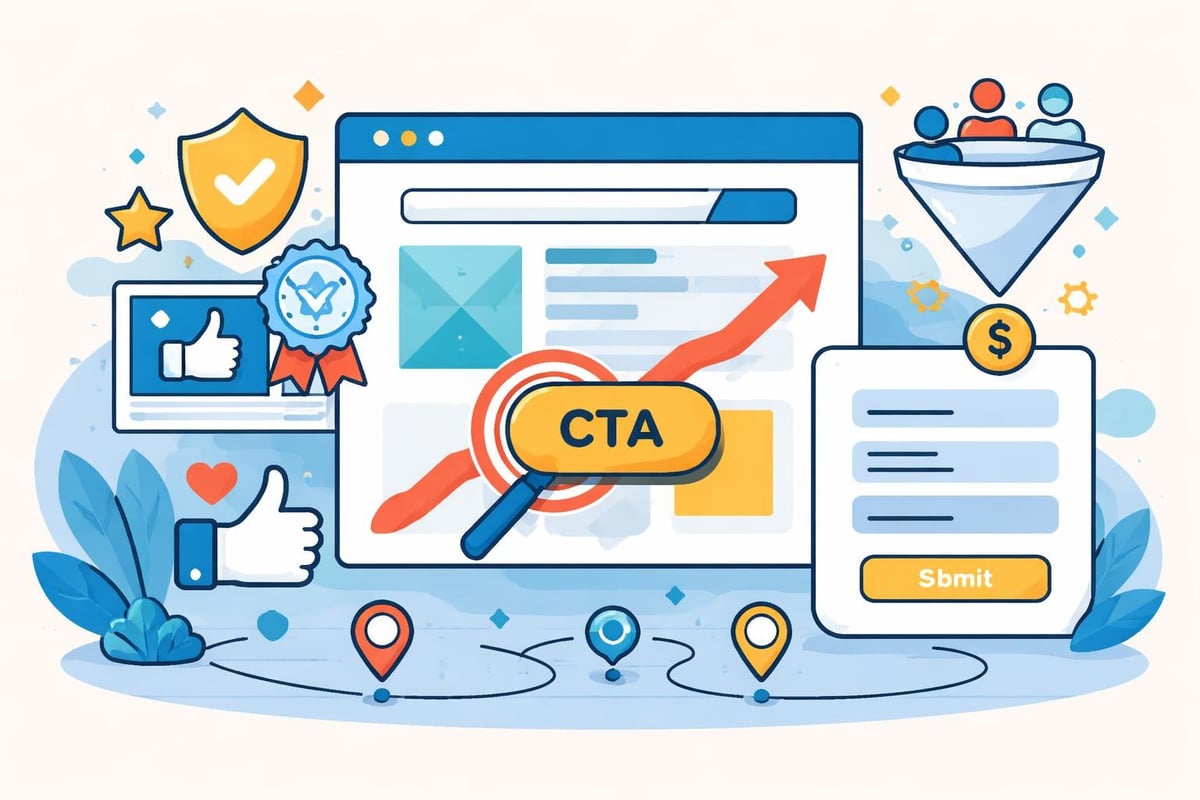
Visual hierarchy directs attention to priority elements through size, color, position, and contrast. Strategic whitespace prevents overwhelming visitors while emphasizing important content. Directional cues like arrows, gaze direction, and motion guide eyes toward calls-to-action.
Trust signals integrated throughout design reduce purchase anxiety and build credibility. Customer testimonials, security badges, money-back guarantees, and professional certifications all influence conversion decisions. Their placement and presentation require strategic thinking about user psychology and decision-making processes.
The relationship between website design and SEO extends beyond technical optimization to user behavior signals. Sites that engage visitors longer and encourage exploration send positive signals to search algorithms, improving rankings over time.
Choosing the Right Website Design Service Provider
Selecting a website design services provider requires evaluating multiple factors beyond portfolio quality. The best partnerships align technical capabilities with business understanding and communication style preferences.
Portfolio evaluation should examine projects similar to your industry and scope. Look for design diversity that demonstrates creative range while maintaining brand consistency within each project. Case studies revealing strategic thinking and measurable results provide more value than visual showcases alone.
Technical expertise varies significantly across providers. Some excel at front-end design but lack back-end development capabilities. Others specialize in specific platforms or industries. Understanding these strengths helps match providers to your specific requirements and constraints.
When choosing between different options, consider long-term relationships rather than just project completion. Websites require ongoing updates, security patches, and optimization. Providers offering comprehensive support packages often deliver better total value than those focused only on initial launches.
Evaluation Criteria for Design Partners
- Relevant portfolio work in your industry
- Technical capabilities matching your requirements
- Clear communication and project management processes
- Understanding of your business goals beyond aesthetics
- Transparent pricing and timeline expectations
- Ongoing support and maintenance options
- Knowledge of current SEO and AI optimization practices
Content Management and Scalability
Modern website design services incorporate flexible content management systems that empower businesses to update content without technical assistance. WordPress, Webflow, and custom solutions each offer different balances of power, simplicity, and control.
User-friendly interfaces allow non-technical team members to publish blog posts, update product catalogs, and modify page content. Role-based permissions control who can edit specific sections, maintaining security while enabling collaboration. Version control provides rollback capabilities when changes create unintended issues.
Scalability planning ensures websites accommodate growth without requiring complete redesigns. Database architecture, hosting resources, and code organization all impact how sites handle increasing traffic and expanding content. Professional website design services build foundations that support years of business evolution.
The learning curve for content management varies significantly across platforms. Agencies should provide training documentation and support to ensure internal teams can confidently manage routine updates. This independence reduces ongoing costs while maintaining publishing flexibility.
Accessibility and Inclusive Design
Website accessibility ensures all users, including those with disabilities, can access and interact with content effectively. Professional website design services implement accessibility standards that comply with legal requirements while expanding potential audience reach.
Screen reader compatibility requires proper HTML structure and descriptive alt text for images. Keyboard navigation allows users who cannot operate mice to access all functionality. Color contrast ratios ensure text remains readable for users with visual impairments. Captions and transcripts make audio and video content accessible to deaf users.
Accessibility benefits extend beyond users with disabilities. Semantic HTML improves SEO by clarifying content structure for search engines. Keyboard navigation enhances usability for power users who prefer shortcuts. Clear visual hierarchy helps all users comprehend information quickly.
| Accessibility Standard | Implementation | Business Benefit |
|---|---|---|
| WCAG 2.1 Level AA | Industry baseline compliance | Legal protection, broader reach |
| Semantic HTML | Proper heading structure | Improved SEO rankings |
| Alt Text | Descriptive image labels | Better image search visibility |
| Keyboard Navigation | Focusable interactive elements | Enhanced user experience |
| Color Contrast | 4.5:1 minimum ratio | Improved readability for all |
Many businesses overlook how accessibility improvements enhance overall user experience for everyone. Clear navigation, readable text, and logical information architecture benefit all visitors regardless of ability level.
Security and Data Protection
Website security represents a critical component of professional website design services. Data breaches damage brand reputation, create legal liability, and erode customer trust in ways that require years to repair.
SSL certificates encrypt data transmitted between browsers and servers, protecting sensitive information like payment details and login credentials. Regular updates patch security vulnerabilities in content management systems, plugins, and themes. Backup systems enable rapid recovery from attacks or technical failures.
Compliance requirements vary by industry and geography. GDPR affects businesses serving European customers. HIPAA applies to healthcare information. PCI DSS governs payment card processing. Professional designers understand relevant regulations and implement necessary safeguards.
Security monitoring detects threats before they cause damage. Malware scanning, intrusion detection, and activity logging identify suspicious patterns. Incident response plans outline steps for containing breaches and notifying affected parties when necessary.
Industry-Specific Design Considerations
Different industries require specialized approaches within website design services. Healthcare sites need HIPAA compliance and patient portals. E-commerce requires product catalogs and payment processing. Professional services benefit from case studies and credential displays.
Understanding industry-specific user expectations helps create resonant experiences. A newborn photography business like One Big Happy Photo needs portfolio galleries showcasing artistic style and emotional impact, while a technical service provider like Video Game 911 prioritizes clear service descriptions and diagnostic processes.
Regulatory compliance varies across industries. Financial services face strict disclosure requirements. Healthcare must protect patient privacy. Legal practices need secure client communication channels. Professional website design services navigate these constraints while maintaining user-friendly experiences.
Competitive analysis within your industry reveals opportunities for differentiation. Identifying common design patterns helps determine where conformity builds trust versus where innovation creates competitive advantages. Strategic designers balance these considerations based on specific business goals and market positions.
Emerging Technologies and Future Trends
Website design services continue evolving as new technologies reshape user expectations and capabilities. Voice search optimization, augmented reality integration, and personalization engines represent expanding frontiers that forward-thinking businesses are already exploring.
Progressive web apps blend website and mobile app capabilities, offering offline functionality and home screen installation without app store distribution. Headless CMS architectures separate content management from presentation, enabling omnichannel delivery across websites, apps, and emerging platforms. AI personalization customizes content and recommendations based on user behavior and preferences.
The tools available for writing effective AI website builder prompts continue improving, making sophisticated design more accessible. However, strategic thinking about user needs, business goals, and brand differentiation remains irreplaceable by automation.
Staying current with design tool evolution helps businesses make informed decisions about platform selection and agency partnerships. The right tools balance ease of use with customization flexibility, supporting both immediate needs and future growth.
Professional website design services have become essential investments for businesses competing in 2026's digital landscape, where first impressions form instantly and visibility spans both traditional search engines and emerging AI platforms. Whether you need a complete redesign, performance optimization, or AI visibility enhancement, Creotivity combines strategic expertise with advanced technology to build websites that attract qualified traffic and convert visitors into customers. Contact our team today to discuss how modern design and AI optimization can transform your online presence.