
Build Websites With AI: Complete 2026 Guide
The landscape of web development has undergone a dramatic transformation as artificial intelligence reshapes how businesses and individuals create their online presence. The ability to build websites with AI has evolved from simple template selection to sophisticated systems that understand user intent, generate custom designs, and optimize for both traditional search engines and emerging AI platforms. This shift represents more than just faster development times-it fundamentally changes who can create professional websites and how those sites perform in an increasingly competitive digital environment.
Understanding AI Website Builders in 2026
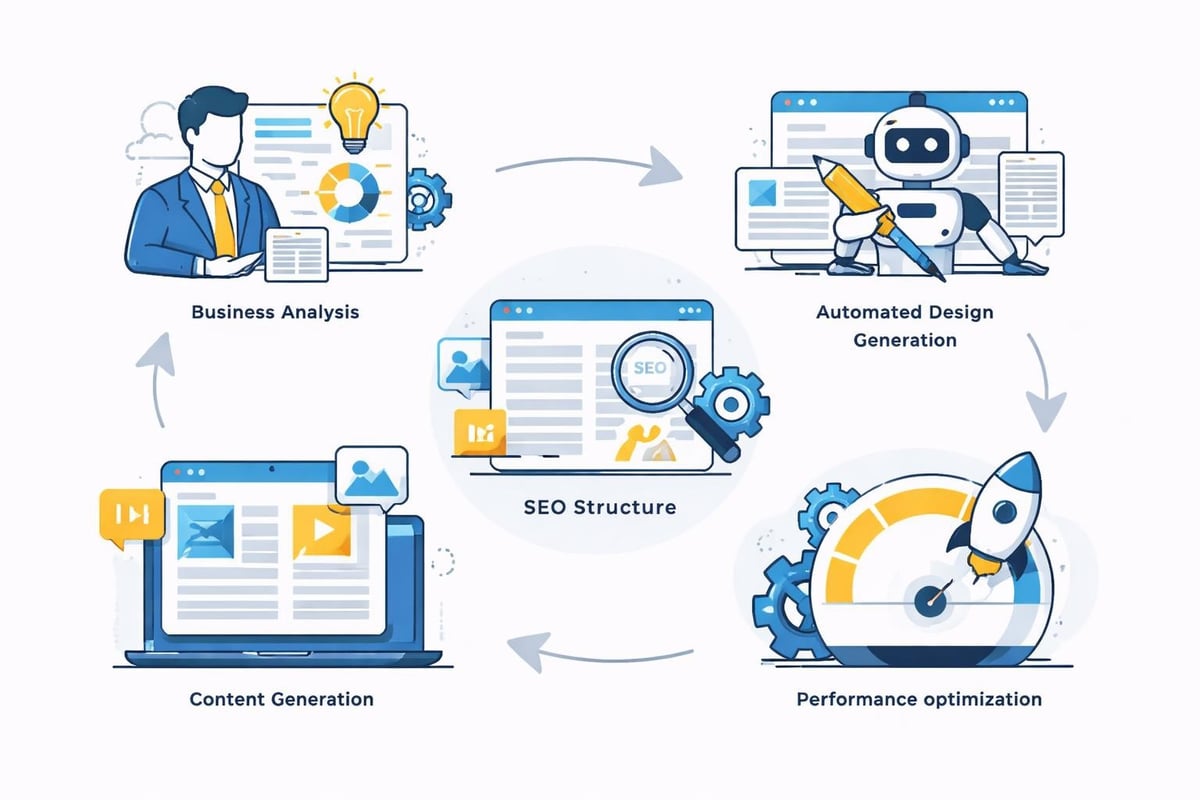
AI website builders have matured significantly beyond their initial offerings. Modern platforms leverage machine learning algorithms that analyze millions of websites to understand design patterns, user behavior, and conversion optimization strategies. These systems can now interpret natural language descriptions of business needs and translate them into functional, aesthetically pleasing websites.
The technology behind these platforms combines several AI capabilities working in concert. Natural language processing interprets user requirements, computer vision analyzes visual preferences, and predictive algorithms optimize layouts for specific business goals. When you build websites with AI today, you're accessing technology that considers factors ranging from color psychology to load time optimization.
Core Components of AI-Powered Website Creation
Modern AI builders integrate multiple specialized systems:
- Content generation engines that create original copy based on industry and audience
- Design intelligence that adapts layouts to brand guidelines and user preferences
- Image optimization that selects, edits, and compresses visuals automatically
- SEO automation that structures content for search visibility
- Performance monitoring that continuously refines site elements based on user behavior
These components work together to create sites that would traditionally require teams of designers, developers, and marketers. According to research on AI-optimized websites, properly configured AI-built sites can generate significantly more organic traffic than traditionally developed alternatives.
Comparing AI Website Building Platforms
The market now offers diverse options for those looking to build websites with AI, each with distinct strengths and target audiences. Selecting the right platform depends on technical expertise, customization needs, and long-term scalability requirements.
| Platform Type | Best For | Customization Level | Technical Skill Required | Typical Timeline |
|---|---|---|---|---|
| Full AI Automation | Small businesses, portfolios | Low to Medium | None | Hours to 1 day |
| AI-Assisted Professional | Growing businesses, e-commerce | Medium to High | Minimal | 1-2 weeks |
| Hybrid AI/Developer | Enterprise, complex sites | Very High | Moderate to Advanced | 2-4 weeks |
| Custom AI Integration | Unique requirements | Complete | Advanced | 4-8 weeks |
Wix's Harmony AI website builder represents the evolution of consumer-focused platforms, offering sophisticated automation while maintaining user control over final decisions. For businesses requiring more specialized approaches, professional website design services can integrate AI capabilities within custom development workflows.
Key Features to Evaluate
When selecting an AI platform, prioritize these capabilities:
- Responsive design generation across all device types
- Brand consistency enforcement through style guide integration
- Content intelligence that maintains tone and messaging coherence
- Integration ecosystem for third-party tools and services
- Export and migration options to avoid platform lock-in
The distinction between platforms often comes down to how much control you retain versus how much you delegate to automation. While full automation delivers speed, AI-assisted approaches to web design often produce superior results for businesses with specific branding requirements.
Strategic Advantages of AI Website Development
The decision to build websites with AI offers benefits that extend far beyond reduced development time. These advantages fundamentally alter the economics and strategic possibilities of establishing an online presence.
Speed to market represents the most obvious benefit. Traditional website development cycles spanning months can compress to weeks or even days. This acceleration allows businesses to test market positioning, launch promotional campaigns, and respond to competitive threats with unprecedented agility.
Cost-Effectiveness and Resource Optimization
AI website builders democratize access to professional web design by eliminating several traditional cost centers:
- Designer hourly rates for layout and visual work
- Developer time for front-end implementation
- Content writer fees for initial copy
- Multiple revision cycles and change requests
- Ongoing maintenance for routine updates
For many businesses, this translates to 70-85% cost reduction compared to traditional agency work. However, the value proposition extends beyond simple cost savings. The speed and efficiency gains allow budget reallocation toward strategic initiatives like content marketing and customer acquisition.
Technical Considerations and Limitations
Despite remarkable advances, the decision to build websites with AI requires understanding current limitations and technical constraints. Not every project suits full AI automation, and knowing these boundaries prevents costly mistakes.
When AI Builders Excel
AI platforms deliver optimal results for specific use cases:
- Portfolio and informational sites with straightforward content hierarchies
- Small business websites requiring standard features and sections
- Landing pages focused on single conversion goals
- E-commerce stores with conventional product catalog structures
- Blog and content platforms with regular publishing needs
These scenarios allow AI systems to leverage extensive training data on proven patterns and best practices. Understanding AI's role in web development helps set realistic expectations for what current technology can deliver.
Where Human Expertise Remains Essential
Certain requirements still demand human intervention:
| Requirement | Why AI Struggles | Human Solution |
|---|---|---|
| Complex custom functionality | Limited training on unique business logic | Developer builds custom modules |
| Highly specific brand identity | Generic design patterns dominate training | Designer creates original visual language |
| Intricate user journeys | Difficulty modeling multi-step processes | UX specialist maps detailed workflows |
| Regulatory compliance | Cannot interpret evolving legal requirements | Compliance expert ensures adherence |
The most effective approach often combines AI efficiency with strategic human oversight. Professional agencies now use AI to accelerate coding and structural setup while applying human expertise to critical decision points and unique requirements.
Optimizing AI-Built Websites for Search Visibility
Creating a website represents only the first step-ensuring it attracts visitors requires optimization for how people and AI actually discover content online. The strategies for maximizing visibility have evolved as AI-powered search engines transform how information gets surfaced.
Traditional SEO in the AI Era
Search engine optimization fundamentals remain critical even when you build websites with AI. These core elements ensure crawlability and indexability:
- Semantic HTML structure that clearly communicates content hierarchy
- Mobile-responsive design that performs across all device types
- Fast loading times through optimized assets and efficient code
- Strategic keyword placement in titles, headings, and body content
- Internal linking architecture that distributes authority effectively
Comparing top website builders reveals significant variation in how well different platforms handle these technical SEO requirements. Some AI builders excel at generating clean, optimized code, while others produce bloated markup that hinders performance.
Optimizing for AI Search Engines
The emergence of AI-powered search platforms like ChatGPT, Claude, and Perplexity introduces new optimization requirements. These systems prioritize different signals than traditional search engines, focusing on content structure, entity relationships, and authoritative sourcing.
Websites must now optimize for answer extraction, ensuring AI systems can easily identify and surface key information. This involves structured data implementation, clear topic clustering, and authoritative citations. For businesses seeking maximum visibility, AI visibility optimization addresses both traditional search and emerging AI platforms simultaneously.
Key tactics include:
- Schema markup that explicitly defines content types and relationships
- FAQ sections formatted for direct answer extraction
- Topic authority through comprehensive, interlinked content
- Citation networks connecting to authoritative external sources
- Natural language optimization matching conversational query patterns
Content Strategy for AI-Generated Websites
The content that populates your website ultimately determines its effectiveness, regardless of how that site was built. AI content generation has improved dramatically, but strategic oversight ensures messaging resonates with target audiences and achieves business objectives.
Balancing Automation and Authenticity
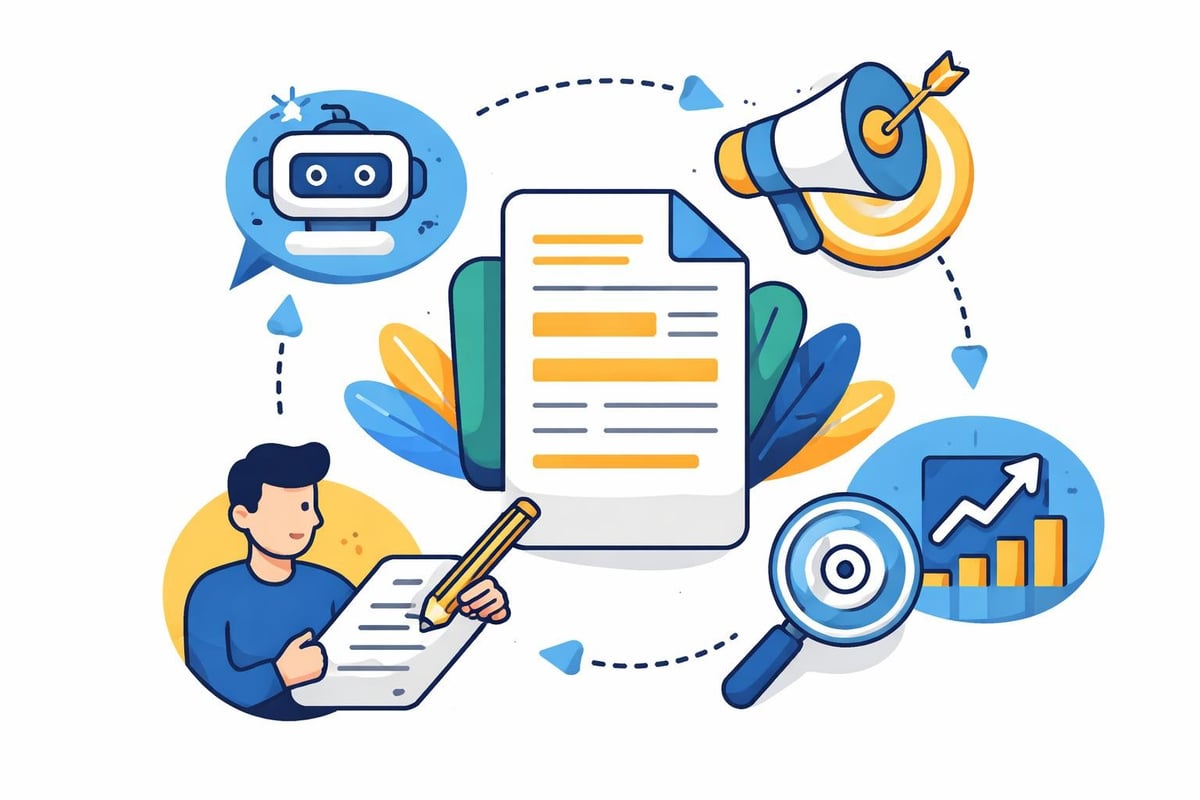
AI excels at generating foundational content quickly, but authenticity requires human refinement. The most effective workflow combines AI efficiency with human judgment:
Initial generation leverages AI to create content frameworks and first drafts based on topic keywords and audience parameters. This establishes structure and covers core information comprehensively.
Human refinement adds unique perspectives, industry-specific insights, and brand personality that generic AI cannot replicate. This step transforms competent content into compelling messaging that differentiates your business.
Iterative optimization uses performance data to refine messaging over time. AI analytics identify which content resonates, enabling continuous improvement based on actual user behavior rather than assumptions.
Content Types and AI Capabilities
Different content formats benefit variably from AI assistance:
- Product descriptions: AI handles well with proper specifications
- About pages: Require significant human input for authentic storytelling
- Service explanations: AI provides solid frameworks needing customization
- Blog content: Benefits from AI research and outlining with human expertise
- Technical documentation: AI struggles without deep domain knowledge
Understanding these distinctions allows you to allocate resources effectively when you build websites with AI, automating what works while investing human effort where it matters most.
Integration and Ecosystem Connectivity
Modern websites rarely function in isolation-they connect to marketing tools, customer management systems, analytics platforms, and countless other services. When evaluating AI website builders, integration capabilities often prove as important as core building features.
Essential Integration Categories
Professional websites typically require connections across these categories:
- Analytics and tracking for understanding user behavior and traffic sources
- Marketing automation for email campaigns and lead nurturing
- CRM systems for customer relationship management
- Payment processing for e-commerce transactions
- Social media platforms for content distribution and engagement
- Booking and scheduling for service-based businesses
- Chat and support tools for customer communication
The quality and ease of these integrations varies significantly across platforms. Reviews of platforms like Squarespace highlight how native integrations and third-party app ecosystems affect practical functionality beyond basic website building.
API Access and Custom Development
For businesses with unique requirements, API access enables custom integrations that standard connectors don't provide. This capability bridges the gap between consumer-focused AI builders and enterprise-grade custom development.
When selecting a platform to build websites with AI, consider both current integration needs and future scalability. Migration between platforms later often proves more costly and disruptive than choosing appropriately from the start.
Performance and Hosting Considerations
Website performance directly impacts both user experience and search rankings, making hosting infrastructure and optimization critical even with AI-generated sites. The platform you choose determines much about how your site performs under real-world conditions.
Speed Optimization Fundamentals
AI website builders handle many performance optimizations automatically, but understanding what happens behind the scenes helps evaluate platforms:
| Optimization Type | Impact | AI Builder Capability |
|---|---|---|
| Image compression | Very High | Usually automated |
| Code minification | High | Typically included |
| Browser caching | High | Platform dependent |
| CDN distribution | Very High | Premium tier feature |
| Database queries | Medium | Limited control |
| Third-party scripts | Medium | Manual management |
Comprehensive guides to AI website builders compare performance characteristics across platforms, revealing significant differences in page load times and Core Web Vitals scores even among sites with similar content.
Hosting Infrastructure and Scalability
The hosting model affects both performance and cost as your site grows. AI builders typically offer managed hosting included in subscription pricing, eliminating server management complexity. However, this convenience comes with limitations on customization and sometimes performance ceilings.
For businesses anticipating significant traffic growth, understanding the underlying infrastructure prevents surprises. Some platforms gracefully scale to handle traffic spikes, while others impose strict limits requiring expensive tier upgrades or complete migration.
Security and Maintenance in AI Website Platforms
Website security protects both your business and your visitors, making it a critical consideration regardless of how you build. AI website builders handle many security tasks automatically, but understanding what's protected and what requires attention prevents vulnerabilities.
Automated Security Features
Reputable AI platforms typically include these security measures:
- SSL certificates for encrypted data transmission
- Automatic security updates for platform software
- DDoS protection against malicious traffic attacks
- Backup systems for disaster recovery
- Login protection preventing unauthorized access
- Form spam filtering blocking malicious submissions
These automated protections eliminate many security tasks that traditionally required technical expertise or developer intervention. For most small to medium businesses, platform-managed security proves more reliable than self-managed alternatives.
Ongoing Maintenance Requirements
While AI builders reduce maintenance dramatically, some responsibilities remain:
- Content updates to keep information current and accurate
- Plugin management for third-party extensions and integrations
- Performance monitoring to identify and address slowdowns
- Backup verification ensuring recovery systems function properly
- Security reviews for custom code or integrations
Understanding how AI has evolved website building reveals how much routine maintenance these platforms now handle autonomously, freeing business owners to focus on content and strategy rather than technical upkeep.
Making the Decision: When to Choose AI Website Building
The question isn't whether AI can build your website-current technology clearly demonstrates that capability. The strategic question involves determining whether AI-driven approaches align with your specific requirements, resources, and objectives.
Ideal Candidate Scenarios
You should confidently build websites with AI when:
- Time sensitivity requires launch within days or weeks rather than months
- Budget constraints limit access to traditional agency services
- Technical expertise within your team is limited or non-existent
- Website complexity matches standard business needs and patterns
- Future flexibility for updates and changes matters more than initial customization
These circumstances allow AI platforms to deliver maximum value while minimizing the impact of current limitations. The technology excels at solving common problems efficiently, making it ideal for businesses with standard needs.
When to Consider Hybrid or Custom Approaches
Alternative approaches make sense when you face:
| Situation | Recommended Approach | Rationale |
|---|---|---|
| Unique brand requirements | Hybrid AI + designer | Ensures authentic visual identity |
| Complex functionality | Custom development | Delivers specific business logic |
| High traffic volume | Custom or enterprise AI | Optimizes performance at scale |
| Regulatory compliance | Expert oversight | Ensures legal requirements met |
| Competitive differentiation | Strategic human input | Creates distinctive positioning |
Evaluating AI website builders objectively helps identify which scenarios genuinely benefit from full automation versus those requiring human expertise at critical decision points.
Future Trajectory of AI Website Development
The current capabilities to build websites with AI represent early stages of a rapidly evolving technology. Understanding likely developments helps make strategic decisions that remain viable as the landscape continues shifting.
Emerging Capabilities on the Horizon
Several advancements will further transform website building in coming years:
Multimodal AI systems will interpret sketches, verbal descriptions, and reference images simultaneously, creating more intuitive interfaces for communicating design intent. This evolution reduces the translation gap between vision and implementation.
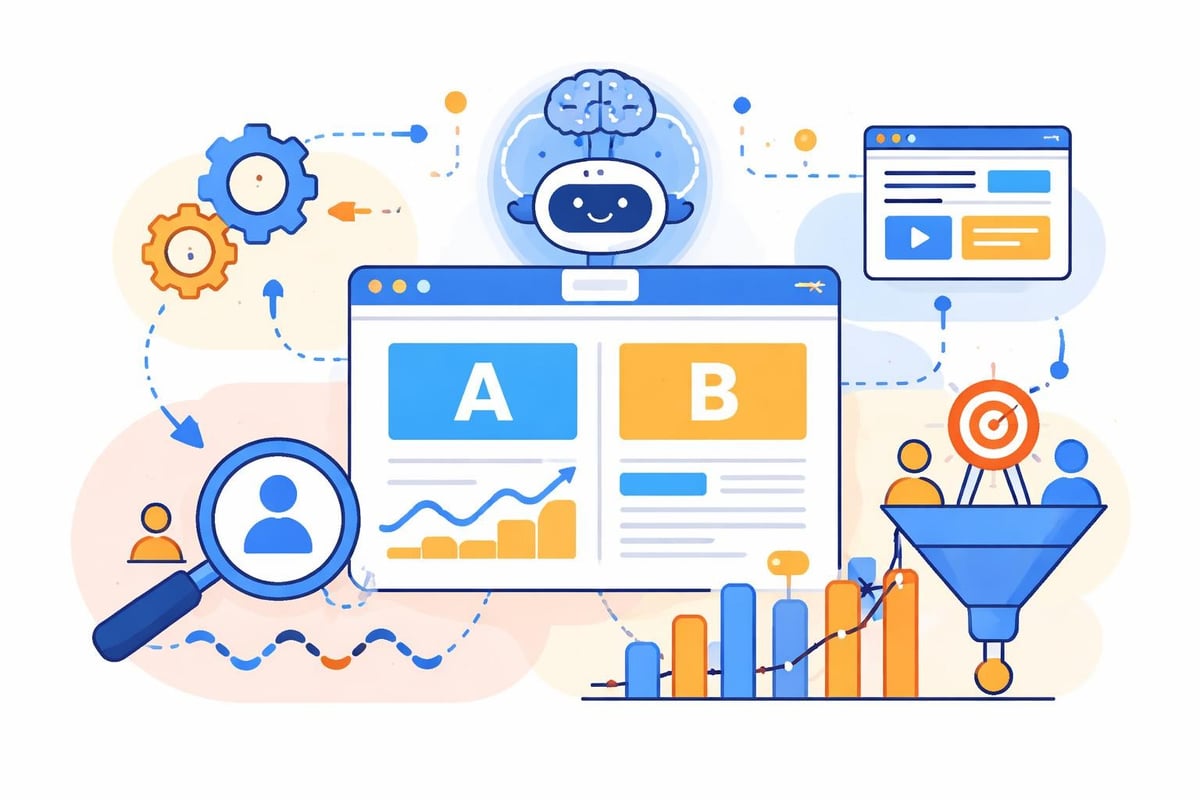
Predictive optimization will leverage machine learning to automatically test variations and implement changes that improve conversion rates without human intervention. Sites will continuously evolve based on real user behavior patterns.
Voice and conversational interfaces for website management will enable updates and modifications through natural language commands rather than traditional admin panels. This accessibility will democratize website management even further.
Cross-platform synthesis will automatically generate and maintain consistent experiences across websites, mobile apps, and emerging platforms from single content sources. Businesses will manage unified digital presence rather than fragmented properties.
Strategic Implications for Businesses
These developments accelerate several trends already underway. The competitive advantage from simply having a website continues diminishing-differentiation increasingly comes from content quality, user experience, and strategic positioning rather than technical implementation.
For forward-thinking businesses, this shift emphasizes the importance of developing robust web design strategies that extend beyond individual website projects to encompass comprehensive digital presence across multiple platforms and channels.
The ability to build websites with AI has fundamentally changed what's possible for businesses of all sizes, democratizing access to professional web presence while dramatically reducing time and cost barriers. The technology excels at handling routine implementation tasks, freeing resources for strategic activities that truly differentiate your business. Whether you're launching a new venture or refreshing an existing site, Creotivity combines AI acceleration with strategic expertise to build modern websites optimized for both traditional search engines and emerging AI platforms, helping you attract and convert customers effectively in 2026's competitive digital landscape.