Designers Agency: How to Choose the Right Partner in 2026
The landscape of creative services has transformed dramatically as businesses recognize that exceptional design drives measurable growth. A designers agency serves as more than just a vendor-it becomes a strategic partner that shapes how customers perceive and interact with your brand. In 2026, selecting the right creative partner requires understanding not only their aesthetic capabilities but also their technical expertise, communication processes, and alignment with your business objectives. The decision carries significant weight because design influences everything from first impressions to conversion rates, customer trust to competitive positioning.
Understanding What a Designers Agency Actually Does
Modern design partnerships extend far beyond creating attractive visuals. A professional designers agency operates at the intersection of creativity, strategy, and technology to solve complex business challenges through visual communication.
Core Service Offerings
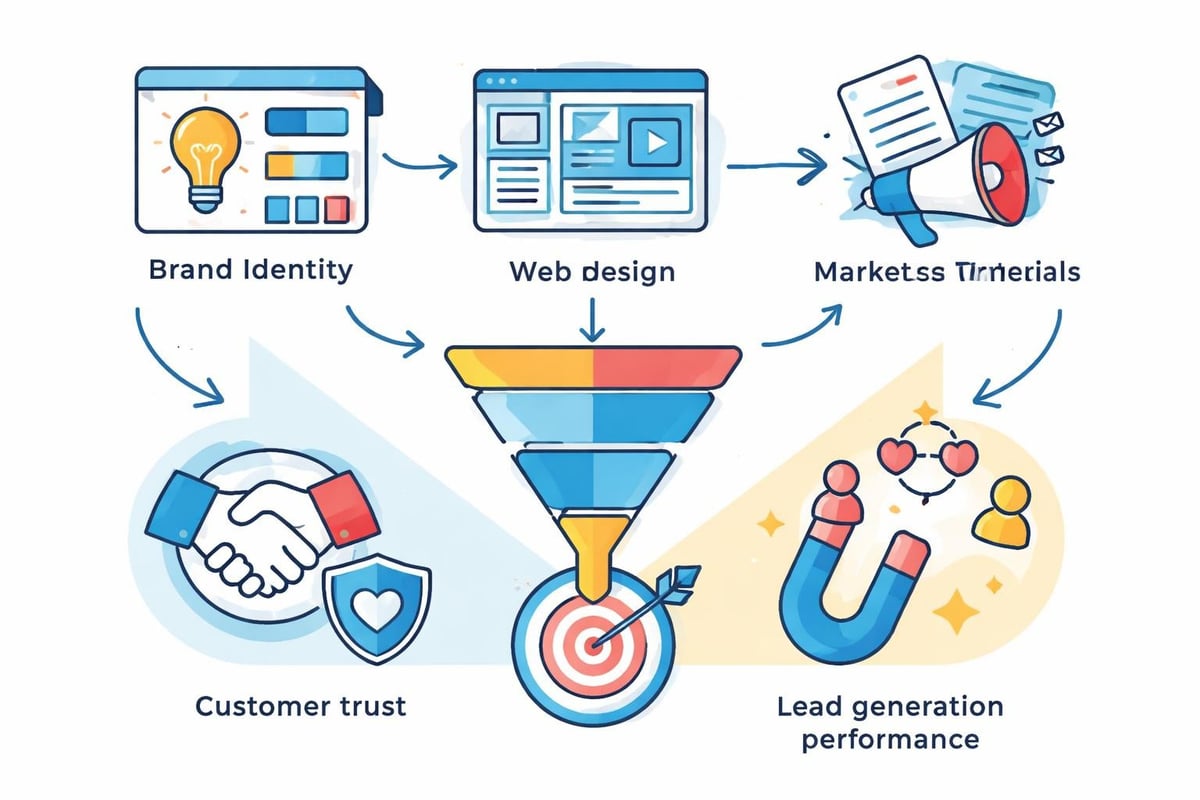
Most established agencies provide a comprehensive suite of services designed to build cohesive brand experiences:
- Brand identity development including logo design, color systems, typography, and visual guidelines
- Web design and digital experiences that balance aesthetics with functionality and conversion optimization
- Marketing collateral from business cards to presentation decks
- User interface and user experience design focused on customer behavior and satisfaction
- Packaging design for physical product companies
- Motion graphics and animation for video content and digital campaigns
The best agencies don't just execute tasks-they diagnose problems, recommend solutions, and measure results. According to market research on design agencies, the industry continues to segment by specialization, with some firms focusing on specific project types while others maintain broad capabilities across multiple disciplines.
Strategic Versus Execution-Focused Partnerships
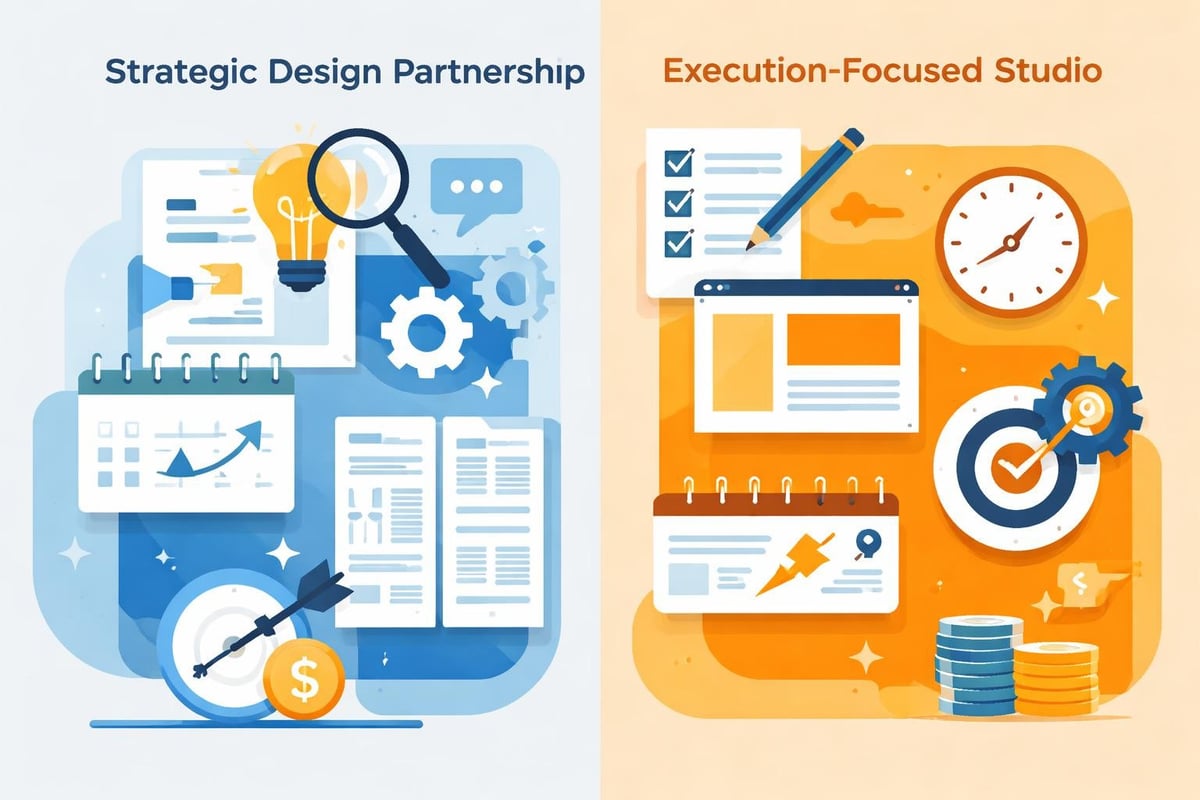
Understanding the difference between strategic and execution-focused agencies helps you select the right match for your needs.
| Agency Type | Best For | Typical Deliverables | Investment Level |
|---|---|---|---|
| Strategic Design Partners | Complete rebrands, market positioning, long-term growth | Research, strategy documents, comprehensive systems | Premium pricing |
| Execution-Focused Studios | Specific projects, quick turnarounds, template-based needs | Individual assets, campaign materials | Mid-range pricing |
| Hybrid Agencies | Businesses needing both thinking and execution | Strategy plus implementation | Variable pricing |
Strategic agencies invest significant time in research, competitive analysis, and business model understanding before producing any visual work. Execution-focused firms excel at taking clear direction and producing high-quality deliverables efficiently.
Evaluating Design Agency Capabilities in 2026
The evaluation process requires examining both tangible outputs and intangible qualities that determine long-term partnership success.
Portfolio Assessment Beyond Aesthetics
When reviewing a designers agency portfolio, look beyond visual appeal to assess problem-solving capabilities. Every case study should demonstrate not just what the agency created, but why those decisions made sense for that particular client.
Strong portfolios tell stories. They explain the business challenge, the creative approach, and the measurable outcomes. Design trends for 2026 emphasize human-centric creativity and tactile techniques, reflecting a broader shift away from purely digital minimalism toward designs that feel authentic and personally crafted.
Ask yourself these questions when reviewing work samples:
- Does the agency demonstrate versatility across different industries and project types?
- Can you identify a consistent level of quality regardless of project scope?
- Do they showcase both established brands and startups successfully?
- Is there evidence of work that drove actual business results?
- Does their aesthetic sensibility align with your brand vision?
Technical Proficiency and Modern Workflows
Design doesn't exist in isolation-it integrates with technology, marketing systems, and business operations. A competent designers agency understands the technical requirements of implementing designs across various platforms and channels.
For web-based projects, agencies should demonstrate expertise in responsive design, accessibility standards, performance optimization, and content management systems. AI and automation are transforming agency workflows, enabling faster production without sacrificing quality when properly implemented.
When considering firms specializing in digital presence, evaluate how they integrate design with search visibility. Web Design services that leverage AI to accelerate development while maintaining custom quality can deliver professional results faster than traditional processes, launching your site in weeks rather than months.
Pricing Models and Budget Considerations
Understanding how design agencies structure pricing helps you budget appropriately and avoid surprises during the engagement.
Common Pricing Approaches
Project-based pricing establishes a fixed cost for defined scope. This model works well when requirements are clear and unlikely to change. It provides budget certainty but may limit flexibility for exploration and iteration.
Hourly or day-rate pricing charges for time invested regardless of specific deliverables. This approach suits discovery phases, consulting engagements, and projects with evolving requirements. However, it can make total costs difficult to predict.
Retainer arrangements provide ongoing access to agency services for a recurring monthly fee. This model benefits businesses requiring continuous design support and typically offers better value than project-based pricing for sustained relationships.
Subscription-based design services have emerged as an increasingly popular model, offering unlimited requests for a flat monthly rate. This approach appeals to growing companies needing regular design work without the commitment of hiring full-time staff.
Value Beyond the Invoice
The lowest-priced designers agency rarely delivers the best value. Calculate total cost of ownership including revisions, project management overhead, implementation support, and potential rework if initial deliverables miss the mark.
Premium agencies often complete projects faster with fewer revision cycles, ultimately consuming less of your internal team's time. They bring specialized expertise that prevents costly mistakes and strategic insights that multiply the impact of every design dollar invested.
| Cost Factor | Impact on Total Investment | Questions to Ask |
|---|---|---|
| Revision rounds | Can double timeline and cost | How many rounds are included? |
| Project management | 15-25% of project cost | Who manages coordination? |
| Implementation support | Variable based on complexity | Do you handle technical deployment? |
| Strategy and research | Front-loaded investment | What discovery process do you follow? |
Red Flags and Warning Signs
Certain indicators during the vetting process suggest potential problems down the road with a designers agency partnership.
Communication and Process Concerns
Poor communication patterns emerge early. If an agency is slow to respond, vague in their proposals, or unclear about timelines during the sales process, expect those issues to intensify during actual project work.
Expert tips for choosing a design agency emphasize the importance of clear processes and transparent communication. Agencies should articulate their workflow, explain decision-making criteria, and establish realistic expectations from the first conversation.
Warning signs include:
- Generic proposals that could apply to any client without customization
- Reluctance to provide references or case studies with metrics
- Inability to explain their creative process or strategic approach
- Pressure tactics or artificially urgent deadlines to force decisions
- Unwillingness to discuss potential challenges or limitations
Portfolio and Capability Mismatches
Some agencies stretch their claimed expertise beyond their actual capabilities. A designers agency with a portfolio containing only one or two examples in your industry category may be using those projects to enter a new market segment where they lack deep experience.
Similarly, be cautious of agencies whose recent work looks dramatically different from projects completed two or three years ago. While evolution is natural, radical style shifts may indicate team turnover or instability.
Industry-Specific Considerations
Different sectors require specialized knowledge that generic design firms may not possess.
B2B Versus B2C Design Requirements
Business-to-business design must navigate longer sales cycles, multiple decision-makers, and complex value propositions. A designers agency with B2B experience understands how to create materials that support relationship-building and gradual trust development rather than immediate conversion.
B2C design typically emphasizes emotional connection, rapid engagement, and streamlined conversion paths. The visual language, messaging hierarchy, and calls-to-action differ significantly between these contexts.
Technical and Regulated Industries
Healthcare, finance, legal services, and other regulated sectors require designers who understand compliance requirements, accessibility standards, and risk considerations. The wrong design choices in these industries can create legal liability or regulatory problems.
For businesses focused on digital visibility, understanding how design impacts search performance is critical. Resources like branding and web design integration demonstrate how visual identity and technical optimization work together to create sites that both look professional and perform well in search results.
The Selection and Onboarding Process
Once you've identified potential partners, structure your evaluation to reveal how the relationship will actually function.
Running Effective Agency Interviews
Prepare specific questions that reveal process, philosophy, and practical capabilities:
- Walk me through how you approached [specific portfolio project]. This reveals their strategic thinking and problem-solving methodology.
- How do you handle disagreements about creative direction? This exposes their collaboration style and ego management.
- What happens if we're not satisfied with initial concepts? This clarifies revision processes and flexibility.
- How do you measure design success? This indicates whether they think beyond aesthetics to business impact.
- Who will actually work on our account? This ensures the team you evaluate is the team you'll get.
Request references from clients with similar project types and budget ranges. Generic references from completely different contexts provide limited value. Understanding how agencies approach SEO-optimized website design matters if your primary goal involves improving search visibility through redesign.
Trial Projects and Pilot Engagements
For significant partnerships, consider starting with a smaller pilot project before committing to comprehensive engagements. This allows both parties to evaluate working relationship compatibility with limited risk.
A well-structured trial project should:
- Represent meaningful work with real business value, not just a test
- Include typical project phases from brief to delivery
- Involve the actual team members who would work on larger projects
- Test communication, revision, and feedback processes
- Provide insights into timeline accuracy and budget management
Long-Term Partnership Development
The most valuable designers agency relationships evolve beyond transactional project work into strategic partnerships that drive sustained growth.
Building Collaborative Relationships
Successful long-term partnerships require investment from both sides. Share business context, challenges, and goals openly so your agency can proactively identify design opportunities that support your objectives.
The design studio survival guide emphasizes that the best client-agency relationships involve mutual respect, clear communication, and shared commitment to excellent outcomes. Treat your agency as an extension of your team rather than an external vendor.
Regular check-ins beyond active projects keep your agency informed about business developments and allow them to bring relevant ideas forward. Many agencies offer the best value and most creative thinking to clients who provide consistent work and long-term partnership potential.
Measuring Design Impact on Business Metrics
Establish clear success metrics at the project outset so both parties understand what defines success beyond subjective aesthetic judgment.
Relevant metrics vary by project type:
- Website redesigns: Traffic growth, engagement metrics, conversion rates, bounce rates
- Brand identity: Brand awareness surveys, market perception studies, sales team feedback
- Marketing campaigns: Lead generation, cost per acquisition, campaign ROI
- Product design: User satisfaction scores, support ticket reduction, feature adoption rates
A sophisticated designers agency will propose appropriate measurement frameworks and help you track results over time. This data-driven approach transforms design from a cost center into a measurable growth investment.
Adapting to Emerging Design Technologies
The design industry continues evolving rapidly as new tools and technologies reshape what's possible and expected.
AI-Assisted Design Capabilities
Artificial intelligence now augments many aspects of the design process, from initial concept generation to production optimization. A forward-thinking designers agency leverages these tools to improve efficiency while maintaining the strategic thinking and creative judgment that technology cannot replace.
AI excels at repetitive tasks, variation generation, and technical optimization. Human designers provide strategic direction, emotional intelligence, and the nuanced judgment required for truly effective brand communication.
When evaluating agencies, ask how they incorporate AI into their workflows and where they rely on human expertise. The most effective approach combines technological efficiency with irreplaceable human creativity.
Preparing for Multi-Platform Design Requirements
Modern brands must maintain consistency across an expanding array of touchpoints-websites, mobile apps, social platforms, email, physical spaces, and emerging channels. A competent designers agency creates flexible design systems that adapt across contexts while maintaining brand coherence.
Understanding how design integrates with digital visibility strategies becomes increasingly important. Resources exploring how websites appear in Google reveal the technical considerations that affect whether your beautifully designed site actually reaches your target audience.
Alternative Agency Models
Beyond traditional full-service firms, several alternative models serve specific business needs effectively.
Freelancer Networks Versus Agencies
Some businesses achieve excellent results working with individual freelancers or loose networks of independent professionals. This approach typically costs less than agency pricing and provides direct access to senior talent.
However, freelancer arrangements require more client-side project management, may lack process consistency, and can create continuity risks if individuals become unavailable. Comprehensive guides on hiring design agencies compare different options to help businesses identify the right match for their specific circumstances.
Specialized Versus Generalist Firms
Specialized agencies focus deeply on particular industries, project types, or design disciplines. This narrow focus builds exceptional expertise but limits scope flexibility.
Generalist firms maintain broader capabilities, making them suitable for businesses requiring diverse design support. However, they may lack the deep specialized knowledge that certain projects demand.
For businesses prioritizing digital presence and search performance, agencies that integrate design with technical optimization deliver the most comprehensive value. Understanding AI visibility optimization becomes crucial as search behavior shifts toward AI-powered platforms that require different optimization approaches than traditional search engines.
Selecting the right designers agency fundamentally shapes your brand's ability to attract, engage, and convert customers through exceptional visual communication. The partnership you choose should understand both creative excellence and business strategy, delivering designs that look outstanding while driving measurable results. If you're ready to work with a team that combines cutting-edge design with technical expertise in search optimization and AI visibility, Creotivity builds modern websites and brand identities designed to rank highly across Google and AI search engines while converting visitors into customers.