
Homepage Design Website: Best Practices for 2026
Your homepage serves as the digital front door to your business. Within seconds, visitors form opinions about your credibility, value, and whether they should stay or leave. A well-crafted homepage design website strategy balances aesthetic appeal with functional performance, guiding users toward meaningful actions while communicating your brand's unique value. In 2026, the stakes are higher than ever, as both human visitors and AI-powered search engines evaluate your site's quality, relevance, and trustworthiness. This comprehensive guide explores the essential elements and best practices that transform average homepages into powerful conversion engines.
Understanding Homepage Purpose and Hierarchy
Every successful homepage design website begins with clarity of purpose. Your homepage must simultaneously address multiple visitor types: first-time explorers, returning customers, potential partners, and search engine crawlers. The challenge lies in creating a clear visual hierarchy that serves all these audiences without overwhelming any of them.
Defining Your Core Message
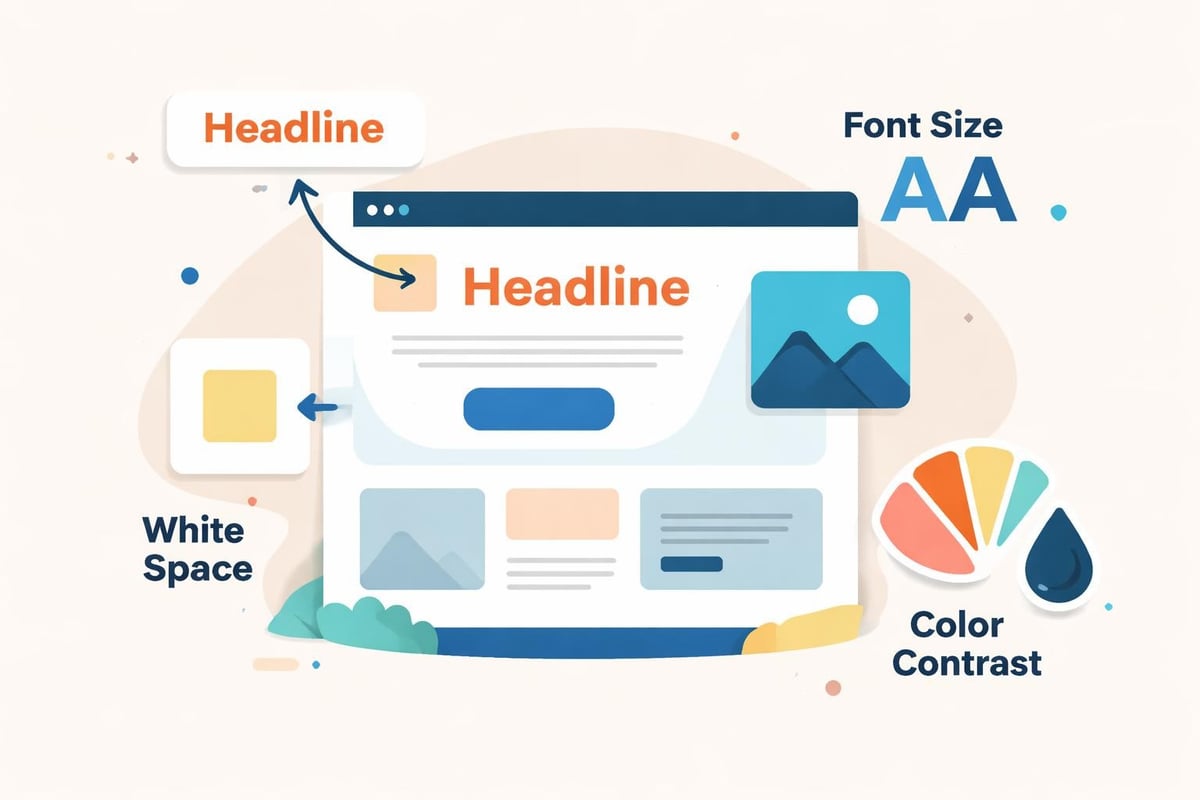
The most critical element of any homepage design website is the value proposition. This statement should appear above the fold and answer three fundamental questions within five seconds: What do you offer? Who is it for? Why should visitors care? Companies that bury their value proposition in dense paragraphs or vague language lose potential customers before engagement begins.
Consider these essential components:
- Headline clarity: Use concrete language that immediately conveys your offering
- Subheadline support: Expand on the headline with specific benefits or differentiators
- Visual reinforcement: Ensure imagery or graphics strengthen rather than distract from the message
- Proof elements: Position trust indicators near your value proposition for maximum impact
Research from essential homepage design principles confirms that visitors spend an average of 50 milliseconds forming first impressions. Your homepage design website must capitalize on this brief window with immediate clarity.
Establishing Navigation Architecture
Navigation structure directly impacts both user experience and search engine optimization. Your primary navigation should provide clear pathways to major content areas while avoiding overwhelming visitors with too many choices. The ideal navigation contains five to seven primary items, with additional options accessible through secondary menus or footer links.
| Navigation Type | Best Use Case | Typical Items |
|---|---|---|
| Primary Header | Main service/product categories | 5-7 key pages |
| Utility Navigation | Account, support, contact | 3-5 functional links |
| Footer Navigation | Complete sitemap, legal, resources | 15-25 organized links |
Effective web design strategy ensures navigation remains consistent across all pages while adapting to different device contexts. Mobile navigation requires particular attention, as hamburger menus and collapsed navigation must still provide intuitive access to critical pages.
Visual Design Elements That Drive Engagement
Modern homepage design website aesthetics extend beyond mere decoration. Every visual element should serve a strategic purpose, whether directing attention, building credibility, or reinforcing brand identity. The importance of compelling visual design cannot be overstated, as professional polish directly correlates with perceived trustworthiness.
Color Psychology and Brand Consistency
Color choices influence emotional responses and user behavior. Your homepage color palette should reflect your brand identity while considering psychological associations and accessibility standards. High-contrast combinations improve readability for all users, including those with visual impairments.
Strategic color application includes:
- Primary brand colors for key calls-to-action and important headlines
- Neutral backgrounds that reduce eye strain during extended browsing
- Accent colors that highlight interactive elements without overwhelming
- Consistent color coding that helps users navigate and understand content organization
Typography and Readability
Font selection impacts both aesthetic appeal and functional readability. Your homepage design website should employ a clear typographic hierarchy with distinct styles for headings, body text, and supporting elements. Most effective sites limit themselves to two or three font families to maintain visual coherence.
Key typography considerations:
- Heading fonts between 28-48 pixels for primary headlines
- Body text between 16-18 pixels for comfortable reading
- Line height of 1.5-1.8 for improved scanability
- Sufficient contrast ratios meeting WCAG 2.1 AA standards minimum
Content Strategy for Maximum Impact
Content placement on your homepage requires strategic thinking about user intent and information architecture. Rather than attempting to showcase everything your business offers, prioritize content that addresses visitor needs at different stages of awareness.
Crafting Compelling Copy
Homepage copy should be concise, benefit-focused, and action-oriented. Avoid industry jargon unless your audience specifically expects technical language. Each section should advance the visitor toward a desired action, whether that's exploring services, reading case studies, or requesting a consultation.
The critical ingredients for homepage design emphasize that content should progressively reveal information. Start with broad value propositions, then provide supporting details for interested visitors, and finally offer deep dives through linked resources.
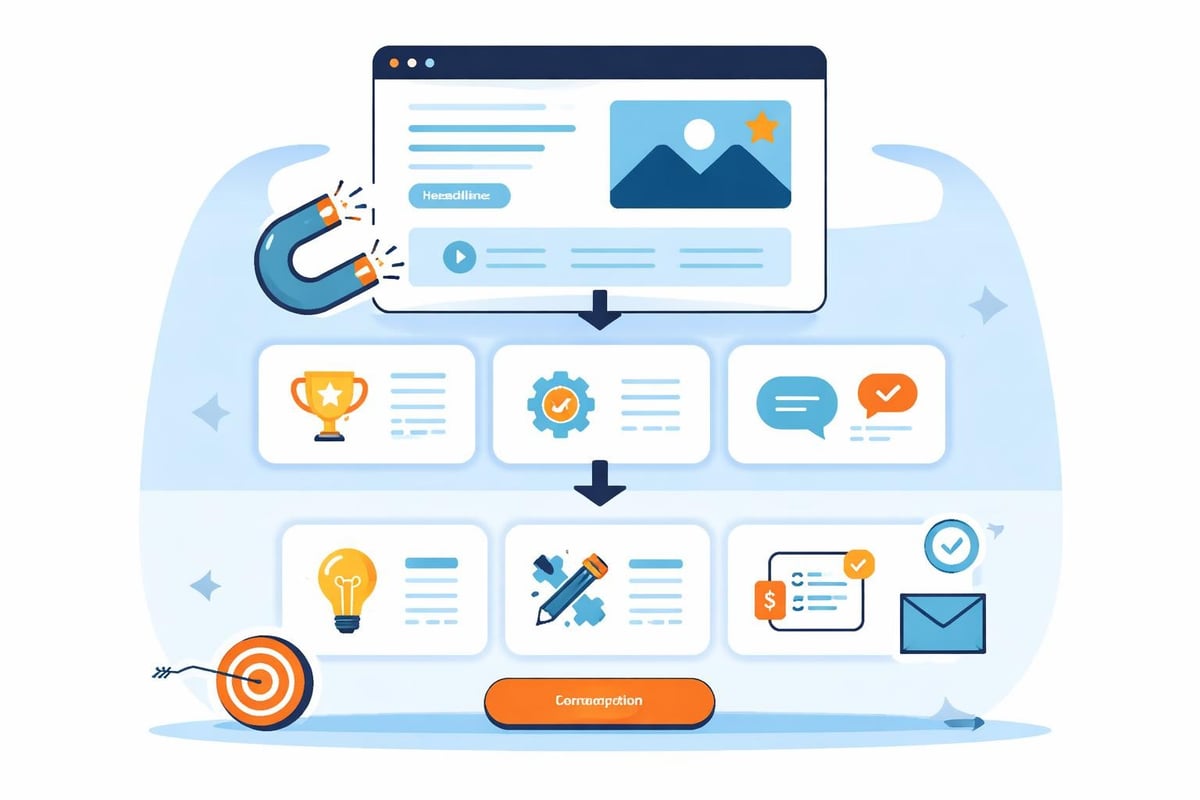
- Opening section: Value proposition, primary call-to-action, trust indicators
- Benefits overview: Three to five key advantages with brief explanations
- Social proof: Customer testimonials, case studies, or notable clients
- Service/product highlights: Core offerings with clear next steps
- Secondary conversions: Newsletter signup, resource downloads, blog access
Integrating Multimedia Elements
Video, imagery, and interactive elements can significantly enhance homepage engagement when used strategically. However, these elements must load quickly and enhance rather than detract from your message. Autoplay videos should be silent by default, and images must include descriptive alt text for accessibility and SEO benefits.
Conversion Optimization Techniques
A homepage design website that doesn't convert visitors into customers or leads fails its primary purpose. Conversion optimization involves systematic testing and refinement of elements that influence decision-making and action-taking.
Strategic Call-to-Action Placement
Calls-to-action (CTAs) should appear multiple times throughout your homepage, adapted to different visitor readiness levels. Your primary CTA might request a consultation or purchase, while secondary CTAs could offer free resources or newsletter subscriptions for visitors not yet ready to commit.
Effective CTA characteristics include:
- Contrasting colors that make buttons visually prominent
- Action-oriented language that specifies what happens next
- Strategic positioning above the fold and after key content sections
- Appropriate sizing that's easy to tap on mobile devices
Building Trust and Credibility
Modern consumers research extensively before making decisions. Your homepage must establish credibility through multiple trust signals integrated naturally throughout the design. These elements reassure visitors that your business delivers on its promises.
| Trust Element | Purpose | Placement |
|---|---|---|
| Client logos | Demonstrate market acceptance | Near value proposition |
| Testimonials | Provide social proof | Throughout page |
| Certifications | Show expertise and compliance | Footer or about section |
| Security badges | Assure data protection | Near conversion forms |
| Awards/recognition | Establish authority | Hero section or sidebar |
Research on homepage design practices that drive sales reveals that pages with multiple trust indicators convert at significantly higher rates than those relying solely on product features.
Mobile Responsiveness and Performance
With mobile devices generating the majority of web traffic in 2026, your homepage design website must deliver exceptional experiences across all screen sizes. Responsive design goes beyond simply scaling content; it requires thoughtful adaptation of layouts, interactions, and information hierarchy for touch interfaces.
Mobile-First Design Principles
Start your design process with mobile constraints, then enhance for larger screens. This approach ensures core functionality and content remain accessible regardless of device. Mobile layouts should prioritize vertical scrolling with clear section breaks and generous tap targets.
Critical mobile considerations:
- Minimum tap target size of 44x44 pixels for all interactive elements
- Simplified navigation that doesn't obscure content
- Optimized images that load quickly on cellular connections
- Forms with appropriate input types for easier data entry
Page Speed Optimization
Performance directly impacts both user experience and search rankings. Google's Core Web Vitals now factor prominently in search results, making page speed a non-negotiable aspect of homepage design website development. Web Design services that leverage AI can dramatically accelerate development while maintaining performance standards.
Target these performance metrics:
- Largest Contentful Paint (LCP): Under 2.5 seconds
- First Input Delay (FID): Under 100 milliseconds
- Cumulative Layout Shift (CLS): Under 0.1
Achieving these benchmarks requires image optimization, efficient code, strategic resource loading, and minimizing third-party scripts that slow rendering.
Accessibility and Inclusive Design
An accessible homepage design website serves all users regardless of abilities or assistive technologies. Beyond ethical considerations, accessibility expands your potential audience and often improves SEO performance since many accessibility practices align with search engine preferences.
Implementing WCAG Standards
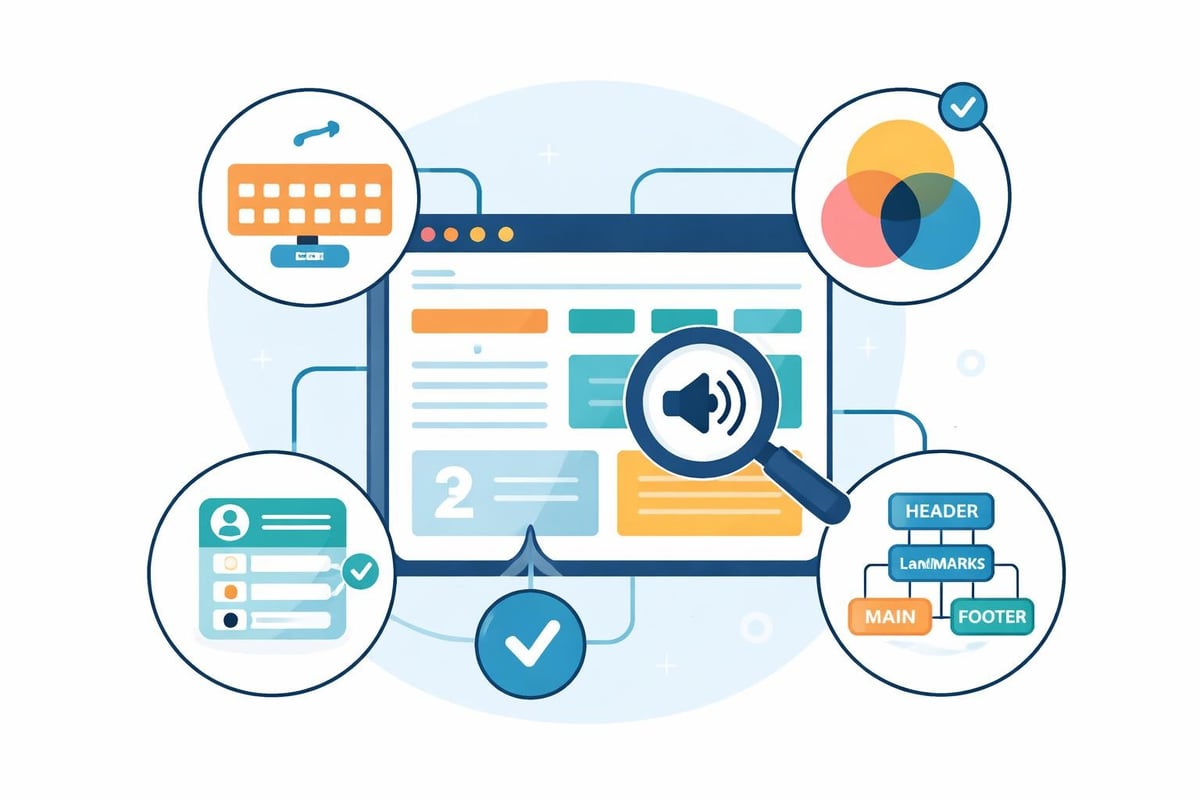
Web Content Accessibility Guidelines (WCAG) provide a framework for creating inclusive digital experiences. Level AA compliance should be your minimum target, ensuring your homepage accommodates users with various visual, auditory, motor, and cognitive disabilities.
Essential accessibility features:
- Semantic HTML that conveys content structure to screen readers
- Keyboard navigation for all interactive elements
- Sufficient color contrast meeting 4.5:1 ratio for normal text
- Descriptive link text that makes sense out of context
- Alternative text for all meaningful images
- Skip navigation links for keyboard users
The practical tips for designing professional homepages emphasize that accessibility improvements benefit all users, not just those with disabilities.
Forms and User Input
Contact forms, newsletter signups, and search functions require particular attention to accessibility and usability. Each form field needs a clearly associated label, helpful placeholder text when appropriate, and descriptive error messages that guide users toward successful completion.
Testing and Continuous Improvement
Launch is just the beginning of your homepage design website journey. Systematic testing reveals how real users interact with your site and where improvements can increase effectiveness. Successful companies treat their homepage as an evolving asset rather than a finished product.
Analytics and User Behavior
Implement comprehensive analytics to understand visitor behavior patterns. Track metrics including bounce rate, time on page, scroll depth, and conversion paths. Heat mapping tools reveal where users click, how far they scroll, and which elements capture attention.
Key metrics to monitor:
- Bounce rate: Percentage of single-page sessions
- Average session duration: Time spent engaging with content
- Goal completion rate: Percentage achieving desired actions
- Traffic sources: Where visitors originate and their behavior patterns
A/B Testing Framework
Test individual elements systematically to determine what resonates with your audience. Change one variable at a time to isolate the impact of specific modifications. Common testing candidates include headline phrasing, CTA button colors, image selection, and content positioning.
The elements to add or remove from your homepage provides guidance on components that typically enhance or detract from performance based on testing data across thousands of sites.
Advanced Homepage Features
Modern homepage design website capabilities extend beyond static content presentation. Interactive elements, personalization, and dynamic content can significantly enhance engagement when implemented thoughtfully.
Personalization and Dynamic Content
Show different content based on visitor characteristics such as location, referral source, previous interactions, or company size. Personalized experiences increase relevance and conversion rates by addressing specific visitor needs and contexts.
Personalization opportunities include:
- Geographic targeting displaying local contact information or case studies
- Industry-specific messaging based on company data or previous visits
- Returning visitor recognition with updated content or special offers
- Time-based content adjusting for business hours or seasonal relevance
Interactive Elements and Engagement
Strategic interactivity can showcase products, explain complex concepts, or simply delight visitors. However, interactions must serve clear purposes and remain optional rather than blocking access to information.
| Interactive Element | Best Application | Considerations |
|---|---|---|
| Product configurators | Customizable offerings | Must work on all devices |
| Calculators | Pricing or ROI estimation | Provide immediate value |
| Animated infographics | Complex data visualization | Don't distract from core message |
| Live chat | Real-time support | Option to minimize or dismiss |
The importance of clean visual hierarchy and white space becomes even more critical when incorporating interactive elements, ensuring they enhance rather than overwhelm the user experience.
SEO Considerations for Homepage Design
Your homepage design website serves as the foundation for search visibility. Structural decisions, content placement, and technical implementation all impact how search engines understand and rank your site. Understanding your design choices affect discoverability is essential for long-term success.
On-Page SEO Elements
Optimize meta titles, descriptions, and heading tags to clearly communicate your page purpose to search engines. Your homepage typically targets your brand name and primary service category, while inner pages focus on specific offerings.
Essential on-page elements:
- Title tag: Include brand name and primary keyword within 60 characters
- Meta description: Compelling summary encouraging clicks within 155 characters
- H1 heading: Single, descriptive headline containing primary keyword
- Structured data: Schema markup identifying organization, contact, and service information
- Internal linking: Strategic connections to important service and content pages
Technical SEO Foundation
Beyond visible content, technical factors significantly influence search performance. Ensure your homepage implements best practices for crawlability, indexation, and site architecture. The intersection of website design and SEO demonstrates how these disciplines must work together for optimal results.
Technical requirements include proper XML sitemap submission, robots.txt configuration, canonical URL specification, and mobile-friendly implementation verified through Google's testing tools.
Industry-Specific Homepage Considerations
Different industries require adapted homepage approaches based on audience expectations, purchase cycles, and information needs. Professional services emphasize expertise and trust, while e-commerce prioritizes products and transactions.
B2B vs. B2C Approaches
Business-to-business homepages typically require more detailed information and multiple conversion paths accommodating longer decision cycles. B2C homepages often emphasize emotional appeals, simplified navigation, and immediate purchase opportunities.
B2B homepage priorities:
- Detailed service descriptions and differentiation
- Case studies and industry-specific examples
- Multiple stakeholder considerations
- Lead generation over immediate sales
B2C homepage priorities:
- Product visibility and availability
- Emotional connection and lifestyle appeal
- Streamlined purchase paths
- Promotional messaging and urgency
The best practices for high-converting websites emphasizes targeting your specific audience effectively, ensuring design decisions align with user expectations and behaviors.
Integration with Broader Digital Strategy
Your homepage design website functions within a larger digital ecosystem. Consider how it connects with social media profiles, email marketing campaigns, paid advertising landing experiences, and content marketing initiatives. Consistency across touchpoints reinforces brand recognition and builds trust.
Coordinating Marketing Channels
Ensure messaging, design language, and conversion paths align across all customer touchpoints. A visitor clicking a Facebook ad should find familiar messaging and visual continuity when arriving at your homepage. Similarly, email campaign recipients should recognize your brand instantly upon landing.
Strategic integration includes:
- Consistent visual branding across all platforms
- Coordinated messaging reflecting current campaigns
- UTM parameter tracking for attribution analysis
- Landing page optimization for specific traffic sources
Supporting Content Strategy
Your homepage serves as the hub connecting visitors to valuable content resources. Strategic linking to blog posts, guides, case studies, and tools demonstrates expertise while keeping visitors engaged. The relationship between design of web presence and content strategy determines how effectively you attract and nurture potential customers.
Creating an effective homepage design website requires balancing aesthetic appeal, functional performance, and strategic conversion optimization. By implementing clear visual hierarchy, compelling messaging, accessibility standards, and continuous testing, you build a digital presence that attracts visitors and converts them into customers. Creotivity specializes in building modern websites designed to rank highly on both traditional search engines and AI-powered platforms, combining cutting-edge design with proven optimization strategies. Whether you need a complete redesign or strategic improvements to your existing homepage, our team delivers custom solutions that drive measurable business results.