Web Agency Website: Build a High-Performance Digital Hub
A web agency website serves as the digital storefront, portfolio showcase, and lead generation engine for design and development firms. In 2026, building an effective web agency website requires balancing aesthetic excellence with technical performance, user experience optimization, and conversion-focused design. The most successful agency sites demonstrate expertise through case studies, streamline client acquisition through strategic calls to action, and position the agency as a trusted authority in website development and digital strategy. This comprehensive guide explores the essential components, strategic decisions, and implementation tactics that transform a standard website into a powerful business development asset.
Essential Components of High-Converting Agency Websites
Every successful web agency website incorporates several foundational elements that establish credibility and drive conversions. The homepage must immediately communicate value propositions while showcasing previous work.
Portfolio sections represent the most critical component of any web agency website. Prospective clients evaluate agencies primarily through completed projects, making portfolio presentation a key differentiator. Effective portfolio showcases include high-quality screenshots, detailed case studies explaining challenges and solutions, measurable results demonstrating impact, and clear categorization by industry or service type.

Service pages require equally strategic development. Rather than listing generic capabilities, high-performing agency websites articulate specific deliverables and outcomes. Each service should address client pain points, explain methodologies, and include relevant work samples.
Building Trust Through Strategic Content
- Team profiles humanize the agency and showcase expertise
- Client testimonials provide social proof and reduce perceived risk
- Industry recognition displays awards, certifications, and partnerships
- Blog content demonstrates thought leadership and improves SEO performance
- Transparent pricing (when appropriate) accelerates decision-making
The architecture of information on a web agency website directly impacts user engagement. Visitors typically arrive with specific questions: Can this agency solve my problem? Have they worked with similar businesses? What does the process look like? Strategic content placement addresses these questions progressively throughout the user journey.
Design Principles That Drive Results
Visual design for agency websites walks a delicate balance between creativity and usability. While agencies want to demonstrate design capabilities, overly complex or experimental interfaces can frustrate users and reduce conversion rates.
Modern web agency websites prioritize clean layouts with generous white space, strong typography hierarchy establishing clear information flow, high-quality imagery showcasing actual work rather than stock photos, and consistent brand identity reinforced through color schemes and visual elements. Website design best practices emphasize user experience over pure aesthetics, recognizing that conversion effectiveness matters more than design awards.
| Design Element | Priority Level | Impact on Conversions |
|---|---|---|
| Portfolio Quality | Critical | Direct correlation |
| Navigation Clarity | Critical | Reduces bounce rate |
| Mobile Responsiveness | Critical | 60%+ of traffic |
| Loading Speed | High | Each second = 7% conversion loss |
| Visual Creativity | Medium | Brand differentiation |
| Animation/Effects | Low | Minimal conversion impact |
Performance Optimization Fundamentals
Technical performance separates memorable web agency websites from forgettable ones. Page speed directly influences both user experience and search engine rankings. Agencies should implement image optimization through next-gen formats like WebP, code minification reducing file sizes, content delivery networks distributing assets globally, and lazy loading deferring off-screen content.
The irony of a slow-loading web agency website is not lost on potential clients evaluating technical competence. Performance optimization demonstrates expertise while improving conversion metrics across all traffic sources.
Content Strategy for Client Acquisition
Content creation for a web agency website extends beyond basic service descriptions. Strategic content marketing positions agencies as trusted advisors rather than mere service providers.
Case studies represent the highest-value content format for agency websites. Effective case studies follow a consistent structure: client background and challenges, strategic approach and methodology, implementation details and timeline, measurable results and outcomes, and client testimonials validating success.
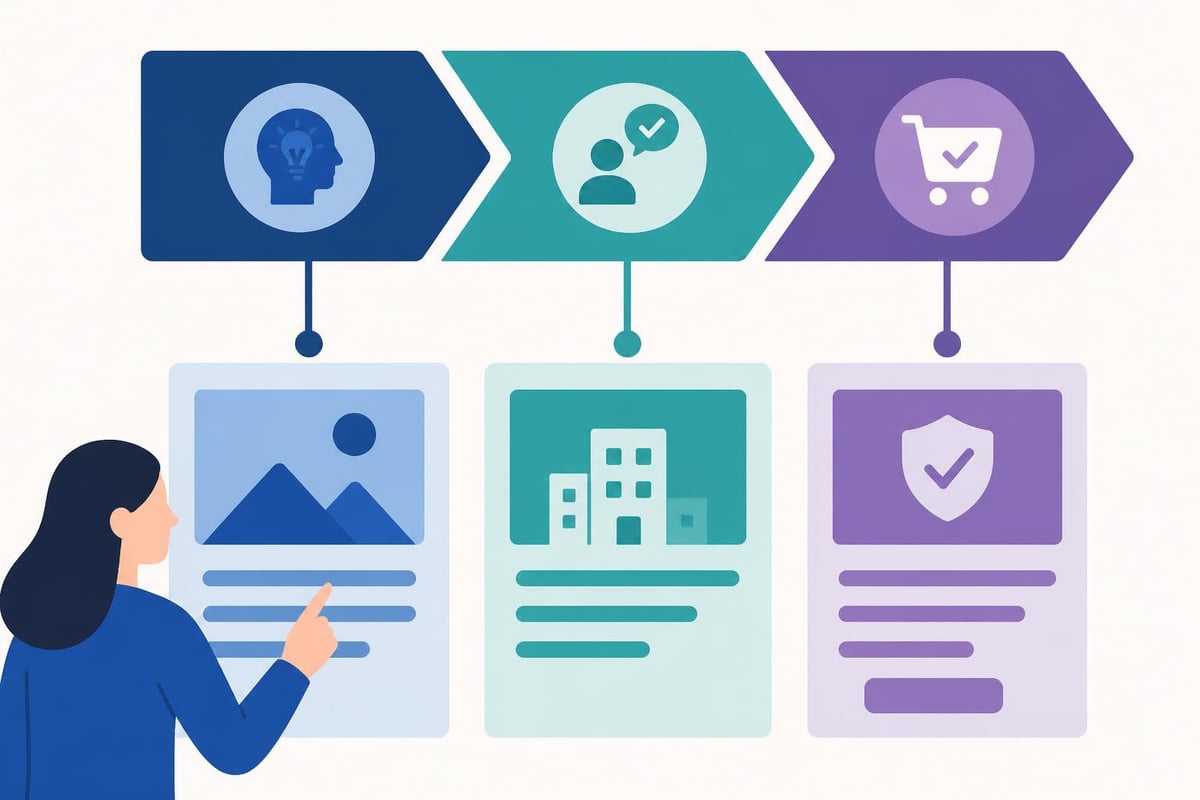
When developing website design services content, agencies should address the full customer journey. Top-of-funnel content educates prospects about website strategy and best practices. Middle-funnel content demonstrates specific capabilities and differentiators. Bottom-funnel content removes final objections and facilitates decision-making.
Blogging for Visibility and Authority
- Research target audience pain points through customer conversations
- Identify high-value keywords related to agency services
- Create comprehensive guides addressing specific challenges
- Publish consistently maintaining editorial momentum
- Promote strategically through social channels and email
- Update existing content keeping information current
Search engine optimization for agency websites requires technical excellence combined with content depth. SEO and web design integration ensures that beautiful sites also generate organic traffic and qualified leads.
Technical Infrastructure Decisions
Selecting the right platform for a web agency website involves evaluating multiple factors including customization requirements, performance expectations, maintenance resources, and scalability needs.
Custom-built solutions offer maximum flexibility and brand differentiation but require significant development resources. Content management systems like WordPress provide extensibility through plugins while maintaining reasonable development timelines. Modern frameworks such as Next.js or Gatsby enable exceptional performance through static site generation and progressive enhancement.
Choosing appropriate hosting for agencies proves equally important. Hosting infrastructure affects site speed, uptime reliability, security posture, and scalability capacity. Premium managed hosting solutions justify their cost through performance optimization, security monitoring, automated backups, and expert support.
Platform Comparison Matrix
| Platform Type | Development Time | Customization | Performance | Maintenance |
|---|---|---|---|---|
| Custom Build | 8-16 weeks | Unlimited | Excellent | High effort |
| WordPress | 4-8 weeks | High | Good | Medium effort |
| Webflow | 2-4 weeks | Medium | Excellent | Low effort |
| Squarespace | 1-2 weeks | Limited | Good | Minimal effort |
The platform choice for your web agency website should align with internal capabilities and client expectations. Agencies specializing in custom development naturally gravitate toward bespoke solutions, while those emphasizing speed-to-market may leverage no-code or low-code platforms.
Conversion Optimization Strategies
Converting visitors into qualified leads represents the ultimate measure of web agency website effectiveness. Strategic conversion optimization requires understanding user psychology, removing friction points, and providing clear pathways to engagement.
Call-to-action placement demands careful consideration. Primary CTAs should appear above the fold on key pages, within portfolio case studies following project descriptions, and at natural conclusion points throughout content. Effective CTAs use action-oriented language, create urgency without manipulation, and offer clear value propositions.
Lead capture mechanisms vary in commitment level and conversion rates. Contact forms with minimal fields maximize completion rates. Project brief questionnaires qualify leads while gathering requirements. Scheduling tools enable direct calendar booking. Resource downloads exchange value for contact information.
- Design multiple conversion pathways for different commitment levels
- Test CTA copy variations measuring engagement differences
- Implement exit-intent popups capturing abandoning visitors
- Use chat widgets providing immediate response options
- Create compelling lead magnets addressing specific pain points
Design AI tools are transforming how agencies approach website creation and optimization. Artificial intelligence enables rapid prototyping, automated accessibility testing, and data-driven design decisions that improve conversion performance.
Showcasing Expertise Through Portfolio Presentation
Portfolio presentation strategies directly influence prospect perception and conversion likelihood. Generic project galleries fail to communicate expertise or differentiate capabilities.
Exceptional portfolio sections tell complete stories. Each project should include contextual background explaining client challenges, strategic rationale describing approach decisions, visual documentation showing key deliverables, quantitative results proving business impact, and client feedback validating success.
Examining successful agency website examples reveals common patterns in portfolio presentation. Top agencies organize work by industry vertical, service category, or project scope. This organization helps prospects quickly identify relevant experience and evaluate fit.
Advanced Portfolio Techniques
Interactive project presentations engage visitors more deeply than static screenshots. Video walkthroughs demonstrate functionality. Interactive prototypes allow hands-on exploration. Before-and-after comparisons visualize transformation. Process documentation reveals methodology and expertise.
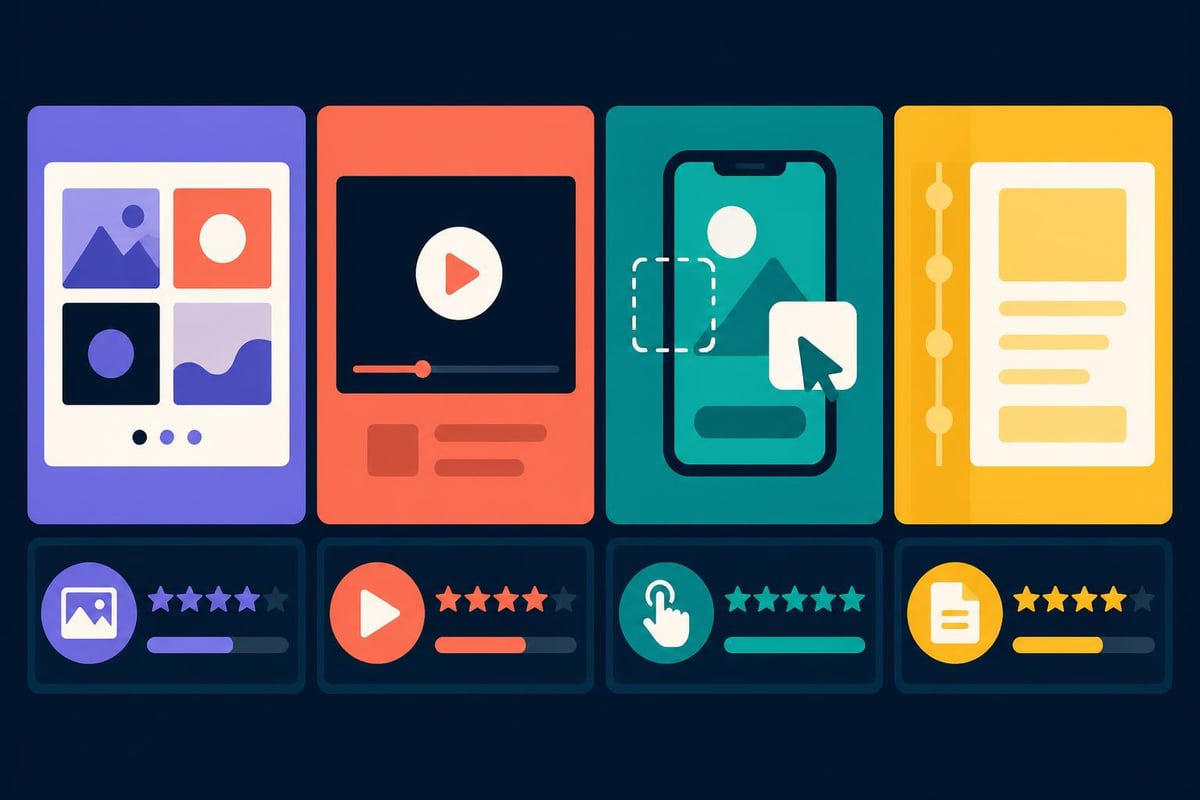
Filtering capabilities enhance user experience on portfolio-heavy websites. Visitors should easily sort projects by industry, budget range, timeline, or technology stack. This functionality helps qualified prospects self-identify relevant experience while demonstrating organizational sophistication.
Mobile-First Design Imperatives
Mobile traffic accounts for over 60% of web browsing in 2026, making mobile optimization non-negotiable for web agency websites. Mobile-first design prioritizes smartphone experiences during initial development rather than treating them as afterthoughts.
Touch-friendly interfaces accommodate finger navigation rather than precise cursor control. Buttons and links require minimum 44-pixel touch targets. Navigation menus simplify to essential items. Forms minimize input requirements through smart defaults and autofill support.
Typography scales appropriately across device sizes. Body text maintains readability at 16 pixels minimum. Headings establish clear hierarchy without overwhelming small screens. Line length constrains to 60-70 characters optimizing comprehension.
Progressive enhancement ensures core functionality works universally while enhancing experiences on capable devices. Critical content loads immediately. Advanced features activate conditionally. Responsive images serve appropriate resolutions based on screen density and viewport dimensions.
Integrating AI Capabilities and Future Technologies
The emergence of AI search engines requires agencies to optimize web agency websites for algorithmic interpretation beyond traditional search engines. AI visibility optimization ensures agency content appears in AI-generated responses across platforms like ChatGPT, Claude, and Perplexing.
Structured data implementation helps AI systems understand website content and relationships. Schema markup defines organizations, services, articles, and reviews. JSON-LD formatting provides machine-readable context without cluttering visible content. Comprehensive metadata supports accurate interpretation and citation.
Conversational content formats align with AI search behavior. Question-and-answer sections address common queries directly. Natural language explanations avoid jargon and technical complexity. Comprehensive topic coverage establishes topical authority encouraging AI citation.
AI-powered website features enhance user experience and operational efficiency. Chatbots provide instant responses to common questions. Recommendation engines suggest relevant case studies or services. Predictive analytics identify high-intent visitors for proactive outreach.
Maintaining and Evolving Your Agency Website
A web agency website requires ongoing optimization rather than one-time development. Regular maintenance preserves performance and security while continuous improvement drives better results.
Analytics monitoring reveals user behavior patterns and conversion bottlenecks. Traffic sources indicate effective marketing channels. Page-level metrics identify high-performing content. Funnel analysis exposes abandonment points. Heat mapping visualizes interaction patterns.
Content freshness signals relevance to both users and search engines. Regular blog publishing demonstrates activity and expertise. Portfolio updates showcase recent work. Service pages evolve with capability expansion. Testimonials rotate highlighting diverse client relationships.
| Maintenance Activity | Frequency | Impact Level |
|---|---|---|
| Security Updates | Weekly | Critical |
| Performance Monitoring | Weekly | High |
| Content Publishing | Bi-weekly | High |
| Portfolio Updates | Monthly | High |
| Design Refresh | Annually | Medium |
| Platform Upgrade | As needed | Variable |
Technical audits identify optimization opportunities. Page speed analysis reveals loading bottlenecks. SEO audits uncover ranking improvement potential. Accessibility testing ensures inclusive experiences. Security scans detect vulnerabilities before exploitation.
Differentiation Through Unique Value Propositions
Generic agency positioning fails to capture attention in crowded markets. Successful web agency websites articulate clear differentiation through specialized expertise, unique methodologies, or distinctive results.
Niche specialization attracts ideal clients while repelling poor fits. Industry-focused agencies emphasize vertical expertise and compliance knowledge. Technology-specialized firms highlight specific platform mastery. Service-concentrated agencies showcase depth in particular capabilities.
Process documentation differentiates through transparency. Detailed methodology explanations build confidence in systematic approaches. Timeline clarity sets realistic expectations. Communication protocols demonstrate client-centric operations. Quality assurance processes prove commitment to excellence.
Results quantification transforms subjective claims into objective proof. Conversion rate improvements demonstrate marketing effectiveness. Traffic growth validates SEO competence. Revenue increases prove business impact. Time savings quantify efficiency gains.
When developing web design consultancy positioning, agencies should identify genuine differentiators rather than generic platitudes. "We build beautiful websites" lacks specificity. "We build HIPAA-compliant healthcare websites that convert 40% better than industry averages" communicates concrete value.
Integration With Business Development Processes
A web agency website functions as one component within comprehensive business development strategies. Integration with sales processes, marketing automation, and client relationship management maximizes effectiveness.
Lead qualification systems separate serious prospects from casual browsers. Progressive profiling gathers information across multiple interactions. Behavioral scoring assigns values based on engagement patterns. Automated routing directs leads to appropriate team members.
Marketing automation nurtures relationships at scale. Email sequences educate prospects about agency capabilities. Content recommendations personalize experiences based on interests. Retargeting campaigns re-engage previous visitors. Automated follow-ups ensure consistent communication.
CRM integration creates unified customer views. Website interactions inform sales conversations. Project histories enable relationship-based selling. Communication logs prevent duplicative outreach. Analytics reveal account-level engagement patterns.
Building an effective web agency website requires strategic planning, technical excellence, and continuous optimization. The most successful agency sites balance aesthetic creativity with conversion-focused design, demonstrate expertise through comprehensive portfolios and case studies, and integrate seamlessly with broader business development efforts. If you're ready to transform your digital presence into a powerful client acquisition engine, Creotivity specializes in building high-performance websites optimized for both traditional search engines and emerging AI platforms. Our team combines modern design principles with advanced SEO and AI visibility strategies to help agencies attract and convert their ideal clients.