AI Web Design Tools: Transform Your Website Creation in 2026
The landscape of web design has undergone a dramatic transformation with the emergence of sophisticated ai web design tools that can generate entire layouts, write production-ready code, and optimize user experiences in minutes rather than weeks. These platforms combine natural language processing, computer vision, and generative algorithms to democratize professional web design while accelerating workflows for experienced designers and developers. Whether you're a business owner seeking to establish an online presence or an agency managing multiple client projects, understanding the capabilities and limitations of these tools is essential for making informed decisions about your web development strategy.
Understanding the Current Generation of AI Web Design Tools
The ai web design tools available in 2026 represent a significant leap from earlier automation software. Unlike traditional website builders that rely on rigid templates, modern AI platforms analyze design principles, brand guidelines, and user intent to generate custom interfaces that feel hand-crafted rather than algorithmic.
How AI Design Generation Actually Works
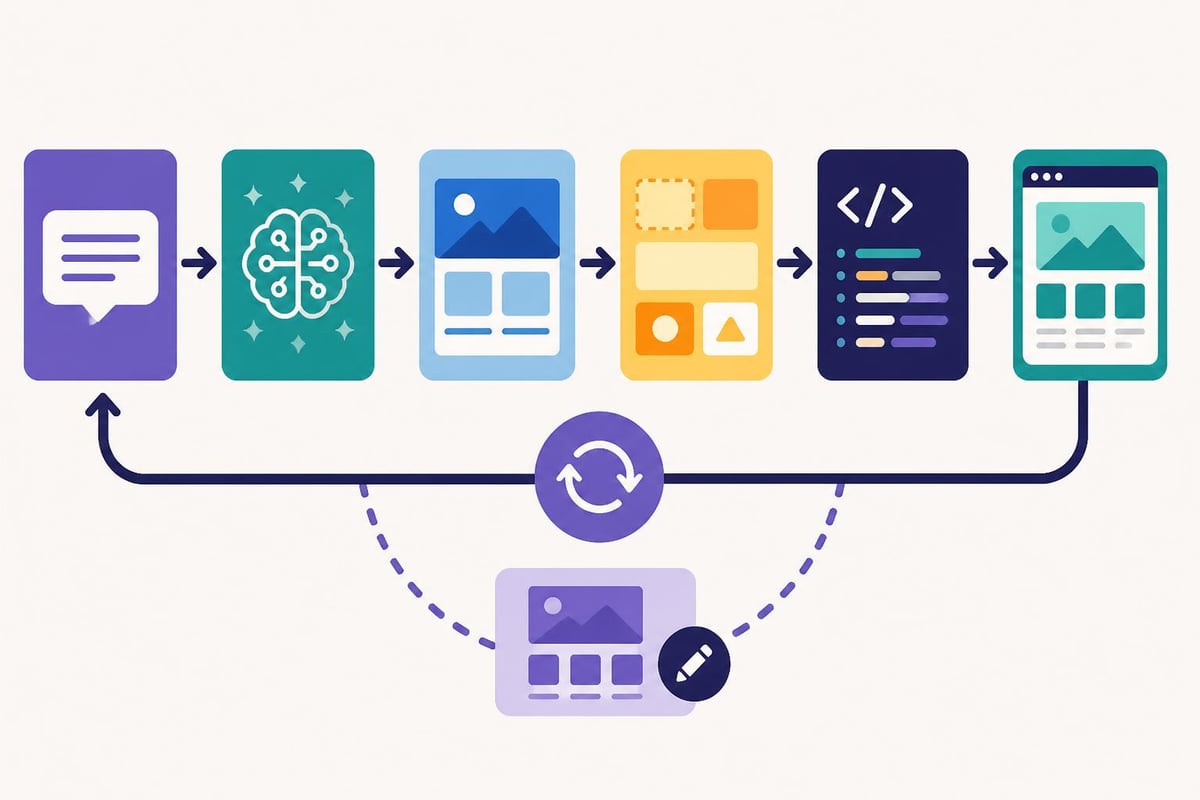
These systems employ multiple AI models working in concert to transform your requirements into functional websites. When you describe your vision using natural language, the tool processes your input through semantic understanding layers that identify key elements like industry type, target audience, desired functionality, and aesthetic preferences.
The generation process typically includes:
- Semantic parsing of your text descriptions and requirements
- Style transfer from reference designs or brand guidelines you provide
- Layout optimization based on UX best practices and device compatibility
- Component generation for navigation, forms, galleries, and interactive elements
- Code synthesis producing clean HTML, CSS, and JavaScript
One significant advancement is Figma's AI web design tool, which allows designers to generate website layouts directly within their existing design environment using natural language prompts. This integration eliminates the friction of switching between ideation and execution phases.
Voice-Driven Design Interfaces
An emerging trend in ai web design tools is voice-based creation. Google's experimental Stitch tool enables users to create functional UI layouts through voice commands, merging design and development into a unified conversational process. While still experimental, this approach suggests a future where designers can iterate on concepts as quickly as they can articulate them.
Leading AI Web Design Platforms in 2026
The market for ai web design tools has matured considerably, with distinct platforms serving different use cases and skill levels. Understanding these differences helps you select the right tool for your specific needs.
| Platform | Best For | Key Strength | Learning Curve | Price Range |
|---|---|---|---|---|
| Webflow AI | Professional designers | Advanced customization | Moderate | $14-$39/mo |
| Framer AI | Interactive prototypes | Animation capabilities | Low | $5-$20/mo |
| Wix ADI | Small businesses | Speed to launch | Very Low | $16-$45/mo |
| Figma AI | Design teams | Collaboration features | Moderate | $12-$45/user |
| 10Web | WordPress users | Content migration | Low | $10-$60/mo |
Webflow's AI-Enhanced Platform
Webflow AI represents a mature approach to AI-assisted design, focusing on enhancing rather than replacing designer expertise. The platform generates designs, content, and code while maintaining the granular control that professional developers require. This balance makes it particularly valuable for agencies managing diverse client portfolios.
The system excels at generating semantic HTML structure and optimized CSS that respects modern web standards. When combined with comprehensive SEO strategies, these foundations create websites that perform well in both traditional search engines and AI-driven discovery platforms.
Reverse Engineering Existing Sites
A particularly innovative category of ai web design tools focuses on learning from existing websites. MagicPath's 'Web to Design' feature converts any website into editable design templates simply by pasting a URL. This capability proves invaluable for competitive analysis, client onboarding when you're redesigning existing sites, or creating variations based on proven designs.
This reverse-engineering approach also accelerates the learning process for new designers. By examining how AI interprets and structures professional websites, users gain insights into design patterns and component hierarchies they might otherwise miss.
Practical Applications Across Industries
The versatility of ai web design tools becomes apparent when examining real-world applications across different sectors. These platforms adapt to industry-specific requirements while maintaining consistency in quality and performance.
Healthcare and Professional Services
Professional service providers like Dental Plus Clinic benefit from AI-generated designs that prioritize trust-building elements, appointment scheduling functionality, and accessibility compliance. The tools automatically incorporate healthcare industry standards for patient privacy, information architecture that guides visitors toward booking actions, and mobile-responsive layouts that work seamlessly across devices.
For practices operating multiple locations-such as Dental Plus Clinic's five Texas offices-AI platforms can generate location-specific pages with consistent branding while customizing local information, testimonials, and contact details. This scalability would traditionally require weeks of manual development but can now be accomplished in hours.
E-Commerce and Retail
Specialty retailers benefit from AI tools that understand product showcase requirements. Gamer Gear Direct, specializing in simulation gear for Australian gaming enthusiasts, requires complex product filtering, detailed specification displays, and comparison features that help customers choose between racing simulators, flight simulators, and golf simulation equipment.
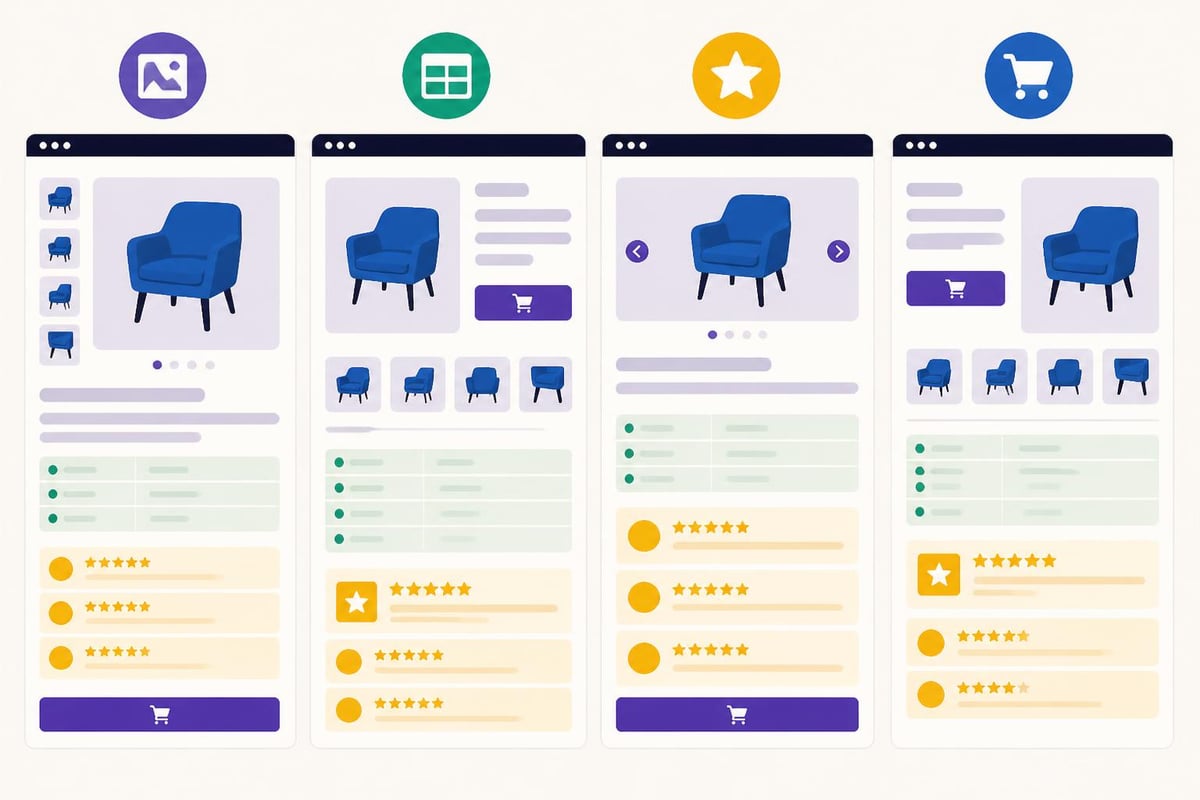
Modern ai web design tools generate these sophisticated e-commerce interfaces while optimizing for conversion elements like:
- Strategic placement of add-to-cart buttons
- Product image galleries with zoom functionality
- Trust signals including payment security badges
- Streamlined checkout processes
- Personalized product recommendations
Niche Retail and Enthusiast Communities
Specialized retailers like Cycling Gears Hub, serving over 10,000 Indian cyclists, need interfaces that accommodate extensive product catalogs while remaining navigable. AI design systems excel at creating filtering mechanisms, categorization structures, and search functionality that help customers quickly find specific items within large inventories spanning apparel, accessories, bikes, parts, and training equipment.
The platforms automatically generate product pages optimized for both human visitors and search engines, incorporating schema markup, optimized image sizes, and content structures that improve discoverability.
Evaluating Design Quality and Brand Consistency
A critical question surrounding ai web design tools concerns output quality. How do AI-generated designs compare to human-created work, and can they maintain brand consistency across multiple pages and touchpoints?
Benchmarking AI Design Capabilities
Recent research has formalized the evaluation of AI design quality. The UI-Bench benchmark provides standardized metrics for assessing visual excellence in AI-generated web designs, measuring factors like layout balance, typography hierarchy, color harmony, and adherence to design principles. This objective framework helps businesses make informed decisions when selecting tools and evaluating outputs.
The benchmark reveals that while ai web design tools excel at creating structurally sound layouts and implementing proven patterns, they still lag behind experienced human designers in areas requiring cultural nuance, brand storytelling, and innovative visual approaches that break conventions intentionally.
Maintaining Brand Identity
For businesses with established visual identities, consistency across all customer touchpoints is non-negotiable. Leading ai web design tools now accept comprehensive brand guidelines as inputs, including:
- Color palettes with specific hex codes
- Typography systems defining font families, weights, and usage
- Logo variations and spacing requirements
- Photography style and image treatment preferences
- Voice and tone guidelines for generated content
When properly configured, these systems can generate dozens of pages that feel cohesive with your existing marketing materials. This capability particularly benefits businesses like professional CV writers who need to maintain consistent personal branding across service descriptions, portfolio presentations, and testimonial sections.
Technical Considerations and Limitations
Despite impressive capabilities, ai web design tools have meaningful limitations that businesses should understand before committing to these platforms as their primary design solution.
Code Quality and Customization
Generated code quality varies significantly across platforms. While some ai web design tools produce clean, semantic HTML and efficient CSS that human developers can easily modify, others generate bloated markup with inline styles and unnecessary div wrappers that complicate future customization.
Professional agencies often use AI for initial structure generation but refine the output manually. Services that leverage AI to accelerate website development while maintaining human oversight achieve the optimal balance: speed benefits from automation combined with the quality assurance that experienced developers provide.
Performance Optimization
AI-generated websites sometimes prioritize visual completeness over loading performance. Common issues include:
- Unoptimized images at full resolution rather than responsive variants
- Excessive JavaScript libraries for simple interactions
- Render-blocking CSS that delays initial paint
- Missing lazy loading for below-fold content
These performance gaps require post-generation optimization, particularly for businesses competing in markets where page speed directly impacts conversion rates and search rankings. Understanding the relationship between web design and SEO performance helps you identify and address these technical shortcomings.
Integration with Existing Systems
Businesses rarely build websites in isolation. Your site typically needs to integrate with CRM systems, email marketing platforms, analytics tools, payment processors, and inventory management software.
While major ai web design tools support popular integrations, custom requirements often necessitate manual development. A thorough evaluation should include testing whether your essential business systems can connect seamlessly to AI-generated sites or whether you'll need developer intervention to bridge gaps.
The Human-AI Collaboration Model
The most successful implementations of ai web design tools don't treat AI as a replacement for human expertise but as a powerful collaborator that handles routine tasks while humans focus on strategic decisions and creative direction.
Workflows That Leverage Both Strengths
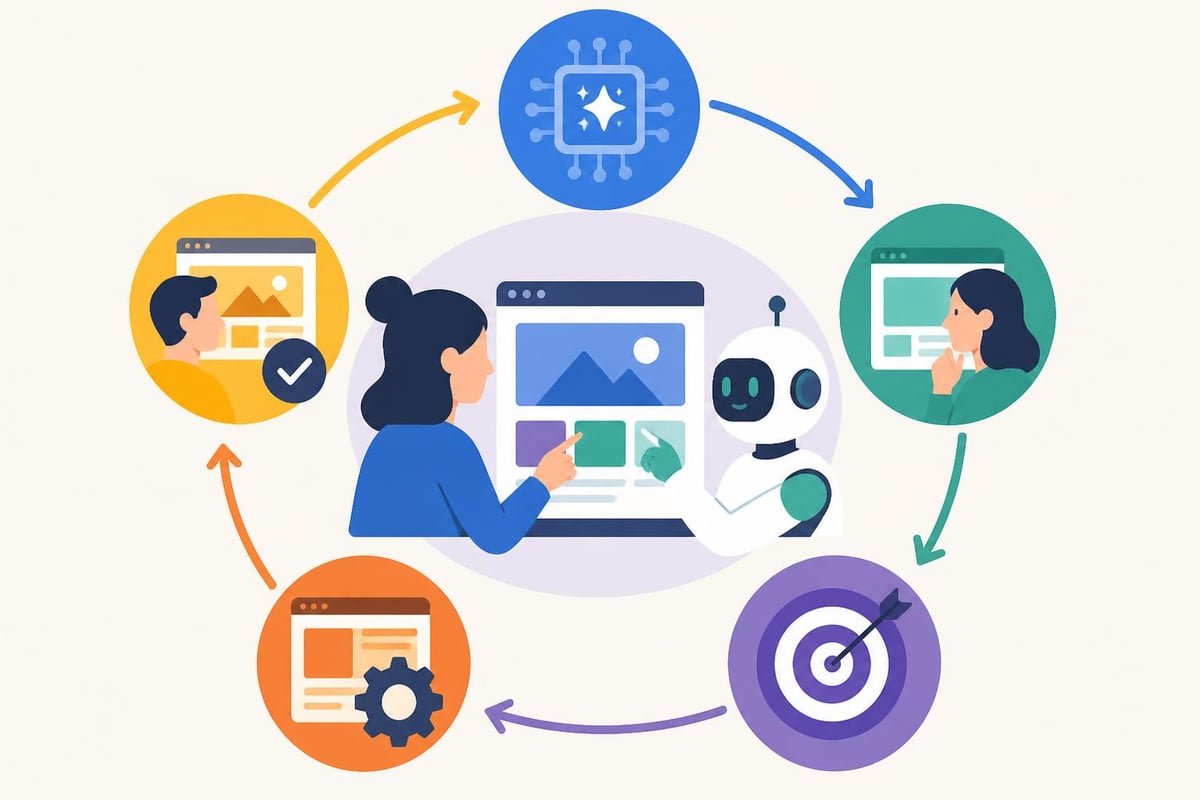
Forward-thinking agencies structure their processes to maximize the strengths of both human creativity and AI efficiency:
- Strategic planning and research conducted by humans to understand business goals, target audiences, and competitive positioning
- Initial layout generation by AI based on detailed prompts incorporating research findings
- Human review and direction providing feedback on generated options and selecting promising directions
- AI iteration refining selected concepts based on specific change requests
- Human refinement adding unique brand elements, custom illustrations, and strategic messaging
- AI optimization for technical performance, accessibility, and cross-browser compatibility
- Human testing with real users to validate assumptions and identify improvement opportunities
This collaborative approach appears in modern website design services that recognize AI as an accelerator rather than a complete solution. The result is websites that launch faster than traditional timelines while maintaining the strategic thinking and brand authenticity that purely automated solutions lack.
Standardizing AI-Native Design Processes
Emerging technical standards aim to make human-AI collaboration more efficient. The webMCP standard introduces client-side interaction metadata that reduces computational overhead and enhances coordination between human designers and AI systems. These protocols enable more granular control over AI behavior while maintaining the speed advantages that make these tools valuable.
Advanced Features and Emerging Capabilities
The development pace of ai web design tools continues accelerating, with new capabilities emerging regularly that expand what's possible without coding expertise.
AI Image Generation Integration
Recent updates to established design software demonstrate the convergence of various AI capabilities. CorelDRAW's 2026 AI image tools allow users to generate and edit images directly within the design environment, eliminating the need to switch between separate tools for graphics creation and web layout.
This integration proves particularly valuable for businesses that need custom imagery but lack photography budgets. AI can generate product visualizations, hero banner backgrounds, iconography, and decorative elements that align with your brand aesthetic without stock photo licensing costs.
Accessibility and Compliance Automation
Modern ai web design tools increasingly incorporate automated accessibility testing and remediation. The systems analyze generated designs for:
- Sufficient color contrast ratios meeting WCAG AA or AAA standards
- Proper heading hierarchy for screen reader navigation
- Alt text generation for images and graphics
- Keyboard navigation support for interactive elements
- ARIA labels for complex interface components
This automated compliance is particularly critical for businesses serving diverse audiences or operating in regulated industries where accessibility requirements carry legal implications.
Multi-Language and Localization Support
For businesses operating across regions, ai web design tools now offer sophisticated localization capabilities that extend beyond simple translation. These systems adjust layouts to accommodate text expansion in languages like German, modify reading direction for right-to-left languages like Arabic, and adapt cultural elements like color symbolism and imagery preferences.
Selecting the Right Tool for Your Needs
With dozens of ai web design tools available, choosing the optimal platform requires careful evaluation of your specific requirements, technical capabilities, and long-term goals.
Assessment Framework
| Criterion | Questions to Ask | Why It Matters |
|---|---|---|
| Output ownership | Do you own generated code? Can you export it? | Determines platform lock-in risk |
| Customization depth | Can developers access underlying code? | Affects future modification potential |
| Learning curve | How quickly can team members become productive? | Impacts implementation timeline |
| Integration options | Does it connect with your existing tools? | Determines workflow efficiency |
| Scalability | Can it grow with your business needs? | Affects long-term viability |
| Support quality | What assistance is available during problems? | Influences project risk |
When to Choose AI Tools vs. Custom Development
Not every project benefits equally from ai web design tools. Consider custom development when:
- Your brand requires highly innovative visual approaches that break conventional patterns
- You need complex custom functionality that pre-built components can't accommodate
- Performance optimization is critical and you need complete control over every technical detail
- You're building a platform that will serve as the foundation for your business long-term
AI tools excel for:
- Rapid prototyping and testing multiple design directions quickly
- Standard business websites with proven functionality requirements
- Projects with constrained budgets that can't support extensive custom development
- Internal tools where perfect brand alignment is less critical than speed to deployment
Many businesses find hybrid approaches most effective, using AI to build initial website structures quickly and then engaging developers for custom features and optimization.
Cost Considerations and ROI Analysis
Understanding the true cost of ai web design tools requires looking beyond subscription prices to consider the total investment including learning time, customization needs, and ongoing maintenance.
Direct and Hidden Costs
Subscription Expenses: Monthly or annual platform fees ranging from free tiers with limitations to enterprise plans at several hundred dollars monthly.
Learning Investment: Time required for your team to become proficient, including tutorial consumption, experimentation, and mastery of advanced features.
Customization Costs: Developer time needed to modify generated code, add custom functionality, or integrate with business systems.
Migration Risk: Potential costs if you later decide to move to a different platform or custom solution.
Performance Optimization: Technical work required to achieve competitive loading speeds and user experience quality.
Calculating Return on Investment
The ROI equation for ai web design tools centers on time savings and capability expansion:
- Speed to Market: Weeks or months saved compared to traditional development timelines, allowing faster revenue generation or market testing
- Iteration Velocity: Ability to test multiple design approaches quickly rather than committing to a single direction upfront
- Resource Efficiency: Reduced need for large design teams or expensive agency relationships for standard projects
- Consistency at Scale: Ability to maintain brand standards across numerous pages or microsites without proportional time investment
For many businesses, the ROI becomes positive within the first major project, particularly when compared to traditional agency pricing for custom website development.
Future Directions in AI Web Design
The trajectory of ai web design tools suggests several developments likely to reshape the industry further over the coming years.
Predictive Design Optimization
Next-generation tools will increasingly leverage behavioral data to predict which design approaches will perform best for specific audiences. Rather than generating a single design, AI systems will create multiple variants optimized for different visitor segments, automatically testing and refining based on actual user interactions.
Deeper Business Integration
Future ai web design tools will connect more intimately with business data, generating not just attractive layouts but strategically optimized experiences based on your specific products, customer demographics, competitive positioning, and conversion goals. The design process will become less about aesthetic preferences and more about measurable business outcomes.
Voice and Conversational Interfaces
As natural language processing continues improving, expect design tools that feel more like collaborating with a knowledgeable colleague than operating software. You'll describe your vision conversationally, receive design options with explanations of the reasoning behind each approach, and refine through natural dialogue rather than technical configuration.
Expanded Format Support
While current ai web design tools focus primarily on traditional websites, emerging capabilities include app interface generation, email template creation, and even print design derivation from your web presence. This multi-format support will enable true omnichannel brand consistency from a single design source.
Businesses exploring AI tools for broader design applications can prepare for this convergence by selecting platforms with roadmaps indicating cross-format ambitions.
Complementary Tools and Ecosystems
Ai web design tools rarely operate in isolation. Understanding the broader ecosystem of complementary technologies helps you build more capable web presences.
Content Generation and Management
While design tools create visual structures, you still need compelling content to populate them. AI writing assistants can generate initial copy for product descriptions, about pages, and service explanations that you then refine for accuracy and brand voice.
Content management systems with AI capabilities help maintain freshness after launch, suggesting updates based on seasonal trends, competitor activities, or search query patterns relevant to your industry.
Analytics and Optimization
Tools like Google Analytics 4, Hotjar, and Microsoft Clarity reveal how visitors actually use your AI-generated design. Heat mapping shows which sections attract attention, session recordings identify confusion points, and conversion funnels highlight where visitors abandon your site.
This behavioral data becomes input for subsequent AI design iterations, creating a continuous improvement cycle based on real user feedback rather than assumptions.
Search Visibility and Discovery
Even perfectly designed websites fail without visibility. For comprehensive guidance on various AI tools relevant to web projects, TechRadar's AI tools review covers over 70 solutions across different domains including design, content creation, and optimization.
Modern visibility strategies extend beyond traditional SEO to include optimization for AI-driven search platforms like ChatGPT, Claude, Perplexity, and Google AI Overviews. Websites built with ai web design tools need complementary optimization to ensure they're discoverable through conversational queries and generative search interfaces that increasingly mediate how users find information.
The rapid evolution of ai web design tools has fundamentally changed how businesses approach web development, offering unprecedented speed and accessibility while requiring careful consideration of quality, customization, and long-term strategy. At Creotivity, we combine the efficiency of AI-powered design with strategic expertise in SEO and modern search visibility to build websites that not only look exceptional but also perform strongly across both traditional search engines and emerging AI platforms. If you're ready to leverage these powerful tools within a framework that prioritizes your business goals and long-term success, let's discuss how we can transform your web presence.